
Understanding Medical Jargon as If It Were a Natural Language
Proceedings of the Sixth International Joint Conference on Artificial Intelligence. .
© 1979 International Joint Conferences on Artificial Intelligence
Abstract
This paper presents BA OBA B-2, a computer program built upon the MYCIN system [II), that is used for understanding medical summaries describing the status of patients. Due to the stereotypic way the physicians present medical problems in these summaries in addition to the constrained nature of medical Jargon, these texts have a very strong structure. BAOBAB-2 takes advantage of this structure by having a model of this organization as a set of related schtmas that facilitate the Interpretation of these texts. Structures of the schemas and their relation to the surface structure of the text are described . Issues relating to selection and use of these schemas by the program during the interpretation are discussed.
- Collins A., Brown J. S., Larkin K., Inference in text understanding, in Spiro, Bruce and Brewer, Theoretical Issues in reading comprehension, Hillsdale, N. J Lawrence Erlbaum Associates, 1978.
- Grosz B., The representation and use of focus in a system for understanding dialogs, Proc. of 5th ljcal, Cambridge Mass, August 1977. IJCAI
- Minsky M ., A framework for representing knowledge, In P. Winston (ed .) The Psychology of Computer vision. New York McGraw-Hill, 1975.
- Sager N., Natural language information formatting, the <Hitomatic conversion of texts in a stuctured data base, Advances In computers vo1.17, 1978.
- Schank R., Abelson R., Scripts, plans and knowledge, in Advance papers of the 4th IJCAI, Tbilisl, USSR, 1975, pp 151-158. IJCAI
- Schank, R., Abelson, R., Scripts, plans, goals and understanding, an inquiry into •human knowledge structures, Lawrence Erlbaum Associates, Hillsdale, New Jersey, 1977.
- Shortliffe E., MYCIN, a rule-based computer program for advising physicians regarding antµbial therapy selection, Ph . D thesi~. October 1971.
- Siclncr C., A computational model of co- rd erence comprehension in Engllsh, Ph . D. Thesis, MIT, Cambridge, Mass, 1979.
References were extracted automatically from the PDF and may contain errors.
Full text extracted automatically from the PDF; figures, tables and equations may differ. The PDF is the version of record.
lntroduct ion
Early works on mrmory [I) and numerous psychological experiments [5) have suggested that people hearing a story make assumptions that they might revise or refine as more Information comes In to confirm or contradict them. Making such assumptions entails building· (or retrieving) models of the expected text contents. A corollary of this process is that, if the story adequiltely fits the model people have in mind, the story will be understood more easily.
A It hough it is difficult to give il formal definition of what constitutes a coherent text, we have an intuitive notion that srntences that compose it form episodes that are linked by different kinds of reliltionshlps, cause-effect, chronological orderings ilnd the like. M edicill summaries are highly structured; their structure Ciln be described in terms of topic. An Important problem Is reco~nizing the different topics and deciding when a "shift of topic' occ:urs.
2 Related work and goa Is
A I research has recently explored strategies to recognize shifts of topic occurring during dialogs or written texts. The two main issues faced In doing so are the necessity to narrow down the space of possible referents of a linguistic object and the risk of combiniltorial explosion. Thus, Grosz [6) studied the role of focus In the interpretation of uttP.rilnces and its relation to domain structure. She used the til~k structure to resolve definite noun phrilses in task-onented dialogs. Sidner [12) extended this work to determ111e the use of focusing in the resolution of pronoun rrferences ilnd other kinds of anaphors occurring in diillogs. De Jong (in [ 10}) has used "scripts" [9) to study ilnother kind of structured texts. such as accident reports.
1\ II of this work and the present study have a common feilture: they do not interprrt sentences in Isolation, but rather in' the context of an ongoing discourse and hence they use discow·se structurt. BAOBA B-2 · also explores Issues of (I) whilt constitutes a model of highly-structured texts and (2) how and when topic shifts occur. The rationale to study schema shifts in the present work are twofold: first, it enables the program to narrow down the space of possible Interpretations of inputs and second, it capitillizes on the coherence of texts, which is mainly il task of detecting anomillies, asking the user to ci;Hify ugue pieces of information or disappointed expectations, suggesting omissions.
· This research was supported by the Advanced Research Projects Agency under contrilct DA HC I 5-73-C-Oi35 and a ~nmt from l'lnstitut de Recherche pour l'lnformatique et I A utomat1que.
UNDERSTANDING MEDICAL JARGON AS IF IT WERE A NATURAL LANGUAGE
A lain Bonnet Heuristic Programming Project, Computer Science Department Stanford University, Stanford CA 9i305
This paper presents BA OBA B-2, a computer program built upon the MYCIN system [II), that is used for understanding medical summaries describing the status of patients. Due to the stereotypic way the physicians present medical problems in these summaries in addition to the constrained nature of medical Jargon, these texts have a very strong structure. BAOBAB-2 takes advantage of this structure by having a model of this organization as a set of related schtmas that facilitate the Interpretation of these texts. Structures of the schemas and their relation to the surface structure of the text are described. Issues relating to selection and use of these schemas by the program during the interpretation are discussed.
The domain of application is the medical summaries for which processing so filr [8) has mainly consisted of filling in formatted grids ilnd has not exhibited ilny interactive behavior. The program objective is to understand summaries about meningitis cases typed in "medical natural jargon" by a physician, interacting with her or him either to ask questions or to display whilt it hils understood.
The program utilizes a model of whilt medical summaries typically look like to guide the comprehension. This model consists of a set of related schemas (structures containing domain-specific knowledge which resemble "fnmes" [7) or "~cripts" [9)) described below. For t>xample, it knows that there is a main character who is the patient. This patient presents symptoms. He is admitted to the hospital. A physician observes signs. Some exams are performed, cultures are taken and eventually results are obtained. The physician describes the status of il piltient. The program uses both its medical knowledge and its model of the usual description of il medical case in order to produce an internal structure usable by MYCJN, which then attempts to make a diagnosis.
The program behaves like a clerk or a medical assistant who knows what the phys1cian has to describe and how a malady is ordinarily presented. It reacts to violations of the model, wch as a description ignoring symptoms or the mention of a culture that has been drawn but for which no result is ever given. It does not ilttempt to use its knowledg-e to infer any diagnosis but in certilin cases Ciln draw inferences that will facihtilte M YCIN's task . It uses these to establish relationships between the concepts stated in order to interpret what is said; for example, it knows that "semi-coma" refers to the state of consciousness of the pillient ilnd "hyperthyroidism" to a d1agnosis. A potential use of the program is to allow the physician to volunteer informiltion before or during the consultation thereby decreilsing her/his frustration ill hilving to wait until a~ked by the system to mention a cruCial symptom.
BA 0 Bl\ B-2 is comprised of: (a) a parser mapping the surfilce input into iln internal representation; (b) a set of schemils, representing a model of the kind of information it is ready to accept and the range of inferences it will be able to draw; (c) episode-recognition strilteg1es, making it pomble to focus on particular pieces of the texts and (d) a generator of Eng-lish med to display in a non-ambiguous fashion what has been understood . This paper will emphasize on the episode recognition striltegies. Detilil on the other pilrts can be found in Bonnet (2] and [3). These tech111ql1es have been successfully implemented using INTERLISP in a program connected with MYCIN's datil base, running on the DEC KA-10 of the medical center at Stanford Univrrsity.
!I Text and model.
As noted earlier, medical summaries have a stereotypic structure. They can be viewed as a sequence of episodes that correspond to phrases, sentences or groups of sentences dealing with a single topic. These topics constitute the model and are represented by schemas. Understanding the content of an episode leads to building one or several internal clauses referring to the same sctJema. In other words, processing and understanding a text consists of mapping episodes in the text onto schemas that constitute the model. Matching a schema can be "discontinuous", that is, two episodes referring to the same schema are not necessarily adjacent in the text (they might be separated by an episode referring to another schema). We will refer to this phenomenon as a temporary schema shift.
A typical scenario Is as follows: The medical case is lntroducect by giving general information such as the date and the reason for admission to the hospital. Then the patient Is presented (name, agr, ... ). Symptoms (noted by the patirnt) and signs (observed by the physician) are described. A physical exam Is usually performed and cultures are taken for which results are pending or available. In the latter case, they are given in detail. The structure of such a text can be captured In a sequence of schemas as shown on Figure 2.
[$SYMPTOMS
(SYMP legalvals (CHILL HEADACHE PHOTOPHOBIA .... ) tobcfilled T ) (TEMP expect (BETWEEN 94 188) whenfilled INFERFEVER) (STATE-OF-CONSCIOUSNESS expoct (ALERT OOTUNDED .. )
default ALERT)]
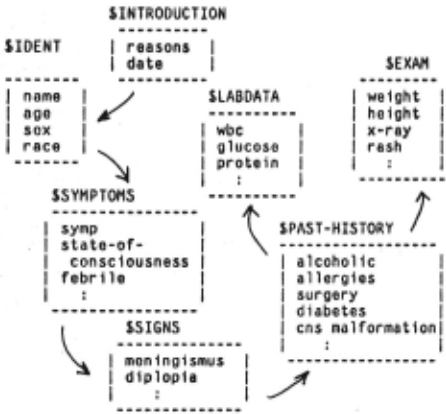
Figura 2: Set of schemes (Arrows indicate sequencing preferences.)
4 Strategies to detect new l'pisode~ .
Top-down vs. bottom-up: Sometimes the schema is explicitly announced, as in "Results of the culture". This is a name driven invocation of the schema. More often, the instantiation of the schema is content-driven. The clues used are : the attributes associated with the schema, their expected values (if any), and other concepts that might suggest the frame; for example "skin" is related to "rash" which belongs to the physical txa.m schema. These are indeed very simple indices. Research on more sophisticated methods for recognimig the relevant schema, such as discrimination nets, have been suggested by C.harniak [1).
Srtggest vs. confinn: Sidner (12) makes a distinction between potential and actual shifts of focus, pointing out that the cues suggesting a new frame must be confirmed by a subsequent statement in order to avoid making unnecessary shifts.
We handle this phenomenon in a different fashion. Instead of waiting for the suggestion to be confirmed, a qualitative distinction is made between the slots of a frame. The ones marked as suggesting but not confirming are regarded as weak clues and will not lead to a shift of focus, whereas the ones marked as confirming (hen·ce suggesting) are sufficiently strong clues to command the shift. This distinction can be illustrated by the following two ex am pies.
- (I) The patient was found comatose. She was admitted to the hospital. A lumbar puncture was performed. She denied syncope or diplopia ...
- The patient was found comatose. He was admitted to the hospital. The protein from csf was 58 mg~.. . (csf · cerebro spinal fluid)
In example I, the lumbar puncture weakly sugg('sts that "csf rrsults" are available. In example 2, a dNail of csf result (strong clue) is given directll; In other words, the physician jumps into detail and the topic csf results" is directly confi rmed.
T rnninarion condirions and acrions: A schema is usually terminated when all of its slots have been filled . This however is an ideal situation that does not occur very often. More often, the intervention of a new schema implies the current schema becomes out of focus . A "terminated-by" slot has been created to define which schemas can explicitly terminate others; for example, the $SYMPTOM schema usually closes the $JDENTIFICA TION schema (name, age, sex , race), as It is very unlikely that the speaker will give the sex of the patient in the middle of the description or the symptoms. This is due to the highly-constrained nature of the domain. When a schema b terminated, the program infers all the default values of the unfilled slots. 'It also checks whether the expectations set during the story have been fulfilled. These actions can be performed only when a shift has been detected or at the end of the dialogue; otherwise, the program might ask too l!arly about information that the user would indeed give later. In the case where a schema has been exhausted (all its slots filled), an a priori choice is made with regard to the next schema likely to appear. This is performed by using a preferably-followed-by poirtter that, in the absence CJf a bottom-up (data-driven) trigger for the next schema, decides in a top-down fashion which one is the most probable at a given point.
Schema-gramPIII!r links: The grammar used to parse the text is divided into specific rules and non-spec~flc rules. SpecifiC grammar rules are associated with particular slots in the schemas and describe the way they could be mentioned at the surface level. Categor ies used 111 the rules are things like <patient>, <sign>, <diagnosis>. This link between the grammar and the schemas provides a means to try in priority those grammar rules that are appropriate to the schema in focus. The notion of grammar rules in focus can be viewed as an extension of Grosz's (6) notion of focusing mentioned above. A schema shift thus leads to re-ordering the specific rules.
5 Conclusion.
The strategies outlined above could be applied to a broad range of structured texts. The approach rests on the assumption that their scenario can be seen as sequences of episodes identifiable by the program, in order to be integrated into appropriate schemas. Therefore, clustering attnbutes Into frame-like structures must make sense in the domain of application. The episodes could simultaneously refer to several schemas, that is, the schemas associated could have slots in common. Furthermore, it should be possible to define partial ordering links between schemas. Therefore, the more structured the text is, the less unexper.ted shifts are necessary, and the easier is the interpretation process.
Expert systems usually need some kind of understanding to communicate In natural jargon with various users (expert, consultant, student). The technique described here (breaking down the knowledge into schemas that should correspond to different pieces of texts, associating semantic grammar rules with the schemas, and using strategies for recognizing episode shifts) should be applicable in such domains.
6 Example or a session
The phy~ician types the input in upper case after the double asterisk; IlA 0 BA B-2's responses are m lower case. Generation of what the program has understood is somewhat "heavy" for the main purpose is to be unambiguous. Some passages have been cut off for lack of space. A few comments have becon Inserted on the right for sake of IllustratiOn. Names of schemas start with a I.
** REASONS FOR ADMISSION: CHILLS HEADACHE MALAISE (sets up txpcctations)
Ok, I will expoc t these symptoms ** DATE OF ADMISSION: DECEMBER 25 1978 My understanding is that: the patient was admitted at tho hospital 4 days ago ** PAT IS A 26 YEAR OLD CAUCASIAN FEMALE My understanding is that: the age of the patient is 26 years tho race of the patient is Caucasian the sex of tho patient is female the name of tho patient is Pat ** ONE DAY PRIOR TO ADMISSION SHE EXPERIENCED CHILLS AND HEADACHE
(shift to $symptoms)
My understanding 1s that: (timt' inferences) Chill is one of the symptoms that the patient had 5 days ago, headache is one of the symptoms that the patient had 5 days ago ** ONE DAY AFTER SHE HAD A MALAISE My understanding is that: malaise is· one of the symptoms that the patient hild 4 days ago ** A LUMBAR PUNCTURE WAS PERFORMED My understanding is that: a lumbar puncture has been performed on the patient "'* SOCIAL HISTORY: OCCASIONAL ALCOHOL USE Do you suspect recent alcoholic history in Pat? (clarification)
** NO My understanding is that: the p~tient is not an alcoholic ** TilE SKIN IS NORMAL
(/tadJ to a clau.sc Ilia illfcrcnce)
My understanding is that: the patient does not have a rash or cut<1neous lesions ** NECK: MARKED NUCHAL RIGIDITY My understanding is that: Meningismus is one of the signs that the patient showed (clau.se via inference) ** CSF RESULTS (sets up a context) Ok. ** WBC 9509 (understood in context) My understanding is that: the WOC from the CSF is 9599 etc. ··WBC FROM CDC: 235 My understanding is that: The white count from the patient's peripheral cbc (in thousands) is 235 ** TilE VALUE OF WBC IS 225 (coructs a mistyping) Instead of 235? ** YES My new understanding is that: The white count from the patient's peripheral cbc (in thousands) is 225 etc.
7 Acknowledgments
I wi~h to thank James Bennett, Barbara Grosz, Candy Sidner and Steven Rosenberg for their helpful comments on earlier drafts of this paper.
- [I) Bartlett F., Remembering, a study in experimental and social psychology, Cambridge University press, 1932.
- [2) Bonnet A., Baobab, a parser for a rule-based system using a semantic grammar, Stanford Computer Science Dept, Report STA N-CS-78-668, September 1978.
- Bonnet A., Schema-shift strategies for understanding structured te"ts in Natural Language, Stanford Technical report, 1979.
- Charniak E., With a spoon in hand, it must be the eating frame, Proc. of Tinlap-2, Urbana-Champaign, Illinois, 1978.
- Collins A., Brown J. S., Larkin K., Inference in text understanding, in Spiro, Bruce and Brewer, Theoretical Issues in reading comprehension, Hillsdale, N. J Lawrence Erlbaum Associates, 1978.
- Grosz B., The representation and use of focus in a system for understanding dialogs, Proc. of 5th ljcal, Cambridge Mass, August 1977.
- Minsky M ., A framework for representing knowledge, In P. Winston (ed .) The Psychology of Computer vision. New York McGraw-Hill, 1975.
- Sager N., Natural language information formatting, the <Hitomatic conversion of texts in a stuctured data base, Advances In computers vo1.17, 1978.
- [9) Schank R., Abelson R., Scripts, plans and knowledge, in Advance papers of the 4th IJCAI, Tbilisl, USSR, 1975, pp 151-158.
- [10) Schank, R., Abelson, R., Scripts, plans, goals and understanding, an inquiry into ·human knowledge structures, Lawrence Erlbaum Associates, Hillsdale, New Jersey, 1977.
- [II) Shortliffe E., MYCIN, a rule-based computer program for advising physicians regarding antµbial therapy selection, Ph. D thesi~. October 1971.
- Siclncr C., A computational model of cord erence comprehension in Engllsh, Ph. D. Thesis, MIT, Cambridge, Mass, 1979.
·
@inproceedings{ijcai1979p21,
  title     = {Understanding Medical Jargon as If It Were a Natural Language},
  author    = {Bonnet, Alain},
  booktitle = {Proceedings of the Sixth International Joint Conference on
               Artificial Intelligence, {IJCAI-79}},
  publisher = {International Joint Conferences on Artificial Intelligence},
  editor    = {Bruce G. Buchanan},
  year      = {1979},
  month     = {8},
  url       = {https://ijcai.org/proceedings/1979/21},
}
TY - CPAPER TI - Understanding Medical Jargon as If It Were a Natural Language AU - Bonnet, Alain T2 - Proceedings of the Sixth International Joint Conference on Artificial Intelligence, IJCAI-79 PB - International Joint Conferences on Artificial Intelligence PY - 1979 UR - https://ijcai.org/proceedings/1979/21 ER -Copied
Machine-readable versions of this paper, for tools and AI agents:





