
Causes and Explanations Revisited
Proceedings of the Eighteenth International Joint Conference on Artificial Intelligence. Pages 154-161.
© 2003 International Joint Conferences on Artificial Intelligence
Abstract
This paper reconsiders the notions of actual cause and explanation in functional causal models. We demonstrate that isomorphic causal models can generate intuitively different causal pronouncements. This occurs because psychological factors not represented in the model determine what criteria we use to determine causation. This partially explains the difficulty encountered in previous attempts to define actual cause. Freed from trying fit all examples to match intuition directly (which is not possible using only the information in causal models), we provide definitions for causation matching the different causal criteria we intuitively apply. This formulation avoids difficulties associated with previous definitions, and allows a more refined discussion of what constitutes a cause in a given situation. The definitions of actual cause also allow for more refined formulations of explanation.
- [Chajewska & Halpern, 1997] Chajewska, U., and Halpern, J. 1997. Defining explanation in probabilistic systems. In Proceedings of the 13th Conference on Uncertainty in Artificial Intelligence (UA1), 62-71.
- [Hall, 2002] Hall, N. 2002. Two concepts of causation. In Casuation and Counterfactua/s. MIT Press.
- [Halpern & Pearl, 2001a] Halpern, J., and Pearl, J. 2001a. Causes and explanations: A structural-model approach- part I: Causes. In Proceedings of the 17th Conference on Uncertainty in Artificial Intelligence (UAI), 194-202.
- [Halpern & Pearl, 2001b] Halpern, J., and Pearl, J. 2001b. Causes and explanations: A structural-model approach- part II: Explanations. In Proc. International Joint Confer- ence on Artificial Intelligence (IJCAI), 27-34.
- [Hopkins & Pearl, 2003] Hopkins, M., and Pearl, J. 2003. Clarifying the usage of structural models for comonsense causal reasoning. In Proceedings of the AAA1 Spring Sym- posium on Logical Formalizations of Commonsense Rea- soning.
- [Lewis, 1986] Lewis, D. 1986. Causation. In Philosophical Papers, volume II, 159-213. Oxford University Press.
- [Pearl, 2000] Pearl, J. 2000. Causality. Cambridge Univer- sity Press.
References were extracted automatically from the PDF and may contain errors.
Full text extracted automatically from the PDF; figures, tables and equations may differ. The PDF is the version of record.
1 Introduction
Identifying an actual cause in a specific situation is a normal part of every day human reasoning. From the specifics of the situation, we sift through the events, identifying those that actually caused the event in question. This is different than general claims about causal tendencies. In fact, the causal nature of events can actually run counter to the general causal tendency of the variables. For example, buying a lottery ticket has the general tendency to decrease wealth. However, in certain circumstances (the numbers on the ticket correspond to the winning numbers), it can cause a significant increase wealth. People are able to make these situation dependent pronouncements fairly easily.
Automating causal determinations has a number of ap plications, including natural language processing, diagnosis, and planning. Unfortunately, formulating a successful no tion of actual cause has proved elusive. Previous attempts were often hindered by trying to embed them in formalisms that are not appropriate for modeling causality (See [Pearl, 2000, Chapter 1 0] for a discussion of these). Recently, func tional causal models [Pearl, 2000] have proven to be an ef fective formalism for modeling causal relationships. There have been previous attempts to use functional causal models as a basis for defining actual cause, but they have been shown to suffer from serious defects of their own [Hopkins & Pearl, 2003]. In this paper, we identify (at least partially) why pre vious methods have failed, and provide new definitions that avoid many of their problems. These definitions allow for a more refined determination of actual causation. Additionally, they provide a useful basis for producing explanations.
2 Review of causal models
In this section we review the basic definitions from [Pearl, 2000] that we will use. First we need some notation. Upper case letters (e.g. X , Y, Z) represent variables. Lower case letters (e.g. x, y , z) represent a particular value of the corre sponding variable. Bold face upper case letters (e.g. X , Y , Z) represent sets of variables, and bold face lower case letters (e.g. x, y, z) an instantiation of the corresponding variables.
A causal model is a triple (U, V , F) where U is the set of background (or exogenous) variables (i.e. their values are determined outside the model), and V is the set of endoge nous variables (i.e. those whose value is determined by model variables). F = {fx I X E V} is a set of functions where fx maps from U U (V \X) to X. Together, for any set ting of the background variables, F determines the values of all variables in V. The parents of a variable X are the vari ables that directly influence the value of X (i.e. the set of variables that is non-trivial in f x ). The causal diagram of a model is a directed graph with vertices U U V where there is an edge from vertex X to vertex Y iff X is a parent of Y in the model. We will restrict our attention to models with acyclic causal diagrams. A submodel of causal model M un der intervention X= xis a causal model Mx = (U, V , Fx) where Fx = {Jy I Y E V \X} U {X= x}. This allows us to talk about what would have happened if X had been x . We will write Yx(u) to mean the value that Y takes on in the submodel Mx in context U = u . For a propositional for mula cp, defined over primitives of the form X= x, 'Px(u) represents the value of the formula when the primitives are evaluated in model Mx in context u.
3 Previous work
Formulating the notion of cause has been a topic of philo sophic debate for many years. Unfortunately, all of the philosophical works of which we are aware either suffer from seri ous problems, or are not precise enough to be falsifiable (See [Halpern & Pearl, 2001 a] for a review of some of these prob lems).
There have been at least two previous attempts to formulate actual cause in functional causal models. The first was the causal beam approach [Pearl, 2000]. This notion of actual cause seemed to be too restrictive, classifying certain events as noncauses that intuitively clearly should have been causes (See for example the critique in [Halpern & Pearl, 200la]). The other [Halpern & Pearl, 200la] (which we will call ASC for Alternate situation Strong Cause) tried to remedy those problems, but introduced several others. [Hopkins & Pearl, 2003] provides a thorough analysis of its problems.
4 Why so hard?
The many formulations encountered, and the problems they exhibit beg the question: why is ascribing cause so difficult to formalize? Consider the following example from [Halpern & Pearl, 200la]: Two arsonists light matches at opposite ends of the forrest. Both start fires, and the forrest burns down. Either arsonist alone was sufficient to burn down the forrest. Now, we ask whether arsonist 1 lighting his match caused the forrest to bum down. Clearly it did. The reason being that it was sufficient to burn it down, and participated in the actual causal process that brought it about.
Consider another example: A prisoner is scheduled for ex ecution. The execution proceeds as follows: The executioner selects a gun from among several, which may or may not have a bullet in the chamber. The prisoner is given the option of death by lethal injection (which is always fatal), or face ex ecution by gunshot. If the prisoner selects gunshot, the ex ecutioner fires the weapon. If the weapon he selected had a bullet, it kills the prisoner. If not, the execution fails and the prisoner goes free. In the situation we consider, the prisoner chooses execution by lethal injection. As it turns out, the se lected gun was loaded so the prisoner would have died even if he had he chosen gunshot.
Now, we ask if the prisoner's choice of execution method caused his death. Obviously it did not. The reason being that in this circumstance, regardless of his choice, he would still die. That is, his choice had no impact on the outcome.
Surprisingly, the obvious causal models in these two exam ples are in fact isomorphic as are the specific situations con sidered. The effect (forrest burns down <--> death) occurs in all but one possible instantiation of its direct causes (neither arsonist lights their match <--> execution by gunshot is selected and the gun is not loaded) and both sufficient conditions oc curred in the situation under consideration. In other words, the information that rendered one a cause and the other a non cause is not contained in the causal model, or the specific sit uation. We achieved intuitively different results because we tested different notions of cause. In the forest fire example, we tested the ability to produce the fire, i.e. whether it was capable of bringing about the result. In the second exam ple, we tested the consequentiality of the choice of execution methods, i.e. whether an alternate decision would produce a different result. The choice of what test to apply seems to be based on psychological factors outside of the causal model.
We believe that the difficulties associated with previous definitions are at least in part due to the fact that they failed to distinguish between different notions of cause. 1 In fact, we would argue that like many problems in philosophy, one reason cause eludes satisfactory definition is because the intu itive concept is fundamentally imprecise. What criteria to ap ply is often a subjective decision, witnessed by the ease with which one can often convince others that an alternate crite ria is the appropriate one. For example, one may argue that it is inappropriate to say that arsonist 1 caused the fire since regardless of his action, the fire would still have occurred.
While the choice of criteria for determining cause is im precise and subject to factors not representable in a func tional causal model, the same is not true once a criteria has been chosen. Each criteria is precise and completely decid able based on the causal model and the state of its variables. Formulating and illustrating appropriate definitions of these criteria is the focus of the next section.
5 A new proposal
In this section, we introduce basic definitions which we then compose to form criteria for evaluating causal relationships. As there are several ways in which an event may be consid ered a cause, we provide definitions for the different aspects. We believe that all causal tests are based on two basic ideas, which are related to , though distinct from, necessity and suf ficiency. By combining these two criteria we can produce the different criteria used for making causal judgments.
First, we need some background and auxiliary definitions. Foremost among them is what we allow to be causes and ef fects.
Definition 1 An instantiation x, of endogenous variables X is an event in context u ifX(u) = x. A propositional formula <p defined over the endogenous variables of the model is an effect in context u ifcp(u).
Any potential cause of an effect must be an event. Note that we force events and effects to be true in the situation being considered. This is merely a convenience meant to simplify subsequent definitions.
Since we are concerned with determining cause in a partic ular context, the causal diagram of a model is not very infor mative. A variable X that in general is necessary to determine the value of another variable Y (and hence has an edge from X to Yin the diagram), may become irrelevant in a particular context. That is, a particular value of the background vari ables u may make the value of Y unresponsive to the value of X. This observation motivates the following definition:
Definition 2 The context diagram of causal world M(u) is the directed graph whose vertices are the endogenous vari ables of M, and includes each edge (X, Y) where the func tion fy is nontrivial in X when the background variables are fixed to u.
The context diagram simplifies reasoning about causal rela tionships in a specific context.
1 [Hall, 2002] makes a similar argument, although the details dif fer from ours.
Another preliminary notion we will need is sufficiency. 2
Definition 3 An event x is sufficient to cause effect cp in con text u if for all instantiations w of the nondescendants W of X in the context diagram of M(u), cpxw(u).
Note that it must hold only when the nondescendants are ma nipulated. Descendants are excluded from manipulation since we believe that the values they take on, including interplay between them, are an integral component of determining cau sation. Allowing them to be manipulated would upset and skew that process.
Sufficiency is not really strong enough for our purposes. For example, consider this example from [Hall, 2002] :
Suzy and Billy both pick up rocks and throw them at a bottle. Suzy's rock gets there first, shattering the bottle. Since both throws are perfectly accurate, Billy's would have shattered the bottle had it not been preempted by Suzy's throw
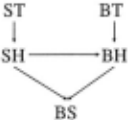
Figure 1 shows the causal diagram of a model of the story (the background variables, as well as the functional relation ship between variables should be obvious in this story, as well as the others, so will not be explicated). BT (ST) represents Billy (Suzy) throwing BH (SH) represents Billy's (Suzy's) rock hitting the bottle, and BS stands for the bottle shattering. Billy throwing is sufficient to cause the bottle to shatter, but it doesn't actually participate in the causal process that made the bottle shatter. Suzy's action preempted Billy's. We ex pect not only sufficiency of the cause, but that in some sense, the event actually participates in the causal process. Defining this notion has been one of the primary difficulties in talking about actual cause. The following two definitions formalize these notions in a way that avoids the problems associated with previous approaches.
Definition 4 Let Z be the children of X in the context dia gram ofu, and let Y be some non-empty subset ofZ. Let W be the intersection of the descendants ofX (including X) and the ancestors ofY (excluding Y) . Then event xy is a child of event x in context u ifW ~ X .
A child event can be thought of as a next step in an unfolding causal process. The criteria that W ~ X is merely to enforce the intuition that before a variable takes on a value, its direct causes must be fixed. That is, a new value can not be added, if the relevant parents have not already been included.
2 Note that this definition differs from the definition for suffi ciency presented in [Pearl, 2000] . That definition was used for a different purpose, and is not appropriate in this context. It is more closely related to, although distinct from the notion of sustenance [Pearl, 2000].
Definition 5 An event xis a strongly sufficient cause of effect cp in context u if either of the following conditions hold:
- For all instantiations z ofZ = V \ X , cpxz(u)
- x is a sufficient cause of cp and there exists some child event y of x which is a strongly sufficient cause of cp in context u
Effectively, what we require is that the event be sufficient for the effect, and that as the causal process progresses from the event, the sufficiency is maintained. This prevents events that are preempted from being strongly sufficient For exam ple, while {BT=T} is sufficient for {BS=T}, the only child event, {BT=T,BH=F} is not, so the event is not strongly suf ficient. Suzy throwing, on the other hand, is strongly suf ficient, witnessed by the sequence {ST=T}, {ST=T,SH=T}, {ST=T,SH=T,BH=F}, {ST=T,SH=T,BH=F,BS=T}.
Strong sufficiency is the first of the two primary notions used to evaluate causality in specific situations. In fact, strong sufficiency by itself corresponds to one of the primary notions of causation. Strong sufficiency corresponds to our intuitions about physical causality. The cause sets in motion a chain of events capable of bringing about the effect. Intuitively, we expect causation to be transitive. If x causes y and y causes z, we expect x to cause z. 3 It is not hard to see that strong sufficiency meets that expectation. In fact, strong sufficiency turns out to be the only transitive relation among our defini tions of cause.
The other primary consideration when testing actual causality is the notion of consequentiality. In addition to par ticipating in the causal process, we often require that an event be in some sense consequential in order to be considered a cause. That consideration motivates the following definition.
Definition 6 Let Z be the nondescendants ofX in the context diagram of u. Then, an event x is potentially consequential with respect to effect cp in context u if for some instantia tions x' ofX, and z ofZ, <pxz(u) and · cpx·z(u). Event x is actually consequential with respect to effect cp if for some instantiation x' of X, ·cpx· ( u).
Like strong sufficiency, actual consequentiality alone is a common criteria for causation. For example, in the execution example from Section 4 the choice of lethal injection was not considered a cause of his death precisely because it was not consequential. If instead the gun had not been loaded, which would make the decision consequential, we would consider it a cause. Note that a consequential event necessarily par ticipates in the actual causal process. That is, for every actu ally consequential event, there is a minimal strongly sufficient event that contains some member of the consequential event.
Potential consequentiality on the other hand is not of it self enough for an event to be considered a cause. However, combining it with strong sufficiency produces a very common causal criteria.
3 In fact, this intuition is so strong that some theories of causation start with the transitivity of cause as a starting point [Lewis, 1986].
| Test Strong | Test Consequentiality | ||
|---|---|---|---|
| Sufficiency | Actual | Potential | No |
| Yes | Strong | Sustaining | Strongly Sufficient |
| No | Consequential | - | - |
Definition 7 An event x sustains effect cp in context u ifx is strongly sufficient and potentially consequential for cp.
The notion of sustenance defined here is a modified version of the one that appeared in [Pearl, 2000]. It differs in two ways. First, it requires strong sufficiency as opposed to merely suf ficiency. Second, it fixes the variables W, against which x must be tested, while the previous definition has W as one of the parameters.
Sustenance is a very commonly applied criteria for cau sation. Most of the examples in [Halpern & Pearl, 2001 a] which were deemed causes correspond to our notion of sus taining cause. In the forrest fire example in Section 4, arsonist 1 was considered a cause of the fire because it sustained the forrest fire.
A more restrictive causal criteria is also sometimes useful.
Definition 8 An event x is a strong cause of cp in context u if x is a strongly sufficient and actually consequential cause of 'P·
A strong cause can be thought of as a complete explication of why the effect occurred.
Often we talk about an event helping to cause an event even though it is neither consequential nor sufficient. It is instead part of some cause. That consideration motivates the follow ing definition.
Definition 9 An event xy (y may be empty) is a contributory cause of effect cp in context u if xis potentially consequential, and for some event z, xz is a minimal sustaining cause ofcp.
Contributory causation is the closest in spirit to the ASC defi nition. If we insist on minimality, it reduces to singletons just as that definition does. Additionally, in all but one example included in [Halpern & Pearl, 2001a], contributory causation matches the pronouncements of the ASC definition. We con sider that example among others in the next section.
6 Examples
The single example presented in [Halpern & Pearl, 2001a] where the ASC definition differs from our definition of con tributory causation comes from the following story (along with some commentary), quoted from [Hall, 2002]:
You are standing at a switch in the railroad tracks. Here comes the train: If you flip the switch, you'll send the train down the left-hand track; if you leave where it is, the train will follow the right hand track. Either way, the train will arrive at the same point, since the tracks reconverge up ahead. Your action is not among the causes of this ar rival; it merely helps to determine how the arrival is brought about (namely, via the left-hand track, or via the right-hand track).
Two models which produced different causal pronounce ments were given, demonstrating the impact that model choice has on the determination of causation. The model that classified it as a cause is the one we are interested in. Figure 2 shows the model. F represents the state of the switch, LT (RT) whether the train goes down the left (right) track, and A rep resents whether the train arrives. The justification given was
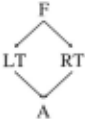
that under normal circumstances, we may not call it a cause, but if something abnormal were to happen (for example, one of the tracks malfunctions, or is destroyed) then the action would be a cause. Our new definitions say that flipping the switch is a strongly sufficient cause ( In the words of Hall it "helps to determine how the arrival is brought about"), but it is not even potentially consequential, so is not a contributory cause. This seems a more satisfactory result.
Unlike the ASC definition, these definitions do not always reduce to singleton causes even if minimality is enforced. Additionally, the different criteria produce causes that cor respond to different ways that people think about cause.
For example, consider a situation where 5 people vote re garding a ballot measure. The votes are tallied, and the mea sure passes if 3 or more vote for it. The associated diagram appears in Figure 3. Suppose that 4 vote for the measure, and 1 votes against. According to the ASC definition, each in-
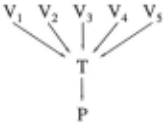
dividual who votes for the measure is an actual cause of the measure passing. In the causal beam approach, nothing qual ifies as a cause of the measure passing. In this approach, it depends what type of cause we are considering.
Three votes for the measure constitute a strong cause of the measure passing, while two do not. This corresponds to our notion that a majority of the votes is required to cause it to pass.
Two votes for the measure constitute a consequential cause. Changing those votes to vote against the measure would make the measure fail. This corresponds to the way we often talk about causes in elections. Often election outcomes are at tributed to the voting behavior of some minority of the elec torate (in U.S. politics these include "Reagan Democrats", "soccer moms", "angry white men", "African Americans", etc). While they are far from sufficient to win an election, we say that they caused the election result because if they had voted significantly differently the outcome of the election would have been different. On the other hand, most people understand that in the vast majority of elections their single vote did not cause the outcome. This is reflected in our defi nitions by the fact that none of the criteria yield a single voter as a cause in this situation. A single vote for the measure is a contributory cause however, as one would expect.
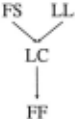
[Halpern & Pearl, 200la] provides a number of examples that have proved problematic for other methods. As most of the examples correspond either to issues of sustenance or con sequentiality4 (and with the exception of the train example considered above, all of the positive examples are contribu tory causes, and the negative examples are not), we will not review them all here. We would like to revisit one exam ple that was considered troublesome. The first version of the story is as follows: A machine severed Fred's finger while he was at work. He was rushed to the hospital and it was reat tached. A month later his finger worked just as before. We would of course not consider getting his finger cut off a cause of it being fully function later (because it is not consequen tial). Now, suppose we add another component to the story: It is possible that Larry the loanshark may be waiting outside for Fred, so that he can cut off his finger to make an example of him for not paying his loan promptly. If Larry cuts off the fin ger, he will destroy it so that it can not be reattached. If Fred severs his finger at the factory, he will be rushed to the hos pital, so Larry will not have an opportunity to do it himself. The causal diagram appears in Figure 4. Now, consider the
FF
Figure 4: Finger severing example. FS represents severing his finger. LL represents whether Larry is lurking. LC represents whether Larry cuts off his finger and FF represents whether his finger is fully functional
situation in which Larry turns out not to be waiting outside, and Fred does sever his finger. Was Fred cutting his finger off a cause of his finger being fully functional the next month? According to the ASC definition it is. This was considered disturbing because adding a provision for a contingency that did not occur changed the the event from noncause to cause.
4 In fact, most of the difficult examples play off of the conflict ing interpretation of cause between sustenance and consequentiality. That is, the event in question is typically either consequential or sus taining, but not both.
In light of our new definitions, we do not see that particular consideration as a problem. According to our definition, it again depends on what you are looking for. It is sustaining, but it is not consequential. Typically, when we are testing if an event caused something to remain unchanged, we are look ing for a consequential cause. That is clearly the case in this example. However, it is still reasonable to say that cutting off his finger at the factory was a sustaining cause, because that event makes certain the effect, regardless of what Larry does or does not do.
Our definitions also handle correctly the examples in [Hop kins & Pearl, 2003] avoiding the problems of ASC, but be cause of space limitations we will not review them all here. We will consider a single example of the problem to demon strate how these definitions avoid it. Consider the following story: Before an execution, the captain loads one of the guns of the two members of his firing squad, putting a blank in the other gun. Both gunmen then fire simultaneously and the prisoner dies. In the current situation, the captain put the bullet in the gun of gunman 1, and both men shoot. The model consists of the loader, and the two gunmen as direct causes of the the variable representing whether the prisoner is alive. Now, we ask if gunman 2 shooting caused the pris oner's death. According to the ASC definition, it did. Gun man 2 did not cause the prisoner's death according to any of our definitions of cause. It is clearly not consequential, nor sufficient, so it can not be a cause. It is not a contributory cause either because it is not a member of any minimal suffi cient cause. According to these definitions, gunman I shoot ing is a consequential cause, gunman 1 shooting and the cap tain loading his gun is a strong cause, and gunman 1 shooting and the captain loading his gun are both contributory causes.
7 Explanations
If we have a probability distribution quantifying our uncer tainty about what context will actually occur, we can use that distribution, combined with our model to produce explana tions for an observed effect.
Causation forms an integral part of evaluating explanations (see [Chajewska & Halpern, 1997; Pearl, 2000; Halpern & Pearl, 2001b] for critiques of methods that ignore causal con siderations when producing causes). In spirit, we agree with the intuitive notion of explanation put forth in [Halpern & Pearl, 2001b]. That is, an explanation is fundamentally just a hypothesized event which if true would be a possible cause of the observed phenomenon. Our new view of actUal causation, however, makes the particulars somewhat different. Our def initions of actual cause form the basis for evaluating possible explanations. We allow any instantiation of endogenous vari ables to be an explanation and compare them based on how well they explain the effect. According to our view, there are different types of explanation, just as there are different types of causes. Which type of explanation to choose depends on its intended purpose. This is in contrast to the approach using ASC as the basis for causal explanation. We believe that this approach provides more flexibility and is more general than ASC based explanations.
By way of example, consider the following situation: We have a circuit consisting of a single 3 input parity gate, with inputs X1, X2 and X3 , and output Y (i.e. Y = 1 when an odd number of the inputs are 1). Each input has an associ ated background variable, independent of the others, where Xj = Uj and Pr(Uj = 1) = 1/(j + 2). So, typically Y = 0 and Xj = 0. Now, suppose that we observe that Y = 1, and we want an explanation in terms of the X vari ables. The first question is what constitutes an explanation (or even a partial explanation in the ASC definition). Ac cording to the ASC based definition, the only possible expla nations (or partial explanations) are singletons. 5 Now, how can we compare between them? The ASC approach provides three measures of the quality of an instantiation x as an ex planation of effect <pin light of evidence e (which must entail cp). The first, named goodness is Pr(x causes cplxe). 6 The second, the posterior probability is Pr(xle). The third, ex planatory power is Pr(x causes cplx). The goodness of all explanations in this example are 1. Also, the explanatory power, Pr(x causes ylx) = Pr(xylx) since every instanti ation is a weak cause according to the ASC definition. Ta ble 2 shows the explanatory power and posterior probability of the different possible explanations. It is not clear how to choose between them in this case. One thing to notice about this example is that every variable is consequential in every context, so notions of consequential causation (or by exten sion, contributory causation) become less interesting. We would argue that in this case, what we are really interested in is sustenance. Our definitions allow that to be consid ered easily. For a particular instantiation we can calculate the probabilities Pr(x sustains cple), Pr(x strongly causes cple), Pr(x is a consequential cause of cple) from the model and the probability distribution over the background variables. For a particular causal criteria c(x, <p, u), the probability that xis a cause of <p given e using criteria c is just
| Explanation | Posterior | Explanatory Power | ||
|---|---|---|---|---|
| Variable | =0 | =1 | =0 | =1 |
| x1 | .52 | .48 | .35 | .65 |
| x2 | .67 | .33 | .40 | .60 |
| x3 | .74 | .26 | .42 | .58 |
The probability of causation can then be used as the mea sure of explanation quality. In our circuit example, for exam ple, Pr(X1 = 1, X2 = 0, X3 = 0 sustains Y = 1IY = 1) = .444, which is the maximal probability for sustenance. This explanation (which is not allowed in the ASC version) seems more satisfying than any of the single variable explanations.
5 Note that this is not always the case. This example was specifi cally crafted to exhibit such behavior.
6 ln the ASC definition of explanation, it "causes" would mean is a weak cause. We write it in a general form, because these measures are applicable to the new method as well
This is not to say that the measures used in [Halpern & Pearl, 200lb] are not useful. In fact they can be very useful. We simply note that our definitions allow a further analysis that is useful in other situations. They prove especially useful when we are looking for a sufficient or sustaining explana tions. Because our definitions can handle different notions of cause, the explanations they produce can be more informa tive than the explanations formed when using the methods in [Halpern & Pearl, 200lb], where they are restricted to one weak form of cause.
8 Conclusion
We demonstrated that the intuitive choice of causal criteria is subjective, and is influenced psychological factors not repre sentable in a causal model. The criteria, once chosen however can be evaluated from the information contained in the causal model. We presented new criteria covering the different no tions of causation. Fundamental among these is the defini tion of strong sufficiency, which provides a simple and in tuitively satisfying definition for actually participating in the active causal process that generated the effect. These defini tions avoid the problems of previous attempts, and allow for a more refined discussion of actual causality. Additionally, they provide a foundation for evaluating explanations, which proves to be more satisfactory than previous attempts to use functional causal models for explanation.
Acknowledgment
This work has been partially supported by MURI grant NOOO 14-00-1-0617
@inproceedings{ijcai2003p22,
  title     = {Causes and Explanations Revisited},
  author    = {Park, James D.},
  booktitle = {Proceedings of the Eighteenth International Joint Conference on
               Artificial Intelligence, {IJCAI-03}},
  publisher = {International Joint Conferences on Artificial Intelligence},
  editor    = {Georg Gottlob and Toby Walsh},
  pages     = {154--161},
  year      = {2003},
  url       = {https://ijcai.org/proceedings/2003/22},
}
TY - CPAPER TI - Causes and Explanations Revisited AU - Park, James D. T2 - Proceedings of the Eighteenth International Joint Conference on Artificial Intelligence, IJCAI-03 PB - International Joint Conferences on Artificial Intelligence PY - 2003 SP - 154 EP - 161 UR - https://ijcai.org/proceedings/2003/22 ER -Copied
Machine-readable versions of this paper, for tools and AI agents:





