
An Endorsement-based Approach to Student Modeling for Planner-controlled Tutors
Proceedings of the Twelfth International Joint Conference on Artificial Intelligence. Principles of AI Applications. Pages 1100-1107.
© 1991 International Joint Conferences on Artificial Intelligence
Abstract
This paper describes an approach to student modeling for intelligent tutoring systems based on an explicit representation of the tutor's beliefs about the student and the arguments for and against those beliefs (called endorsements). A lexicographic comparison of arguments, sorted according to evidence reliability, provides a principled means of determining those beliefs that are considered true, false, or uncertain. Each of these beliefs is ultimately justified by underlying assessment data. The endorsement-based approach to student model ing is particularly appropriate for tutors controlled by instructional planners. These tutors place greater demands on a student model than opportunistic tutors. Numeric calculi approaches are less well-suited because it is difficult to correctly assign numbers for evidence reliability and rule plausibility. It may also be difficult to interpret final results and provide suitable combining functions . When numeric measures of uncertainty are used, arbitrary numeric thresholds are often required for planning decisions. Such an approach is inappropriate when robust context-sensitive planning decisions must be made. Instead, the ability to examine beliefs and justifications is required. This paper presents a TMS-based implementation of the endorsement-based approach to student modeling, discusses the advantages of this approach for plannercontrolled tutors, and compares this approach to alternatives.
- Barr, A.; Beard, M; and Atkinson, R. The Computer as a Tutorial Laboratory. International Journal of Man-Machine Studies (8):567-596. 1976.
- Bonissone, 87
- Bonissone, P. Plausible Reasoning. Appears in Encyclopedia of Artificial Intelliience, Volume 1. pp. 854 -863.
- Edited by Stuart C. Shapiro. John Wiley & Sons, Inc. 1987.
- Burton, 82
- Burton, R. R. Diagnosing Bugs in a Simple Procedural Skill. Appears in Intelli~ent Tutorin~ Systems, pp. 157 -183.
- Edited by D. Sleeman and J. S. Brown. Academic Press. London. 1982.
- Burton and Brown, 82]
- Burton, R. R. and Brown, J. S. An Investigation of Computer Coaching for Informal Learning Activities. Appears in Intelliient TutorinK Systems, pp. 79-98. Edited by D. Sleeman and J. S. Brown. Academic Press. London. 1982.
- Carr, 77]
- Carr, B. Wusor-11: a Computer-Aided Instruction Program with Student Modeling Capabilities. AI Lab Memo 417 (Logo Memo 45). Massachusetts Institute of Technology, Cambridge, Massachusetts. 1977.
- Carr and Goldstein, 77]
- Carr, B. and Goldstein, I. P. Overlays: a Theory of Modeling for Computer-aided Instruction. Technical Report AI Lab Memo 406, Massachusetts Institute of Technology. 1977.
- Clancey, 87
- Clancey, W. J. Knowledie-based TutorinK. The MIT Press. Cambridge, Massachusetts. 1987.
- Cohen, 85]
- Cohen, Paul R. Heuristic ReasoninK about Uncertainty: An Artificial Iotelliience Approach. Pitman. London, England. 1985.
- De Kleer et al., 89]
- De Kleer, J.; Forbus, K.; and McAllester, D. Truth Maintenance Systems. (Notes for tutorial SAS.) Eleventh International Joint Conference on Artificial Intelligence in 1989. Notes available from AAAI. Menlo Park, California. 1989.
- Derry et al., 89]
- Derry, S.; Hawkes, L. W.; Kegelmann, H.; and Holmes, D. Fuzzy Remedies to Problems in Diagnostic Modeling. Proceedings of the 4th International Conference on AI and Education. pp. 81 - 85. lOS. 1989.
- Fum et al., 90] Fum, Danilo; Giangrandi, Paolo; Tasso, Carlo. Backward Model Tracing: An Explanation-based Approach for Reconstructing Student Reasoning. Proceedings Eight National Conference on Artificial Intelligence. pp. 426-433. 1990.
- Guha and Lenat, 90]
- Guha, R. V.; and Lenat, D. B. Cyc: A Mid-term Report. AI Magazine 11:3, pp. 32 -59. 1990.
- Huang, 90]
- Huang, Xueming. Student Model Revision: Evolution and Revolution. CSCSI-90. 1990.
- Johnson, 86
- Johnson, W. L. Intention-based DiaKnosis of Novice ProiramminK Errors. Research Notes in Artificial Intelligence.
- Morgan Kaufmann. Los Altos, California (copublished with Pitman, London). 1986.
- Kimball, 82
- Kimball, R. A Self-Improving Tutor for Symbolic Integration. Appears in lntelliient TutorinK Systems. Edited by D. Sleeman and J. S. Brown. Academic Press. London. 1982.
- Langley et al., 84]
- Langley, P; Ohlsson, S; and Sage, S. Machine Learning Approach to Student Modeling. Technical Report CMU-RI-TR-84-7. Robotics Institute, 1106 Principles of AI Applications Carnegie-Mellon University. Pittsburgh, Pennsylvania. 1984.
- Murray, 90
- Murray, William R. A Blackboard-based Dynamic Instructional Planner. Proceedings Eighth National Conference on Artificial Intelligence. pp. 434- 441. 1990.
- Peachey and McCalla, 86]
- Peachey, D. R. and McCalla, G. I. Using Planning Techniques in Intelligent Tutoring Systems. International Journal of Man-Machine Studies 24:77-98. 1986.
- Rich, 79]
- Rich, E. User Modeling via Stereotypes. Cog Sci 3:355 -366. 1979.
- Shafer, 76
- Shafer, G. A Mathematical Theory of Evidence. Princeton University Press. Princeton, New Jersey. 1976.
- Shortliffe and Buchanan, 75]
- Shortliffe, E. H. and Buchanan, B. G. A Model of Inexact Reasoning in Medicine. Mathematical Bioscience 23:351 -379. 1975.
- Sleeman, 83]
- Sleeman, D. Inferring Student Models for Intelligent Computer-Aided Instruction. Machine LeaminK: An Artificial Inte1liience Approach. volume ~ pp 483 -510.
- Stansfield, 76
- Stansfield, J. C.; Carr, B.; and Goldstein, I. P. Wumpus Advisor I: a First Implementation of a Program that Tutors Logical and Probabilitistic Reasoning Skills. Technical Report AI Lab Memo 381, Massachusetts Institute of Technology, 1976.
- Towne, 89
- Towne, D. M.; Munro, A.; Pizzini, Q.A., Surmon, D.S., and Wogulis, J. ONR Final Report: Intelligent Maintenance Training Technology. Technical report number 113, Behavioral Technology Laboratories. University of Southern California. 1989.
- Wenger, 87]
- Wenger, Etienne. Artificial lntelliGnce and TutoriDK Systems. 1987. Morgan Kaufmann Publishers, Inc. Los Altos, California.
- Woolf, 84]
- Woolf, Beverly P. Context Dependent Planning in a Machine Tutor. Ph.D. dissertation. University of Massachusetts. 1984.
- Zadeh, 78]
- Zadeh, L. A. Fuzzy Sets as a Basis for a Theory of Possibility. Fuzzy Sets Sys. 1:3-28. 1978.
References were extracted automatically from the PDF and may contain errors.
Full text extracted automatically from the PDF; figures, tables and equations may differ. The PDF is the version of record.
1. Introduction - limitations of numeric student models
This paper proposes a symbolic (i.e., non-numeric) means of coping with uncertainty in student modeling. Rather than represent the uncertainty of the tutor's beliefs with numeric degrees of confidence the student model explicitly records arguments (called endorsements in [Cohen, 85]) for and against each belief. No interpretation of numbers or use of numeric combining functions is required. Instead, the different kinds of arguments are compared based on the reliability of their evidence to decide if belief or disbelief in a proposition is justified.
* This research was sponsored by the Armstrong Laboratory, Human Resource Directorate (formerly AFHRL/IDI), in cooperation with NASA under subcontract #063, RICIS research activity #ET.24 (NASA Cooperative Agreement NCC9-16).
Previous research on the Blackboard Instructional Planner [Murray, 90], a planner-controlled tutor for teaching troubleshooting for a complex hydraulic-electronic mechanical device, illustrated some of the shortcomings of numeric student models. That research motivates the research presented here. Before reviewing the earlier research, we briefly consider the role and demands placed on the student model in both planning and non-planning (i.e., opportunistic) tutors.
In opportunistic tutors the student model may be used to decide what skills to address (e.g., WEST [Burton and Brown, 82]) or what topics to explore (e.g., MENO TUTOR [Woolf, 84]). Other uses are problem selection (e.g., BIP [Barr, 76]) or hint generation (e.g., WUSOR-11 [Carr, 77]). Frequently, diagnostic student modeling is used to provide a detailed model of a student's problem solving and to evaluate its correctness (e.g., PROUST [Johnson, 86]).
The student model for a planner-controlled tutor must not only address these issues but others. A sophisticated student model is needed to allow customized plan generation based on an initial assessment of the student. Later it is needed to track and help revise the plan as instruction is delivered. It must interpret different kinds of assessments (student data) such as the student's background, any student self assessment, test questions, any instructor assessment, student-initiated questions, and student problem-solving actions. Typically, the student model for opportunistic intelligent tutoring systems will handle a much more limited range of assessment data and have fewer responsibilities. For example, those tutors that act as problem-solving monitors (the most common paradigm) predominantly focus on assessing problem-solving actions for hint generation and future problem selection (e.g., IMTS [Towne et al., 89]).
The student model of the Blackboard Instructional Planner illustrates some of the shortcomings of numeric student models and how they can limit tutor capabilities. That student model is an overlay [Carr and Goldstein, 77] of a semantic net representation of domain concepts. Associated with each concept is a number representing the tutor's confidence that the student has acquired the concept. The numbers are initialized from a pre-instruction questionnaire according to inferred cognitive stereotypes [Rich, 79] and later are adjusted according to the student's test and problem solving performance.
With this numeric approach the tutor tended to either replan at the wrong times or not replan when it should. The problem was that planning decisions could only rely on these numbers, which were compared to threshold values. Replanning can easily go awry because of the difficulty of determining precisely how to adjust the numeric weights to integrate the different kinds of assessment data, and because of the arbitrary nature of the three planning thresholds that were used. One threshold measured when a concept was learned, another when it was forgotten, and a third when an instructional activity was making insufficient progress. When the thresholds and updates were adjusted conservatively the planner tended not to replan when it should. When they were adjusted less conservatively the planner tended to replan when it should not.
These problems led to the development of an endorsement-based student model (ESM). The remainder of this paper describes the endorsement-based approach, compares it to alternatives, and argues that it is particularly appropriate for planner-controlled tutors.
2. The endorsement-based approach to student modeling
The key aspects of the ESM are as follows:
1. Explicit representation of tutor beliefs and their endorsements-propositions represent the tutor's beliefs about the student's skills along with arguments for and against those beliefs.
2. Inheritance of endorsements-an ISA hierarchy represents the subject matter. The ESM uses the hierarchy to represent the degree to which a student has generalized a skill. Endorsements for a generic skill (a skill that can be applied to all members of a class) are inherited down the hierarchy towards subclasses (or instances) representing more specific skills. Endorsements against a generic skill are propagated up towards superclasses representing more general skills.
3. Wide variety of assessments-several different kinds of information, varying both in specificity, source, and reliability are incorporated.
4. Lexicographic comparison of arguments endorsements are sorted into equivalence classes according to reliability. This ordering allows lexicographic comparison of pro and con arguments. The result of the comparison is a label for each belief - believed-true, believed-false, unknown (no data), or uncertain - and an indication of the decisive argument, if any, that indicates how well justified a belief is.
5. Consistency between endorsements and labels--the student model explicitly represents the justification for each endorsement and tutor belief. All justifications are ultimately grounded in assessments (student data). If endorsements become invalid or labels change then consistency is maintained between derived endorsements and any labels that depend on them.
These features are best illustrated by examples.
2.1 Examples of endorsement-based student modeling
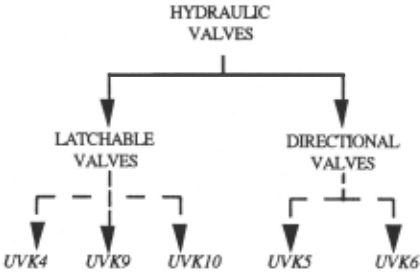
This section presents a scenario demonstrating the endorsement-based approach. Assume the student is learning to troubleshoot a device and must first learn how the device and its individual parts operate. Figure 1 shows a class hierarchy of parts of the device. Classes of parts are connected to subclasses by solid arrows. These in turn are connected to part instances by dashed arrows. The tutor's goal is to ensure that the student understands the operation of all of the device's hydraulic valves. This goal (a generic skill) is represented by the proposition SK(op, hydraulic valves).
' l
'
' '
SK stands for "student knows" (a notation adopted from [Peachey and McCalla, 86]). The general form is SK(skill, node) where node is either a class or instance. SK(op, UVK4) is believed true when the tutor believes the student understands the operation of the UVK4 valve. SK(op, latchable valves) is believed true when the tutor believes the student understands the operation of all the latchable valves: UVK4, UVK9, and UVK10. So, if SK(op, UVK4) was believed false then SK(op, latchable valves) would also have to be believed false.
The scenario below illustrates how an endorsement-based student modeling system can cope with several different kinds of assessments, can infer new beliefs based on inheritance using the links in Figure 1, and can retract beliefs that are no longer justified. It also shows how pro and con arguments are compared.
| Event | UVK4 | UVK9 + | UVKlO | Latch | Hydra | |||||
|---|---|---|---|---|---|---|---|---|---|---|
| + | - | - | + | - | + | - | + | - | ||
| 1. Defaults | D | D | D | |||||||
| 2. Self-assess | D | D | D | ST | ||||||
| 3. Inherit beliefs | IB | D | IB | D | IB | D | ST | |||
| 4. T/F question | m | D T/F | IB | D | IB | D | ST | |||
| 5. M-C question | m | D T/F | ffiM-C | D | IB | D | ST | |||
| 6. S/A question | m | D T/F | ffiM-C | D | m | D SIA | ST | |||
| 7. Data trend | m | D T/F | ffiM-C | D | m | D SIA | sr | TR | ||
| 8. Retract inherited | m | D T/F | mM-C | D | m | D S/A | sr | TR | ||
| 9. Propagate disbelief | D T/F | M-C | D | D S/A | sr | TR | PR | |||
| 10. Tutor presentation | TU | D T/F | M-C | D | D S/A | sr | TR | PR | ||
| 11. Retract arguments | TU | I> +IF | M-C | D | D SIA | ST | TR | PR | ||
| 12. Inherit as before | TUm | M-C IB | D | m | D SIA | ST | ||||
| 13. Tutor presentation | TUm | M-C m TU | D | m | D SIA | ST | ||||
| 14. Retract arguments | TU ffi | M-C m TU | I> | m | D SIA | ST | ||||
| 15. Tutor presentation | TU IB | M-C m TU | m TU | D S!A | sr | |||||
| 16. Retract arguments | TU IB | M-C m TU | m TU | I>SIA | sr | |||||
| 17. Label trend | TUm | M-C m TU | m TU | sr LT | ||||||
| 18. Label trend | TU ffi | M-C m TU | m TU | sr LT | LT | |||||
Table 1 summarizes the scenario. The top row lists the labels of the five left-most nodes in Figure 1. These nodes are the only ones whose labels change in this scenario. In the top row "Latch" and "Hydra" stand for "Latchable Valves" and "Hydraulic Valves" respectively. Below each node are two columns marked + and -. For each node x all pro arguments for SK(op, x) appear in the+ column and all con arguments appear in the - column. The letters are abbreviations for different kinds of arguments. For example, D stands for a default belief. The other kinds of arguments and their abbreviations are shown in Table 2; they will be explained as the scenario unfolds. Boldface arguments are the deciding arguments in determining the label of propositions, i.e., they cast the deciding vote for or against a proposition. If an argument is in boldface underneath a- column with label node then SK(op, node) is believed-false. Similarly, a boldface argument in the + column indicates a label of believed-true.
Initially the tutor assumes that the student does not know how the valves operate. These default assumptions are indicated by the three Ds in line 1. Since there are no arguments to oppose these, each node 1 is labeled believed false. The remaining two nodes receive the labels unknown as no arguments are recorded for them yet
Line 2 shows the student's self-assessment (ST) of his knowledge of the operation of latchable valves. This is recorded as a pro argument under Latch as the student claims to understand how this kind of valve operates. The node Latch now receives the label believed-true.
1 Actually for each node the predicate SK(op,node) is assigned the label. For succinctness, nodes are referred to instead of their corresponding SK predicates.
Line 3 represents three new endorsements inferred by inheritance. As shown in Figure 1, if the student understands how latchable valves operate then he should understand how UVK4, UVK9, and UVKIO operate. Each new inherited belief (18) overrides the previous default (D) beliefs, changing the labels from believed-false to believed-true.
As shown in Table 2, each endorsement is classified into an endorsement reliability class according to the kind of endorsement and whether it is positive or negative. Table 2 lists the different kinds of endorsements used in the scenario, in order from most credible to least credible. Consistent data trends (TR) are considered the most reliable, followed by student claims of ignorance (ST-), and then specific counterexamples to generic skills (PR-). Tutor presentations are considered the next most reliable evidence (TU+ ), followed by arguments to label parent nodes the same as the majority of their children (L T). A student's claim to know some skill (ST +) is considered less reliable, but answers to individual questions are even more suspect. However, a given short answer question (S/A) is considered more reliable than a multiple choice question (M-C), which in turn is considered more reliable than a true false question (TIF). The weakest beliefs are those based on inheritance (ffi+) or defaults (D).
Continuing the scenario, the tutor asks one question on each latchable valve in lines 4, 5, and 6. Only the second question is answered correctly. As arguments based on test data are more strongly believed than inherited beliefs or default beliefs the labels for UVK4 and UVK10 are now believed-false once more.
A new kind of argument, called a data trend, is inferred by the student model from these three questions. A data trend is only inferred based on test questions or other kinds of student performance, and only when a clear majority of the data is pro or con. A data trend is considered the most reliable kind of endorsment since it is based on multiple snapshots of student performance. Individual questions (T/F, M-C, or S/A) are more liable to noise-lucky guesses, confusion, typos, etc.
A negative data trend is added as a con argument to the node Latch in line 7 as two out of three questions on latchable valves were missed. It overrides the student's self assessment causing the label of Latch to become believed false. The previous inherited beliefs, which depended on Latch being labeled believed-true, are now retracted as shown in line 8 by a strike through each retracted belief (m).
If the student does not understand how latchable valves operate then he cannot understand how hydraulic valves operate. That is why a PR (for propagated disbelief) argument is added to the minus (con) column under Hydra in line 9. That causes Hydra to become labeled believed false.
Now the tutor reviews the operation of the valves. Lines 10, 13, and 15 indicate these tutor presentations. After a tutor presentation prior test results or default beliefs indicating lack of the knowledge covered are no longer necessarily valid and are retracted. Such retractions occur in lines 11, 14, and 16. In line 11 the T/F argument against UVK4 is retracted. The data trend argument (TR) against Latch depends on that T/F argument, so it too is retracted and the label for Latch is recomputed. It becomes believed-true again, which in turn causes the inherited endorsements (IB) for UVK4, UVK9, and UVK10 to be reintroduced in line 12.
After the final presentation a different kind of trend is inferred called a label trend. The earlier data trend depended on test data. This second kind of trend reflects a trend among the labels (not data) of the children of a node. The labels must be justified by arguments that are at least as strong as tutor presentations, which is why no label trend was inferred from the defaults in line 1. Lines 17 and 18 show label trends added to Latch and Hydra, assuming that Directional Valves (see Figure 1) was already labeled believed-true because of a sufficiently strong argument.
The label trend endorsement (L T) for Hydra causes SK(op, hydraulic valves) to become labeled believed true. This completes the scenario as the tutor's goal is now achieved.
Note that the strength of a belief can be measured by the reliability of its deciding argument. For example, belief that the student knows how UVK9 operates increases from line 3 (IB) to line 5 (M-C) to line 13 (TU) as shown in Tables 1 and 2. If the planner had wanted stronger justification before believing its goal was achieved, it could have required a stronger deciding argument for SK(op, hydraulic valves), such as an argument of the data trend class. In that case further questioning of the student after the tutor presentation would be required to gather such data.
The key points illustrated in this scenario are listed below:
1. Many different kinds of assessments are handled in the ESM-three different kinds of test questions are used along with default beliefs, inherited beliefs, student self-assessment, and changes inferred from tutor presentations.
- No numeric degrees of belief are required for evidence-the ordering of endorsements according to their reliability is sufficient.
- No numeric combining functions are required-all arguments are retained unless later retracted. Unlike numeric approaches, each argument's contribution to a label can always be determined.
- Inferred beliefs reflect the inheritance hierarchy of the subject matter-the inheritance in Figure 1 is enforced by the ESM. The ESM uses the class hierarchy to represent the extent to which the student has generalized a skill.
| Class | Svmbol | Description |
|---|---|---|
| Data trends | 1R | Consistent trends in student performance |
| Negative student self-assessment | ST- | The student says he does not know something |
| Propagated disbelief | PR- | Argue that generic skill x cannot be known for class y as it is not known for class (or instance) z and v includes z |
| Tutor presentation | TU+ | Argue that a skill is known as the tutor has covered it |
| Label trends | LT | Assign class X the same label as most of its children |
| Positive student self-assessment | ST+ | The student say_s he knows something |
| Short-answer | S/A | The student answers a single short-answer question |
| Multiple-choice | M-C | The student answers a single multiple-choice auestion |
| True-false | T/F | The student answers a single true or false question |
| Inherited belief | ill+ | Ar2ue that class (or instance) v is known as its superior class x is known |
| Default belief | D | Default belief |
The lexicographic comparison routine was demonstrated in the scenario only with simple cases. In general, an arbitrary number of arguments can be compared. They are first sorted into equivalence classes of reliability, such as those shown in Table 2.2 Then, starting with the most reliable class, the pro and con arguments in that class are paired. If one or more pro arguments are left over then the label for an SK proposition in question will be believed true. If one or more con arguments are left over it will be believed-false. If all arguments can be paired then the next most reliable class is considered to break the tie. If a tie is never broken then the label is uncertain. If there are no arguments at all it is unknown.
2.2 Implementation
The ESM is implemented in a layered fashion over a simple forward-chaining rule-based inference engine, assertional database, and justification-based truth maintentance system (JTMS). These were obtained from the documentation and code of De Kleer, Forbus, and McAllester [De Kleer et al., 89].
The role of the JTMS is to ensure consistency between inherited and propagated beliefs and those they depend on, and to notify the lexicographic comparison routines that ESM labels need to be recomputed when such beliefs are retracted or previous endorsements are un-OUTed (i.e., reintroduced). The assertional database stores propositions representing SK predicates, their ESM labels, and the pro and con arguments that justify the labels. Forward-chaining rules carry out the propagation and inheritance of endorsements and invoke the lexicographic comparison routines when new arguments should be considered.
3. Related work in student modeling and uncertain reasoning
Now we consider related work in student modeling and uncertain reasoning. Numeric and symbolic approaches to uncertainty are discussed for both ITS and non-ITS applications.
3.1 Numeric approaches
Possible numeric approaches to representing uncertainty include certainty factors [Shortliffe and Buchanan, 75], Dempster-Shafer theory [Shafer, 76], fuzzy logic [Zadeh, 78]. or use of Bayes' Rule. These approaches are discussed in [Bonissone, 87]. along with the following problems:
1. Inability to distinguish uncertainty from lack of evidence-if a single number is used to represent degrees of belief, then typically 0 will represent both a complete lack of data and uncertainty due to a balance of conflicting data.
2other kinds of assessments, evidence reliability classes, class orderings, and assessment to class mappings can be used in an ESM. Table 2 illustrates just one choice.
2. Normalizing pro and con evidence-if on the other hand two numbers are used so the distinction above can be made, then the amount of evidence for and against a belief may be normalized. This results in disproportionate weighting of a single piece of evidence that contradicts several other pieces of evidence.
- Difficulty of assigning numbers-all of these approaches require numbers to be assigned to indicate the reliability of each piece of evidence.
- Difficulty of interpreting numbers-with the exception of approaches based on Bayes' Rule, it can be hard to provide consistent and meaningful semantics to the numbers assigned to derived beliefs.
- Obscuring the source of derived beliefs-no records are maintained showing how numeric degrees of belief have been accumulated from different sources of evidence.
6. Arbitrary combining functions-there may be several consistent ways of combining conflicting data reflecting conservative, optimistic, or moderate viewpoints.
7. Stringent assumptions-Bayes' Rule can be simplified given strong requirements regarding the mutual independence of each piece of evidence and the exhaustivity and disjointness of the hypotheses. Unfortunately, these requirements, or the need for a large number of conditional probabilities (if the simplifying requirements are lifted), often render the approach impractical.
Formal approaches to handling uncertainty are infrequently used in intelligent tutoring systems, with some exceptions. Certainty factors have been used in GUIDON [Clancey, 87] but the initial assignment and subsequent updating within tutorial rules is somewhat arbitrary. A different approach, based on fuzzy logic, is being applied to the TAPS intelligent tutoring system [Derry et al., 89] to handle imprecision in measuring the correctness of student inputs.3
Frequency of use measures or parameter adjustment approaches, neither based on probability theory, are the most commonly used numeric approaches to uncertainty in ITS. WEST [Burton and Brown, 79] and WUMPUS [Stansfield, 76] rely on the frequency of use approach. They measure how often a skill was used compared to the numbers of times it could have been used. Examples of the parameter-adjustment approach include the Blackboard Instructional Planner (discussed earlier), Kimball's integration tutor [Kimball, 82], MENO-TUTOR [Woolf, 84]. and the user modeling system GRUNDY [Rich, 79].
3In contrast, there is no uncertainty in the assessments the ESM receives. Instead, there is uncertainty in deciding which tutor beliefs are justified when conflicting assessments are present.
3.2 Non-numeric approaches
Typical non-numeric symbolic student models used to represent student problem-solving strategies or knowledge include the following:
1. Procedural networks - such as BUGGY's [Burton, 82] procedural network to represent subtraction skills.
2. Rules and mal-rules- such as the rules of LMS [Sleeman, 83] representing correct and incorrect linear algebra simplifications.
3. Plan and bug libraries- such as the loop plans and bug recognizers of PROUST [Johnson, 86] used to understand Pascal programs.
4. Rule application heuristics - such as ACM's [Langley et al., 84] use of production rules to model subtraction skills. Rule application heuristics induced from student solutions allow ACM's rules to model student problem solving.
These student models go beyond overlays by representing incorrect beliefs a student may have. However, except for ACM's, they typically do not address issues of uncertainty other than by applying averaging or other statistical techniques to reduce the effects of noise in data [Wenger, 87]. The kind of knowledge they focus on is primarily the representation of subskills required to perform an algorithmic, procedural, or problem-solving task.
As mentioned earlier, the ESM is built over a truth maintenance system (TMS) to maintain consistency between endorsements and labels. In general, TMSs and nonmonotonic logics can be used to represent tutor assumptions about the student and detect contradictions that arise when tutor expectations do not match student performance (as in [Fum et al., 90]). The faulty assumptions can then be retracted and the consistency of the student model restored. [Huang, 90] adopts this kind of approach to enforce default cognitive stereotypes and switch stereotypes when expectations are contradicted.
The difficulty with TMSs (without extensions) are the restricted labels of TMS nodes. Due to frequently conflicting justifications for and against any particular belief about the student, the TMS will have to resolve or tolerate many contradictions. Resolving the contradictions may require too much student interrogation at an inappropriate time. Alternatively, the beliefs can just be considered unknown, but that is not much use to the planner.
Cohen first presented endorsement theory in a portfolio recommendation program called FOLIO [Cohen, 85]. That program weighed pro and con arguments for various investments and intermediate conclusions, such as whether a client would accept high risk investments, in making its recommendations.
CYC [Guha and Lenat, 90] uses a similar approach called argumentation. In this approach alternative defaults are compared and specific preference relationships between defaults (e.g., assumption A is preferred to assumption B) are used to decide which is the most compelling. The endorsement-based approach is similar except it uses a less flexible means of weighing arguments.
4. Conclusion
This paper has described problems with numeric approaches to representing uncertainty in student models. These problems have motivated the development of an endorsement-based approach. An endorsement-based student model (ESM) is particularly suitable for planner-controlled tutors due to the greater demands they place on the student model. These tutors rely on the student model to generate, track, and revise instructional plans. They must query the student model and interpret the results to decide if a current activity has achieved its objective, if a previous objective needs to be reachieved, or if a pending objective has already been achieved. The endorsement-based approach supports these kind of queries by allowing context-sensitive planning decisions to be made that rely on an examination of tutor beliefs and the evidence that justifies them.
The key research contribution of this work is the symbolic approach to uncertainty of the ESM. In this approach the tutor's beliefs about the student's ~owledge are represented explicitly. Arguments for and agamst these beliefs are justified in terms of underlying assessments. The justifications are used to maintain consistency between assessments, inferred arguments, and the tutor's beliefs. Arguments may be inferred from trends in data, or may be propagated or inherited according to the knowl~dge representation of subject matter skills. The ESM wetghs all arguments for and against a belief by sorting the arguments according to evidence reliability and then performing a lexicographic comparison.
Acknowledgements
I would like to thank Dr. Kurt Steuck of the Armstrong Laboratory, Human Resource Directorate (formerly AFHRL/101), for technical guidance during this effort.
@inproceedings{ijcai1991p162,
  title     = {An Endorsement-based Approach to Student Modeling for Planner-controlled Tutors},
  author    = {Murray, William R.},
  booktitle = {Proceedings of the Twelfth International Joint Conference on
               Artificial Intelligence, {IJCAI-91}},
  publisher = {International Joint Conferences on Artificial Intelligence},
  editor    = {John Mylopoulos and Ray Reiter},
  pages     = {1100--1107},
  year      = {1991},
  month     = {8},
  note      = {Principles of AI Applications},
  url       = {https://ijcai.org/proceedings/1991/162},
}
TY - CPAPER TI - An Endorsement-based Approach to Student Modeling for Planner-controlled Tutors AU - Murray, William R. T2 - Proceedings of the Twelfth International Joint Conference on Artificial Intelligence, IJCAI-91 PB - International Joint Conferences on Artificial Intelligence PY - 1991 SP - 1100 EP - 1107 UR - https://ijcai.org/proceedings/1991/162 ER -Copied
Machine-readable versions of this paper, for tools and AI agents:





