
An Approximate Solver for Symbolic Equations
Proceedings of the Eleventh International Joint Conference on Artificial Intelligence. Automated Deduction. Pages 431-433.
© 1989 International Joint Conferences on Artificial Intelligence
Abstract
This paper describes a program, called NEWTON, that finds approximate symbolic solutions to parameterized equations in one variable. NEWTON derives an initial approximation by solving for the dominant term in the equation, or if this fails, by bisection. It refines this approximation by a symbolic version of Newton's method. It tests whether the first Newton iterate lies closer to the solution than does the initial solution. If so, it returns this iterate; otherwise, it chooses a new initial solution and tries again.
- [Arnon et a/. , 1984] Dennis S. Arnon, George E. Collins, and Scott McCallum. Cylindrical algebraic decompo- sition I: the basic algorithm. SIAM Journal of Com- puting, 13( 4) :865-877, 1984.
- [Bundy and Welham, 1981] Alan Bundy and Bob Wel~ ham. Using meta-level descriptions for selective appli- cation of multiple rewrite rules in algebraic manipula- tion. Artificial Intelligence, 16{2) :189-211, May 1981.
- [Doyle and Sacks, 1989] Jon Doyle and Elisha P. Sacks. Stochastic analysis of qualitative dynamics. In Pro- ceedings of the Eleventh International Joint Confer- ence on Artificial Intelligence, 1989. IJCAI
- [Mathlab Group, 1983] Mathlab Group. Macsyma Ref- erence Manual. MIT Laboratory for Computer Sci- ence, Cambridge, Mass., version 10 edition, January 1983.
- [McAllester, 1981] David A. McAllester. Algebraic ap- proximation. In Proceedings of the Seventh Inter- national Joint Conference on Artificial Intelligence, pages 1024-1026, 1981.
- William H. Press, Brian P. Flannery, Saul A. Teukolsky, and William T. Vetterling. Numer~ ical Recipes. Cambridge University Press, Cambridge, England, 1987.
- [Sacks, 1985] Elisha P . Sacks. Qualitative mathematical reasoning. In Proceedings of the Ninth International Joint Conference on Artificial Intelligence, pages 137- 139, 1985. IJCAI
- [Sacks, 1987a] Elisha P. Sacks. Hierarchical inequality reasoning. TM 312, Massachussetts Institute of Tech- nology, Laboratory for Computer Science, 545 Tech- nology Square, Cambridge, MA, 02139, 1987.
- [Sacks, 1987b] Elisha P. Sacks. Hierarchical reasoning about inequalities. In Proceedings of the National Conference on Artificial Intelligence, pages 649-654. American Association for Artificial Intelligence, 1987.
References were extracted automatically from the PDF and may contain errors.
Full text extracted automatically from the PDF; figures, tables and equations may differ. The PDF is the version of record.
1 Introduction
Research in symbolic equation solving has focused on ex act solution methods. The resulting programs, such as MACSYMA (Mathlab Group, 1983) and PRESS (Bundy and Welham, 1981], either return an exact solution or fail. Yet , scientists and engineers routinely must solve prob lems that have no exact closed-form solution. They need an equation solver that finds adequate approximate solu tions to such problems, rather than failing. In fact, they often prefer a simple approximate solution even when a complicated exact solution is available. For example, the equation x 5 + x = k cannot be solved for x in closed form, but x = k is an accurate approximation to the solution for k near 0. One might well prefer this approx imation to the full solution of x 4 + x = k, which is very long and complicated. This paper describes an equation solver, called NEWTON, that finds approximate solutions to parameterized equations in one unknown.
Numeric analysis provides many algorithms for solv ing individual equations approximately, but says little about parameterized equations. One could solve numer ically for specific parameter values and interpolate the results. This would provide little general understanding and require prohibitive amounts of computation, espe cially for equations containing multiple parameters. In stead, NEWTON constructs a single parameterized solu tion, such as x = k above, for all legal parameter values. Users can instantiate a solution with multiple parame ter values, rather than rederiving it numerically for each value. They can examine the influence of parameters on a solution analytically instead of by experimentation.
For example, the approximate solution x = k increases linearly in k.
2 The Algorithm
NEWTON takes as input a parameterized function f(x), an interval domain for x, and a set of constraints. Each constraint is a strict or nonstrict inequality between real valued functions of the parameters, for example k > 1 and k 2 :::; 2m. The constraints and /( x) must be ex tended elementary functions: polynomials and compo sitions of exponentials, logarithms, trigonometric func tions, inverse trigonometric functions, and absolute val ues. NEWTON assumes that f(x) is differentiable and has a single, simple root 1 in the domain of x. I discuss multiple and nonsimple roots in the concluding section.
NEWTON narrows in on the root in stages. First, it brackets the root within an interval on which f(x) is monotonic by the following algorithm:
- let [a, b] be the domain of x
- iff' (x) has a fixed sign on [a, b] then return [a, b]
- let m =(a+ b)/2; if f(a)f(m) :::; 0 then b +- m else a+- m
- go to step 2.
If a = -oo or b = oo, it chooses a very small or very large finite number instead. It uses the BOUNDER inequality prover [Sacks, 1987a, Sacks, 1987b] to test whether the inequalities in steps 2 and 3 hold for all parameter val ues that satisfy the input constraints. The simple root assumption ensures that the algorithm terminates. For example, the function f(x) = x 4 +kx-16 with parameter k and constraints -1 < k < 1 is monotone on the domain x E [1,10) because f'(x) = 4x 3 +k 2:4-1 = 3 > 0.
Next, NEWTON calculates an initial approximate root, x0 , for f(x). If f(x) is a sum, it finds the addend of max imal absolute value among those containing x, deletes the remaining addends that contain x, and solves the resulting equation. 2 In our example, the addends x 4 and kx contain x with lx 4 1 > lkxl, so NEWTON solves x 4 - 16 = 0 to obtain x0 = 2. It rejects x0 = -2 be cause that root lies outside the domain. NEWTON tries to calculate x0 for general equations by reducing them to sums, as shown in Table 1. These reductions suf fice for all rational functions and for all the examples in this paper. If NEWTON cannot reduce a function or cannot solve a reduced equation, it sets x0 to be the middle of the monotone domain of x. One such case is f(x) = x"'- 2.
1 A root r is simple if f(r) = 0 and f'(r)-:/:. 0.
2 McAllester [McAllester, 1981] uses a similar strategy.
| function | reduced function |
|---|---|
| 9i(x) · · · 9n(x) [g(x)]P h(g(x)) | g; ( x) for i = 1, ... , n if p > 0 then g( x) else fail if h invertible then g(x)- h-i(O) else fail |
NEWTON tries to improve upon x0 by applying New ton's method symbolically. It tests whether the first Newton iterate
is closer than x0 to the root, r, of f(x), that is whether
It must test this condition indirectly because r is un known. If the test succeeds, NEWTON assumes that Xi approximates r sufficiently well and returns Xi· This assumption normally works well. In our example,
has a relative error of at most 0.0015 for all k that satisfy the input constraint. A more sophisticated implementa tion could check xi against an accurate numeric solution for several parameter values and calculate further iter ates when xi proved inadequate. The stopping condition would involve a tradeoff between the accuracy and the complexity of the approximate solution, both of which grow with each iteration.
To understand how NEWTON tests xi, suppose first that f(x) increases monotonically and that x0 > r. Fig ure 1 depicts the geometric interpretation of Newton's method in this situation: xi is the intersection point between the tangent to f(x) at x0 and the x axis. As f'(xo) decreases from oo to 0, Xi decreases from x0 to -oo via r. Any xi 2: r satisfies equation (1), as Fig ure 1a illustrates. If Xi < r (Figure 1b) , equation (1) becomes
By the mean value theorem, f(x0 ) = f'(~)(x0 - r) for some ~ in (r, x0 ). Substituting into equation (2) and rearranging yields/'(~)< 2f'(x0 ). A sufficient condition for this inequality is that f'(x) < 2f'(x0 ) for all x in [a, x0] . This condition holds in our example:
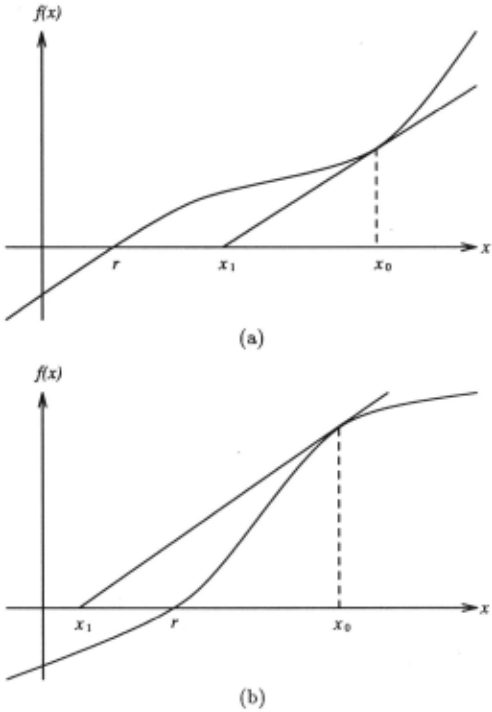
Figure 2: A sufficient condition for ixo- rl > ixi - ri on a monotone interval [a, b].
for x in [1, 2]. The cases of x0 < r and of f(x) mono tone decreasing are analogous. The complete test for equation (1) appears in Figure 2. NEWTON resolves the inequalities with BOUNDER as before.
NEWTON tests progressively narrower intervals until it succeeds or the interval shrinks beneath a prespecified width. It starts with the monotone interval [a, b] and repeatedly bisects the distance from x0 to each current boundary. If the initial guess really is a good candidate for iteration, the shrinking should eventually make the test work, at which point NEWTON returns the first iter ate. If not, NEWTON must choose a different value for x0 by bisection and start over. If the test had failed in the example, the next test interval would have been (1.5, 6], splitting the distance from the ends of [1, 10] to x0 = 2.
3 Examples
As another example, consider f(x) = e"' + x- k with domain x E [0, oo) and constraint k ~ 1. The function increases monotonically for all x because f' ( x) = e"' + 1 > 0. It has a unique root because f(O) = 1 - k :::; 0 and f( k) = ek > 0. Approximation is inevitable because the root cannot be expressed in closed form. NEWTON determines that le"' I > lx I and solves e"' - k = 0 to obtain xo = log k . It verifies the convergence condition (Figure 2) and returns
| k | X1 | root | %error |
|---|---|---|---|
| 1 | 0.000 | 0.000 | 0.000 |
| 2 | 0.462 | 0.442 | 0.045 |
| 4 | 1.109 | 1.073 | 0.033 |
| 8 | 1.848 | 1.821 | 0.015 |
| 16 | 2.609 | 2.596 | 0.005 |
| 32 | 3.361 | 3.355 | 0.002 |
| 64 | 4.095 | 4.093 | 0.000 |
Table 2: Relative error between the root of e"' + x- k and x1 = k log kj(k + 1).
Given the domain x E ( -oo, -1] and no constraints on k, NEWTON determines that lxl > le"'l, obtains x0 = k, verifies convergence, and returns
For f ( x) to have a root, k must satisfy
The relative·error of x1 is 0.2 for this value, 0.007 for k = -1, and less than 0.001 fork< -2.
The dominance argument only requires the sign of k: k > 0 implies le"'l > lxl, whereas k < 0 implies lxl > ie"'l· NEWTON needs stronger constraints, such as those above, to derive dominance. Given only the sign of k, it must calculate x0 by bisection. It can, however, prove convergence and obtain x1 as before.
The previous examples are all separable, that is ex pressible in the form f(x, k) = g(x) + h(k). The final example,
with x E (0, oo) and k ~ 0.5, demonstrates that NEW TON handles nonseparable functions as well. The func tion increases monotonically and has a unique root. The convergence condition holds for all k. Given the modest constraint k < e"'~ - x, NEWTON can calculate x0 = k and
The relative error of x1 is 0 for k = 0.5, 0.048 for k = 1, and less than 0.002 for k > 4. One can obtain even bet ter results with a more sophisticated choice of x0 , setting x = 0 in log(x+k), the dominated term of f(x), and solv ing the resulting equation to obtain x~ = Jk 2 - log k. NEWTON does not implement this strategy. Newton's method appears to work for 0 < k < 0.5, even though the convergence condition fails. A more experimental implementation could validate x1 empirically on a large number of sample parameter values, rather than give up.
Table 3 summarizes the examples in this paper.
4 Conclusions
This paper describes NEWTON, an equation-solver that finds approximate roots to parameterized functions by a symbolic version of Newton's method. If this fails, it turns to a symbolic bisection algorithm. NEWTON re quires that the function have a single, simple root in its domain. One can .handle a nonsimple root, r, of f(x) ·by applying NEWTON to ~t(x) = f(x)ff'(x), which has a simple root at r. One can find multiple roots by parti tioning the domain into intervals on which f(x) is mono tone, hence has at most one root, and applying NEWTON to .each subinterval [a, b] for which f(a)f(b) :::; 0. I de scribe a program that calculates the monotone intervals elsewhere [Sacks, 1985].
NEWTON can only find a root r of f(x) for which the sign of f' ( r) is fixed for all legal parameter values. Oth erwise, it can neither bracket the root within a monotone domain nor prove that Newton's method converges. For example, the function f(x) = (ax- 1)e"' has a unique root of 1/a for a =F 0, but /'(1/a) = ae 1 fa can be positive or negative. A possible solution is to partition the space of legal parameter values into regions on which J'(x) has a fixed sign and solve for each subset separately. In our example, one can solve for a > 0 and for a < 0. Partition algorithms exist for polynomials [Arnon et al., 1984]; partitioning other functions is a topic for future research.
The strategy of applying numeric techniques symbol ically to parameterized problems has many other appli cations. Newton's method generalizes to vector equa tions. Additional numeric techniques, such as the se cant method and fixed-point iteration [Press et al., 1987], also extend directly to parameterized equations. Other domains for symbolic application of numeric algorithms include Markov theory (which I have worked on with
| f x) | constraints | Xt | %error |
|---|---|---|---|
| x 4 + kx- 16 | 1 :5 X :5 10; lkl :5 1 | 64 32+k | 0.002 |
| e"' + x- k | X 2: 0; k 2: 1 | klogk k+1 | 0.045 |
| e"' +x- k | X< -1·k < -1 - , - | ek k--- ek + 1 | 0.007 |
| x 2 + log(x + k)- k 2 | X 2: 0; k 2: 0.5 | k _ 2k log 2k 4k2 + 1 | 0.048 |
- Doyle [Doyle and Sacks, 1989]), integration; and dy namic systems theory.
Acknowledgem.ents
Harry Mynick of the Princeton Plasma Physics Labo ratory motivated me to develop NEWTON. Forman Ac ton, Woody Bledsoe, Joel Friedman, Dick Lipton, Harry Mynick, and especially Mike Wellman provided valuable comments on this paper.
@inproceedings{ijcai1989p69,
  title     = {An Approximate Solver for Symbolic Equations},
  author    = {Sacks, Elisha},
  booktitle = {Proceedings of the Eleventh International Joint Conference on
               Artificial Intelligence, {IJCAI-89}},
  publisher = {International Joint Conferences on Artificial Intelligence},
  editor    = {N. S. Sridharan},
  pages     = {431--433},
  year      = {1989},
  month     = {8},
  note      = {Automated Deduction},
  url       = {https://ijcai.org/proceedings/1989/69},
}
TY - CPAPER TI - An Approximate Solver for Symbolic Equations AU - Sacks, Elisha T2 - Proceedings of the Eleventh International Joint Conference on Artificial Intelligence, IJCAI-89 PB - International Joint Conferences on Artificial Intelligence PY - 1989 SP - 431 EP - 433 UR - https://ijcai.org/proceedings/1989/69 ER -Copied
Machine-readable versions of this paper, for tools and AI agents:





