
Principled Constructive Induction
Proceedings of the Eleventh International Joint Conference on Artificial Intelligence. Machine Learning. Pages 651-655.
© 1989 International Joint Conferences on Artificial Intelligence
Abstract
A framework for the construction of new features for hard classification tasks is discussed. The approach brings together ideas from the fields of machine learning, computational geometry, and pattern recognition. Two heuristics for evaluation of newly-constructed features are proposed, and their statistical significance verified. Finally, it is shown how the proposed framework can be used to combine techniques for selection of representative examples with techniques for construction of new features, in order to solve difficult problems in learning from examples.
- Ahmad,1988
- S. Ahmad, "Scaling and Generalization in Neural Networks: a Case Study," in Proc. 1988 Connectionist Models Summer School, ed., D. Touretzky, G. E. Hinton, T. J. Sejnowski. Palo Alto, CA: Morgan Kaufmann, 1988.
- T. M. Cover, ''Geometrical and Statistical Proper- ties of Systems of Linear Inequalities with Applications in Pattern Recognition," IEEE Trans. on Elec. Computers, vol. 14, pp. 326- 334, June 1965.
- [Dietterich et al., 1982] T. G. Dietterich, B. London, K. Clarkson, and G. Dromey, "Learning and Inductive Inference," in The Handbook of Artificial Intelligence, ed., P. R. Cohen and E. A. Feigenbaum. Kaufmann, 1982.
- [Duda et al., 1973] R. 0 . Duda and P. E. Hart, Pattern 656 Machine Learning Classification and Scene A111llysis, John Wiley & Sons, 1973. [Faroutan et al., 1987] I. Faroutan and J. Sklansky, "Feature Selection for Automatic Classification of Non-Gaussian Data," IEEE Trans. Systems, Man, and Cybernetics, vol. SMC-17, 1987.
- [Kearns et al., 1987] M. Kearns, M. Li, L. Pitt, and L. G. Valiant, "Recent Results on Boolean Concept Learning," Proc. Fourth lnt' 1. Workshop on Machine Learning, Morgan Kaufmann, 1987.
- [Kohonen et al., 1988] T. Kohonen, G. Barna, and R. Chrisley, "Statistical Pattern Recognition with Neural Networks: Bench- marking Studies," Proc. Second lnt' 1. Conf Neural Networks, pp. 1-61 -1-68, IEEE, 1988.
- [Lambert, 1969] P. F. Lambert, "Designing Pattern Categorizers with Extremal Paradigm Information," in Methodologies of Pat- tern Recognition, ed., S. Watanabe. Academic Press, 1969.
- [Lowrie and Wah, 1988] M. Lowrie and B. W. Wah, "Learning Heuristic Functions for Numeric optimization Problems," Proc. COMPSAC 88, pp. 443450, IEEE, 1988.
- [MacGregor, 1988] J. N. MacGregor, "The Effects of Order on Learning Classifications by Example: Heuristics for Finding the Optimal Order," Artificial Intelligence, vol. 34, pp. 361 -370, North-Holland, 1988.
- [Michalski, 1975] R. S. Michalski, "On the Selection of Representative Samples from Large Relational Tables for Induc- tive Inference," U. Illinois (Chicago circle) tech. report, No.
- M.D.C 1.1.9, July, 1975.
- [Minsky et al., 1969] M. Minsky and S. Papert, " Perceptrons: An Introduction to Computational Geometry." Cambridge, Mas- sachusetts: MIT Press, 1969.
- [Muggleton et al., 1988] S. Muggleton and W. Buntine, " Con- structive Induction in First-order Logic," Proc. Workshop on Change of Representation and Bias, 1988.
- [Papadimitriou et al., 1982] C . H. Papadirnitriou and K. Steiglitz, Combi111ltorial Optimization: Algorithms and Complexity. Engle- wood Cliffs, NJ: Prentice-Hall, 1982.
- [Preparata et al., 1985] F. P. Preparata and M.l. Shamos, Compu- tatioMl Geometry: An Introduction. Springer-Verlag, 1985.
- [Rendell, 1986] L.A. Rendell, ''A Framework for Induction and a Study of Selective Induction," Machine Learning, vol. 1, Kluwer academic Press, June 1986.
- [Rendell, 1988] L. A. Rendell, "Learning Hard Concepts," Proc. European Workshop in Learning (EWSL-88), 1988.
- [Rumelhart et al., 1986] D. E. Rumelhart, G. E. Hihton, and R. J. Williams, "Learning internal Representations By Error Propaga- tion," in Parallel Distributed Processing: Explorations in the Microstructure of Cognition, eds ., D. E. Rumelhart, J. L McClel- land and the PDP Research Group, vol. 1, pp. 318-362, Cambridge, MA: MIT Press, 1986.
- [Watanabe, 1969] S. Watanabe, "Object-Predicate Reciprocity and its Application to Pattern Recognition," Proc. Information Processing 68, pp. 1608-1613, Amsterdam: North-Holland, 1969.
- [Watanabe, 1985] S. Watanabe, Pattern Recognition: Human and Mechanical, Wiley lnterscience, 1985.
- [Winston, 1975] P. H. Winston, "Learning Structural Descriptions from Examples," in The Psychology of Computer Vision, ed., P. H. Winston, New York, NY: McGraw-Hill, 1975.
References were extracted automatically from the PDF and may contain errors.
Full text extracted automatically from the PDF; figures, tables and equations may differ. The PDF is the version of record.
1. Introduction.
The problem of new terms, also known as the constructive induction problem, has long been considered a source of difficulty in machine learning (Dietterich, 1982). Simple classifiers using only the primitive features of description have limited learning capabilities. For example:
(i) Single-layered neural networks can realize only those class dichotomies, where the classes are linearly separ able in the feature space (Minsky, 1969).
(ii) Selective induction can be used to learn only those concepts whose concept-membership function is smooth (Rendell, 1986).
Researchers in different areas have recently addressed these fundamental limitations of simple classifiers. Algo rithms such as back-propagation (Rumelhart, 1986) can implement learning in multi-layered networks. They impli citly create weighted combinations of primitive features in the internal (hidden) units of such networks. Constructive induction, on the other hand, explicitly constructs and tests new terms from the primitive features (Dietterich et at., 1982) by applying feature-construction operators. Both of these approaches transform the primitive feature space of the problem into another in which the classes to be discrim inated are separable using simple discrimination surfaces.
With a few exceptions (Muggleton, 1988), these tech niques provide no justification for the heuristics used, they do not integrate theories of selection and evaluation of features, and they have no obvious trade-offs between Benjamin W. Wah 1
1 This research was supported by the National Science Foundation under Grant MIP-88-10584, and by the National Aeronautics and Space Administration under Grant NCC 2-481.
Coordinated Science Lab., University of Illinois, Urbana, IL 61801.
performance and accuracy. In this paper, we examine the problem from a geometric perspective in hope of develop ing heuristic techniques that are amenable to analyses of performance and accuracy. Our focus is on a study of con structive induction in two-class discrimination learning problems.
1.1. Simple Versus Hard Classification Problems.
Given a set of d-dimensional training samples, E=E+uE-, a simple classification problem is to discover a primitive surface (such as a hyperplane in d-1 dimensions) that separates the positive examples E+ from the negative examples E-, when the sample points and the hyperplane are represented in the d-dimensional feature space. In a hard classification problem, such a primitive surface does not exist.
1.2. Constructive Induction.
Constructive induction discovers new features of the training sample. It transforms feature spaces to permit primitive separating surfaces which, in tum, enable the use of simple classification techniques for solving hard classification problems.
2. Feature Spaces and Inverted Spaces.
Let E=E+uE- be the set of examples. Each eiEE is ad dimensional vector, ei=(eLe~ .. ,e~). We say that the classification problem is defined in a d-dimensional feature-space F=(/1 ,J 2 , .. ,J 4 ), and that the value of the feature .[j for the example e' is ej. A hyperplane H in F has the form H: W·F=e, where W=(w~ow2 , .. ,wd) is a d dimensional vector of weights, and e is a constant. A hyper plane H is said to separate E+ and E- if, for any e+ E E+ and e- E E-, (W·e+-e)(W·e--9)<0.
In feature spaces, each feature is represented by a dimension, and each example is represented by a point. So, for instance, the example ei is represented by the point (ei ,e~, .. ,e~) in the feature space F.
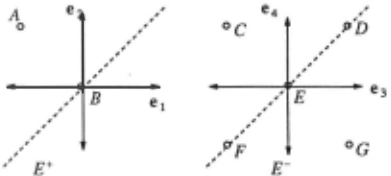
An inverted space, after Watanabe (1985) can be defined for each class in the feature space as follows. Each example of the class is represented by a dimension, and features are represented as points. If E+={p 1 , ·· ,pm}, then the feature /; E F maps to the point (p} ,pf, .. ,p'[') in the inverted space for the class E+. Similarly, if E-={n 1 , ·· ,n 1 }, then the feature /; maps to the point (n} ,n'f , .. ,ni) in the Figure 1. From XOR{j 1 ./2 ) in (a), the positive examples e 1 and e 1 define the positive inverted space (b), and the negative examples e 3 and e4 produce the negative inverted space (c).
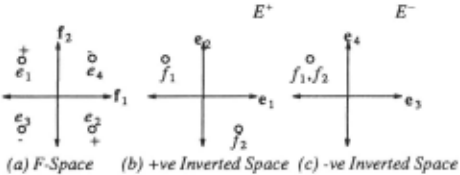
inverted space for the class E-. Figure 1 shows the con struction of inverted spaces for the two-dimensional parity (XOR) problem. Even though the framework is general, our examples are restricted to two-dimensional spaces, pri marily because it is easy to illustrate such spaces visually.
An advantage of inverted spaces is that features become points. Consequently, feature space transformations (the basic operation in constructive induction) can be inter preted geometrically. In inverted spaces, constructive induction is the creation of new points by applying point to-point, or (set of points)-to-point, transformations. Only some of these transformations are useful: the inclusion of certain additional points in the inverted spaces (feature dimensions in F-space) can create separability. In the next few sections, we develop a representation of primitive sur faces and a notion of separability in terms of the inverted space framework.
Linear separators are represented geometrically in feature spaces as hyperplanes, and in inverted spaces as hyper cubes. Figure 2 shows the basic representations of linear separators in both a feature space and the corresponding inverted space for the class {el>e2 }. A hyperplane W-F=9 divides the feature space F into the half-spaces W·F <9, and W·F>9. In order to give a geometric interpretation to the surface defined by W·F=9 in an inverted space for a set of examples E, the hyperplane equation can be rewritten as
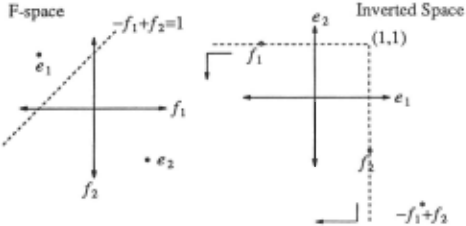
Elements of F (features) map into points in the inverted space. Hence, W·F can be interpreted as a linear combina tion of the vectors from the origin to the points representing features of F. Thus, as illustrated in Figure 2, if E has k components, equation (1) defines an infinitely extending hypercube with one comer at (9,9, .. 9)t. In order for a weighted combination of features, W -j, to separate E+ and E-, the point resulting from the linear combination of feature points in the E+ -inverted space must lie outside (inside) the hypercube, if the corresponding point for the same combination in theE--inverted space lies inside (out side). If the two classes are separable, the class for which W ·f lies inside the hypercube is characterized by the set of points satisfying W-j<9 in the feature space, and similarly for the other case.
Observation. A feature can separate two classes E+ and E- in the feature space if the E+ -inverted space representation of that feature is a point lying inside (outside) an infinitely-extending hypercube with one comer at (9,9, .. ), and its E--inverted space representation is a point that lies outside (inside) the corresponding E--hypercube.
4. Two Measures of Feature Goodness.
Information-theoretic considerations (Watanabe, 1985) sug gest that using a good feature of discrimination provides compact descriptions of each of the two classes, and that these descriptions are maximally distinct. Geometrically, this constraint can be interpreted to mean that (i) such a feature takes on nearly identical values for all examples of the same class, and (ii) it takes on some different value for all examples of the other class.
We define the equiparameter line in the inverted space for a class E=(e 1 ,e 2 ,e 3 , .. , eP) by the following sys tem of equations:
so that a feature fi that lies on this line is maximally uniform within the class. Deviations of a feature from such unifor mity can be approximated by the sine of the angle between the feature vector and the equiparameter line in the inverted space. Interestingly, this heuristic measure is directly related to the standard deviation of the feature values within the class sample. We state this formally:
Theorem. The standard deviation, cr 1 , of the distribu tion of values of a feature fwithin a class E of n samples, is related to the angle a, between the equiparameter line and the feature vector for fin the £-inverted space, by the fol lowing formula:
where r 1 is the root-mean-square of feature values within the sample.
Proof. Let Vj denote the value that the feature f takes for an examyle e E E. The feature vector, f, of f = (V~ 1 , V~2 , .. .Ve. ). Let! denote the vector (1, 1, .. , 1):
The cosine of the angle between the equiparameter line and the feature vector can be calculated as follows.
The variance of the sample can be calculated as fol lows.
The second heuristic, dissimilarity between the feature values for the two classes, can be applied by testing a feature for inclusion in a 0-hypercube in one of the two inverted spaces, and for exclusion in the other, as already discussed in §3. Alternatively, one can use the sine of the angle in order to ensure that the feature vector lies in a posi tive octant in one of the spaces, and in a negative octant in the other. Thus, distinctness can be guaranteed by requiring that the following two conditions hold:
where a is the angle between . the feature vector and the equiparameter line in the £+-inverted space, and ~ is the corresponding angle in theE--inverted space. Other heuris tic tests for inclusion/exclusion are discussed in §5.2.
4.1. Parity (XOR) Revisited.
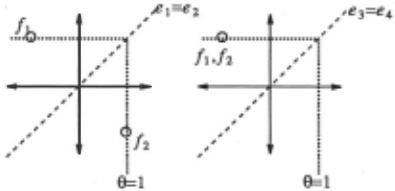
Figure 3 shows the two inverted spaces for the 2-bit parity problem. The equiparameter lines in each of the inverted spaces are dashed; the boundaries of a (1,1) hypercube are dotted. Notice that the primitive features score low evaluation on both the proposed heuristics. First, both the features, in both inverted spaces, are oriented per pendicular to the equiparameter line, indicating a maximum deviation of 1. Second, there is no 0 such that the corresponding 0-hypercube includes a feature in one inverted space, and excludes the same feature in the other. Thus, the framework captures both the high variance of the sample within a class, and the linear inseparability between classes. In §6.3, we show that the heuristic measures sug gested above are helpful in discovering good features for this problem.
Having introduced the basic notion of inverted spaces, we now consider some pragmatic issues about the framework, such as the amount of information that needs to be retained.
S. Realizing the Inverted Space Framework.
Applying this framework naively can yield complex compu tations on large matrices. The complexity results from simultaneous consideration of a large number of examples. To counter this problem, the heuristic approximation methods of §5.1 consider only a subset of training samples that still retains the separability traits of the entire set. To address another problem, the techniques suggested in §5.2 are amenable to incrementa/learning so that heuristic infor mation is accumulated by examining a few examples at a time.
5.1. Using Low-Dimensionality Inverted Spaces.
Michalski has suggested several approaches to selec tion of representative samples for a two-class discrimination problem (Michalski, 1975). His ESEL system uses three cri teria (as shown in Figure 4):
The Cluster Centroid (CC) method. Each class is represented by its centroid and centroids of clusters within the class. In addition, one keeps additional points that are more than twice the cluster standard deviation away from the centroid of every cluster within the class. Sklansky et al. use a similar approach (Faroutan, 1987). Rendell's

CC method NM method OR Method
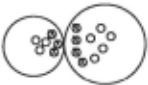

Figure 4. Methods for selecting representative examples
Probabilistic Learning System (Rendell, 1986) also con structs such representations.
The Near Miss (NM) method. Choose from a class those points that are nearest to the opposite class. Similar techniques have been explored by Winston (1975) and MacGregor (1988). The idea is that any separating surface for the two subsets consisting only of near-misses would still separate the two classes.
The Outstanding Representative (OR) method. Choose the subset of examples from each class whose con vex hull is the same as that for the entire class. This means choosing the extremal points of each class. Any surface that separates the extremal points must, of necessity, separate the two classes. Lambert (Lambert, 1969) has proposed similar techniques.
Several researchers have recently noticed improved performance in learning systems that pay special attention to boundary cases (Ahmad, 1988,Kohonen, 1988). On the theoretical side, Cover (1965) has suggested that for two class discrimination problems using surfaces with d degrees of freedom, on the average, 2d samples can capture the information of a possibly infinite training set. The implica tion of Cover's result, and the existence of mechanisms for finding boundary patterns, make the inverted-space frame work a viable technique.
5.2. Using Approximate Tests of Separability
In our proof of the theorem, we showed a relationship between the sine of the angle between the feature vector and the equiparameter line, and the standard deviation of the ~alue di~tribution for a feature. Considering that the only mformation needed to calculate the latter is the sum of sam ple values, the sum of their squares, and the number of values seen, suggests incrementally maintaining the infor mation required to calculate the sine of the angle.
The following tests implement a cheaper heuristic approach to testing feature points for inclusion/exclusion in a 9-hypercubes:
Let If IE+ denote the length of the feature vector for f in the inverted space forE+,
These tests do not cover all the cases. However, the advan tage over exact tests for inclusion/exclusion is that only two items of information per feature need to be maintained, and those can be computed incrementally. The heuristic pro vides a positive answer to a query about inclusion if the feature vector lies within the largest hypersphere that can be inscribed in the hypercube in question, and a negative answer if it lies outside the smallest hypersphere that can circumscribe the hypercube. We do not detail these methods here, primarily because there are several ways of approxi mating the real measures of goodness, and these are only two of them.
| OR | |
| NOT | |
| Scalar Addition | Translation |
| Scalar Multi lication | Scalin |
6. Constructive Induction Using . Inverted Spaces.
A constructive induction problem is defined by a set of feature-construction operators to be applied to the primitive features, or to combinations thereof. Table 1 shows the geometric interpretation of some commonly used construc tive induction operators in terms of the inverted space framework. Given a difficult discrimination learning prob lem, and the description of features in the form of inverted spaces for both the classes, the goal of constructive induc tion is to create features that (i) lie close to the equiparame ter line in both the inverted spaces, and (ii) satisfy the exclusion/inclusion test for some 9-hypercube. In the fol ~owing, we first examine how one might apply the mverted-space framework to construct new features.
Knowing which transformations the various construc tion operators achieve lets one select the particular operator to apply. Additional heuristics, such as using Boolean operators on Boolean features, can provide additional bias for selection. The constructive induction algorithm employed is a search in the space of constructed attributes. The inverted space framework is useful in both the genera tion and the testing phases of this algorithm.
6.1. Feature Generation
This employs several heuristics based on the meas ures of feature goodness discussed in §4. One heuristic uses a linear combinations of d=max(l,m) features, where ~=IE+ I, and m= IE- I. A (d-1)-dimensional surface pass mg through these features is made to intersect the equiparameter line in one of the spaces. The intersection yields the exact values of weights to be applied in the linear combination. The new feature is evaluated according to the measures of goodness.
Yet another heuristic limits the application of thres holding only to features close to the equiparameter line. Constructors such as AND and NOT are applied only to Boolean features. Sometimes, several features map into the same point in one of the inverted spaces, but to different points in the other. In such cases, one can apply operators such as AND, OR, difference, and equality, in order to con struct new features.
In general, this phase employs substantial domain knowledge. Operators specific to an application domain can still be interpreted in the inverted spaces, and this knowledge of transformations can be used (abductively) for feature generation.
6.2. Feature Evaluation
Features are evaluated on the basis of the goodness criteria introduced in §4. Different constructive induction algorithms employ different search mechanisms, but all can use this measure of goodness to serve as a heuristic esti mate. Usually, the cheaper version of the inclusion/exclusion test will suffice. The more expensive test involving all the dimensions of the inverted space may be limited only to promising features (those that lie close to the equiparameter line). Other techniques, such as dynamic bias management, may be employed to focus the search.
In the following, we illustrate the effect of such con structions on the XOR problem. Recall from §4.1 that this problem requires constructive induction.
6.3. Parity Revisited
Figure 5 shows the inverted spaces for the parity problem. It also shows the map of a new feature, f 1Af2. This new feature is recommended by the feature-generation heuristic for the AND operator. The linear combination of / 1 and h yields 0.5/1 +0.5h upon intersection with the equiparameter line in the inverted space. Still, no single feature scores highly on the evaluation criteria. Further con struction suggests taking the difference of the two con structed features, thus yielding the final constructed feature 0.5/1 +0.5h-!1 Ah which separates the two classes.
6.4. Constructive Induction as Merging Peaks
It has been suggested that hard problems in concept learning require the formation of disjuncts. This is sup ported by recent results in computational learning theory (Keams, 1987). Rendell (1988) has suggested that member ship functions of hard concepts have multiple peaks in the primitive feature space. Simple surfaces cannot be used to discriminate between classes whose membership functions have multiple peaks. Rendell (1988) advocates transforming the feature spaces so that the various peaks merge. In the transformed space, the membership function is smooth, and simple surfaces can discriminate.
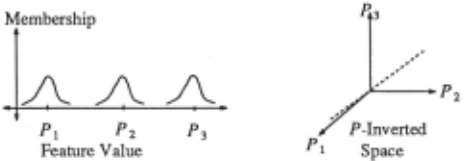
Representative examples from the concept function in feature space (left) are used to construct a low-dimensionality inverted space (right). Features that lie on the equiparameter line (shown dashed) in the inverted space can be seen as merging peaks, provided these features are constructed by applying continuous, compact transformations to the original features.
Let F be the set of primitive features of a disjunctive problem, and let P=(p 1 ,p 2 , ·· ,pm) be the centroids of the peaks of the membership function. (See Figure 6) Using the reduced-dimension inverted spaces discussed in §5.1, one can construct the P-inverted space, and map into it the features of F. If a feature receives a high evaluation in the P-inverted space, it must lie close to the equiparameter line. In other words, it takes on nearly identical values for the examples corresponding to peaks in the membership func tion. Now, if such a feature is constructed using a nonlinear, continuous mapping, it can be shown to merge the peaks of the membership function in the feature space. Similarly, simultaneous construction in the inverted space for negative examples, and the application of the hypercube-inclusion test, can result in the construction of features that transform complex learning problems into simple ones.
6.5. Feature Construction in Inverted Spaces.
The inverted space framework is particularly suitable for constructive induction because the inverted spaces remain fixed during construction. This is in sharp contrast to the traditional feature space representation used to study pattern recognition operations, where new features contri bute new dimensions. The two major ideas that distinguish our work from that of Watanabe (1969) are the concept of the equiparameter line, and the angle that a feature vector makes with this line. In our recent research, we have started exploring the inverted space representation of value-coded features (aka. overlapping localized receptive fields, coarse-coded distributed representations). The concepts of angle and distance in the feature space relate, respectively, to generalization and discrimination - two conflicting goals in the design of classifiers.
Besides the obvious application of constructed features in classification, one of the authors has also explored the application of constructed variables in numeric optimization problems (Lowrie and Wah, 1988). There is no reason to believe that inverted space analysis should be res tricted to classification problems. In the future, we plan to explore inverted space representations of variables in optim ization problems.
7. Conclusions and Future Work.
We have presented a new framework for representing classes, examples, and features. It is applied to the construc tive induction problem. Principles for evaluating newly constructed features are developed, and are shown to guide the construction process. The exact measure for compact ness is shown to have a direct relationship with a statistical measure of the spread of a distribution. Several inexpensive heuristics for feature evaluation arise from relaxation of measurement accuracy.
Our analysis covers a variety of algorithms and heuristics for construction and evaluation of features. In particular, it synthesizes techniques for selection of exam ples with those for selection and construction of features. By posing the dual of the classification learning problem, it suggests new techniques similar to the primal-dual algo rithm (Papadimitriou, 1982) for linear programming. For example, one might use geometric techniques such as hull finding and proximity analysis (Preparata, 1985) in order to discover representative examples in the feature space, while constructing good features in the inverted space of these examples, repeating the process on the reduced feature space. The inverted-space representation, therefore, pro vides a rich basis for such integration of geometric and sta tistical techniques.
The framework is important as an analytical tool. It allows complex nonlinear operations on features. We have demonstrated its ability to represent a variety of construc tion and classification operations. In future, we would like to extend the analysis to include other problems in classification. One such problem is redundancy-elimination. Inverted space permits the use of geometric tests, such as collinearity, and coplanarity, for detection of dependencies between features. We plan to study the statistical properties of geometric operations, and the geometric interpretation of statistical operations, in order to arrive at a synthesis of techniques for problems like dimensionality reduction, clus tering, and multi-class discrimination (Duda, 1973).
Acknowledgements.
Darrell Hougen suggested the proof technique for interpret ing the method of §4 statistically. The authors wish to thank Mark Gooley, Subutai Ahmad, and the anonymous referees for their helpful comments.
@inproceedings{ijcai1989p104,
  title     = {Principled Constructive Induction},
  author    = {Mehra, Pankaj and Rendell, Larry A. and Wah, Benjamin W.},
  booktitle = {Proceedings of the Eleventh International Joint Conference on
               Artificial Intelligence, {IJCAI-89}},
  publisher = {International Joint Conferences on Artificial Intelligence},
  editor    = {N. S. Sridharan},
  pages     = {651--655},
  year      = {1989},
  month     = {8},
  note      = {Machine Learning},
  url       = {https://ijcai.org/proceedings/1989/104},
}
TY - CPAPER TI - Principled Constructive Induction AU - Mehra, Pankaj AU - Rendell, Larry A. AU - Wah, Benjamin W. T2 - Proceedings of the Eleventh International Joint Conference on Artificial Intelligence, IJCAI-89 PB - International Joint Conferences on Artificial Intelligence PY - 1989 SP - 651 EP - 655 UR - https://ijcai.org/proceedings/1989/104 ER -Copied
Machine-readable versions of this paper, for tools and AI agents:





