
Multi-View Alignment and Denoising via Center-Guided Spectral Diffusion
Proceedings of the Thirty-Fifth International Joint Conference on Artificial Intelligence. Main Track. Pages 4940-4948.
https://doi.org/10.24963/ijcai.2026/550
© 2026 International Joint Conferences on Artificial Intelligence
Keywords
- Machine Learning: Multi-view learning
Abstract
Multi-view learning aims to enhance performance by integrating information from multiple sources. While different views offer complementary perspectives, extracting consistent and discriminative representations remains a significant challenge due to discrepancies in representation and presence of noise. Existing methods typically separate the denoising and alignment processes, mapping the denoised heterogeneous views to a shared subspace for alignment. This means that noise may propagate or even amplify during the alignment stage, ultimately leading to suboptimal solutions. To address this issue, we propose center-guided spectral diffusion, which replaces traditional alignment with generative modeling. This method avoids noise propagation in multi-view alignment process and prevents multi-view features be aligned to the noise subspace during fusion process. Specifically, we first performs unconditional diffusion in both the feature space and a low-rank spectral space to learn a stable consensus centre anchor. This anchor is then used to condition a guided generative diffusion process, enabling the model to generate more consistent and realistic sample representations. By combining conditional and unconditional diffusion, the proposed method alleviates the noise amplification problem commonly found in traditional alignment methods. Experimental results show that the proposed method outperforms state-of-the-art methods on several datasets.
- [Arazo et al., 2019] Eric Arazo, Diego Ortego, Paul Albert, Noel O'Connor, and Kevin McGuinness. Unsupervised label noise modeling and loss correction. In International Conference on Machine Learning, pages 312-321, 2019.
- [Bruna et al., 2014] Joan Bruna, Wojciech Zaremba, Arthur Szlam, and Yann Lecun. Spectral networks and deep lo- cally connected networks on graphs. In International Con- ference on Learning Representations, pages 1-14, 2014.
- [Butcher, 2016] John Charles Butcher. Numerical methods for ordinary differential equations. John Wiley & Sons, 2016.
- [Chen et al., 2023a] Yuhong Chen, Zhihao Wu, Zhaoliang Chen, Mianxiong Dong, and Shiping Wang. Joint learning of feature and topology for multi-view graph convolutional network. Neural Networks, 168:161-170, 2023.
- [Chen et al., 2023b] Zhaoliang Chen, Lele Fu, Jie Yao, Wen- zhong Guo, Claudia Plant, and Shiping Wang. Learnable graph convolutional network and feature fusion for multi- view learning. Information Fusion, 95:109-119, 2023.
- [Chen et al., 2023c] Zhaoliang Chen, Zhihao Wu, Shiping Wang, and Wenzhong Guo. Dual low-rank graph au- toencoder for semantic and topological networks. In Pro- ceedings of the AAAI Conference on Artificial Intelligence, pages 4191-4198, 2023.
- [Chen et al., 2024] Huanran Chen, Yinpeng Dong, Zhengyi Wang, Xiao Yang, Chengqi Duan, Hang Su, and Jun Zhu. Robust classification via a single diffusion model. In In- ternational Conference on Machine Learning, pages 1-13, 2024.
- [Dhariwal and Nichol, 2021] Prafulla Dhariwal and Alexan- der Nichol. Diffusion models beat gans on image synthe- sis. Advances in Neural Information Processing Systems, pages 8780-8794, 2021.
- [Du et al., 2024] Shide Du, Zhiling Cai, Zhihao Wu, Yueyang Pi, and Shiping Wang. Umcgl: Universal multi- view consensus graph learning with consistency and diver- sity. IEEE Transactions on Image Processing, 33:3399- 3412, 2024.
- [Fang et al., 2024] Zihan Fang, Shide Du, Yuhong Chen, and Shiping Wang. Beyond the known: Ambiguity-aware multi-view learning. In Proceedings of the 32nd ACM In- ternational Conference on Multimedia, pages 8518-8526, 2024.
- [Geng et al., 2021] Yu Geng, Zongbo Han, Changqing Zhang, and Qinghua Hu. Uncertainty-aware multi-view representation learning. In Proceedings of the AAAI Con- ference on Artificial Intelligence, pages 7545-7553, 2021.
- [Ho and Salimans, 2021] Jonathan Ho and Tim Salimans. Classifier-free diffusion guidance. In Advances in Neural Information Processing Systems, pages 1-8, 2021.
- [Ho et al., 2020] Jonathan Ho, Ajay Jain, and Pieter Abbeel. Denoising diffusion probabilistic models. pages 6840- 6851, 2020.
- [Huang et al., 2021] Zhenyu Huang, Guocheng Niu, Xiao Liu, Wenbiao Ding, Xinyan Xiao, Hua Wu, and Xi Peng. Learning with noisy correspondence for cross-modal matching. volume 34, pages 29406-29419, 2021.
- [Jo et al., 2022] Jaehyeong Jo, Seul Lee, and Sung Ju Hwang. Score-based generative modeling of graphs via the system of stochastic differential equations. In Inter- national Conference on Machine Learning, pages 10362- 10383, 2022.
- [Jolicoeur-Martineau et al., 2021] Alexia Jolicoeur- Martineau, Ke Li, Rémi Piché-Taillefer, Tal Kachman, and Ioannis Mitliagkas. Gotta go fast with score-based generative models. In The Symbiosis of Deep Learning and Differential Equations, pages 1-6, 2021.
- [Karras et al., 2022] Tero Karras, Miika Aittala, Timo Aila, and Samuli Laine. Elucidating the design space of diffusion-based generative models. In Advances in Neu- ral Information Processing Systems, pages 26565-26577, 2022.
- [Kipf and Welling, 2017] Thomas N. Kipf and Max Welling. Semi-supervised classification with graph convolutional networks. In International Conference on Learning Rep- resentations, pages 1-13, 2017.
- [Li et al., 2018] Qimai Li, Zhichao Han, and Xiao-Ming Wu. Deeper insights into graph convolutional networks for semi-supervised learning. In Proceedings of the AAAI Conference on Artificial Intelligence, pages 3538-3545, 2018.
- [Li et al., 2020] Shu Li, Wen-Tao Li, and Wei Wang. Co-gcn for multi-view semi-supervised learning. In Proceedings of the AAAI Conference on Artificial Intelligence, pages 4691-4698, 2020.
- [Li et al., 2024] Jinghan Li, Yuan Gao, Jinda Lu, Junfeng Fang, Congcong Wen, Hui Lin, and Xiang Wang. Diffgad: A diffusion-based unsupervised graph anomaly detector. In The Thirteenth International Conference on Learning Representations, pages 1-14, 2024.
- [Lian et al., 2024] Jie Lian, Xuzheng Wang, Xincan Lin, Zhihao Wu, Shiping Wang, and Wenzhong Guo. Graph anomaly detection via multi-view discriminative aware- ness learning. IEEE Transactions on Network Science and Engineering, 11:6623-6635, 2024.
- [Lian et al., 2026] Jie Lian, Zhihao Wu, Jielong Lu, Jiajun Yu, Qianqian Shen, and Haishuai Wang. Beyond lo- cal patterns: Multiscale inconsistency learning for graph anomaly detection. In Proceedings of the AAAI Confer- ence on Artificial Intelligence, pages 15216-15224, 2026.
- [Lin et al., 2025] Weihong Lin, Zhaoliang Chen, Yuhong Chen, and Shiping Wang. Heterogeneous graph neural network with adaptive relation reconstruction. Neural Net- works, 187:107313-107323, 2025.
- [Liu et al., 2023] Xihui Liu, Dong Huk Park, Samaneh Azadi, Gong Zhang, Arman Chopikyan, Yuxiao Hu, Humphrey Shi, Anna Rohrbach, and Trevor Darrell. More control for free! image synthesis with semantic diffusion guidance. In Proceedings of the Winter Conference on Ap- plications of Computer Vision, pages 289-299, 2023.
- [Liu et al., 2024] Suyuan Liu, Qing Liao, Siwei Wang, Xin- wang Liu, and En Zhu. Robust and consistent anchor graph learning for multi-view clustering. IEEE Trans- actions on Knowledge and Data Engineering, 36:4207- 4219, 2024.
- [Liu et al., 2025a] Chengliang Liu, Jie Wen, Yong Xu, Bob Zhang, Liqiang Nie, and Min Zhang. Reliable represen- tation learning for incomplete multi-view missing multi- label classification. IEEE Transactions on Pattern Analy- sis and Machine Intelligence, 47:4940-4956, 2025.
- [Liu et al., 2025b] Lu Liu, Yongquan Shi, Yueyang Pi, Wen- zhong Guo, and Shiping Wang. Efficient multi-view graph convolutional networks via local aggregation and global propagation. Expert Systems with Applications, 266:126131, 2025.
- [Lu et al., 2024a] Jielong Lu, Zhihao Wu, Zhaoliang Chen, Zhiling Cai, and Shiping Wang. Towards multi-view con- sistent graph diffusion. In Proceedings of the 32nd ACM International Conference on Multimedia, pages 186-195, 2024.
- [Lu et al., 2024b] Jielong Lu, Zhihao Wu, Luying Zhong, Zhaoliang Chen, Hong Zhao, and Shiping Wang. Genera- tive essential graph convolutional network for multi-view semi-supervised classification. IEEE Transactions on Mul- timedia, 26:7987-7999, 2024.
- [Lu et al., 2025] Mingfei Lu, Qi Zhang, and Badong Chen. Divergence-guided disentanglement of view-common and view-unique representations for multi-view data. Informa- tion Fusion, 114:102661, 2025.
- [Luo et al., 2023] Tianze Luo, Zhanfeng Mo, and Sinno Jialin Pan. Fast graph generation via spectral diffusion. IEEE Transactions on Pattern Analysis and Machine Intelligence, 46:3496-3508, 2023.
- [Peng et al., 2022] Xiaokang Peng, Yake Wei, Andong Deng, Dong Wang, and Di Hu. Balanced multimodal learning via on-the-fly gradient modulation. In Proceed- ings of the IEEE/CVF Conference on Computer Vision and Pattern Recognition, pages 8238-8247, 2022.
- [Peng et al., 2024] HU Peng, ZHEN Liangli, PENG Xi, et al. Deep supervised multi-view learning with graph priors [j]. IEEE Transactions on Image Processing, 33:123-133, 2024.
- [Santosh et al., 2020] Tokala Santosh, Avirup Saha, and Niloy Ganguly. Mvl: Multi-view learning for news rec- ommendation. In Proceedings of the 43rd International ACM SIGIR Conference on Research and Development in Information Retrieval, pages 1873-1876, 2020.
- [Song et al., 2021] Yang Song, Jascha Sohl-Dickstein, Diederik P Kingma, Abhishek Kumar, Stefano Ermon, and Ben Poole. Score-based generative modeling through stochastic differential equations. In International Conference on Learning Representations, pages 1-12, 2021.
- [Süli and Mayers, 2003] Endre Süli and David F Mayers. An introduction to numerical analysis. Cambridge University Press, 2003.
- [Tian et al., 2023] Xudong Tian, Zhizhong Zhang, Cong Wang, Wensheng Zhang, Yanyun Qu, Lizhuang Ma, Zongze Wu, Yuan Xie, and Dacheng Tao. Variational distillation for multi-view learning. IEEE Transactions on Pattern Analysis and Machine Intelligence, 46:4551- 4566, 2023.
- [Wang et al., 2021] Shiping Wang, Zhaoliang Chen, Shide Du, and Zhouchen Lin. Learning deep sparse regulariz- ers with applications to multi-view clustering and semi- supervised classification. IEEE Transactions on Pattern Analysis and Machine Intelligence, 44:5042-5055, 2021.
- [Wang et al., 2025] Xuzheng Wang, Shiyang Lan, Zhihao Wu, Wenzhong Guo, and Shiping Wang. Multi-view rep- resentation learning with decoupled private and shared propagation. Knowledge-Based Systems, 310:112956, 2025.
- [Wu et al., 2025] Yuze Wu, Shiyang Lan, Zhiling Cai, Mingjian Fu, Jinbo Li, and Shiping Wang. Schg: Spectral clustering-guided hypergraph neural networks for multi- view semi-supervised learning. Expert Systems with Ap- plications, 277:127242, 2025.
- [Xie et al., 2020] Yuan Xie, Bingqian Lin, Yanyun Qu, Cui- hua Li, Wensheng Zhang, Lizhuang Ma, Yonggang Wen, and Dacheng Tao. Joint deep multi-view learning for im- age clustering. IEEE Transactions on Knowledge and Data Engineering, 33:3594-3606, 2020.
- [Xu et al., 2019] Keyulu Xu, Weihua Hu, Jure Leskovec, and Stefanie Jegelka. How powerful are graph neural net- works? In International Conference on Learning Rep- resentations, pages 1-13, 2019.
- [Xu et al., 2023] Cai Xu, Wei Zhao, Jinglong Zhao, Ziyu Guan, Yaming Yang, Long Chen, and Xiangyu Song. Pro- gressive deep multi-view comprehensive representation learning. In Proceedings of the AAAI Conference on Arti- ficial Intelligence, pages 10557-10565, 2023.
- [Xu et al., 2024] Cai Xu, Jiajun Si, Ziyu Guan, Wei Zhao, Yue Wu, and Xiyue Gao. Reliable conflictive multi-view learning. In Proceedings of the AAAI Conference on Arti- ficial Intelligence, pages 16129-16137, 2024.
- [Zhang et al., 2020] Changqing Zhang, Yajie Cui, Zongbo Han, Joey Tianyi Zhou, Huazhu Fu, and Qinghua Hu. Deep partial multi-view learning. IEEE Transactions on Pattern Analysis and Machine Intelligence, 44:2402- 2415, 2020.
References were extracted automatically from the PDF and may contain errors.
Full text extracted automatically from the PDF; figures, tables and equations may differ. The PDF is the version of record.
1 Introduction
Multi-view data is prevalent in a wide range of real-world applications, including multi-camera vision systems and crosslingual text modeling [Xie et al., 2020; Santosh et al., 2020; Liu et al., 2024]. While different views offer complementary observations of the same underlying structure from diverse perspectives, challenges arise due to differences in representation, noise interference, and structural misalignment across views [Fang et al., 2024; Lu et al., 2025;
∗Corresponding author.
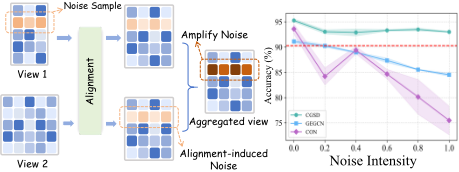
Figure 1: (a) Traditional methods introduce noise during the alignment process and then amplify it during the fusion stage. (b) The impact of adding noise to a single view and then fusion the view using various baseline model. Here, GEGCN learns the consistent representations through neural network; CON denotes the concatenation method. The red dashed line indicates the performance of the deleted noisy view on the baseline model.
Liu et al., 2025a]. A central problem in multi-view learning is how to extract consistent and discriminative representations from such heterogeneous and partially redundant information [Tian et al., 2023; Peng et al., 2024]. In recent years, researchers have attempted to model similarity matrices to uncover potential relationships among samples [Chen et al., 2023c; Du et al., 2024; Wu et al., 2025]. While this graph-based approach has achieved impressive results, the presence of extensive noise has exacerbated the heterogeneity between views, making denoising particularly important. Mainstream methods typically treat view denoising and alignment as two separate sequential processes. In this separationbased paradigm, each view is first denoised, and then aligned by mapping heterogeneous modalities to a shared subspace via a neural network [Geng et al., 2021; Xu et al., 2023; Lu et al., 2024a]. Research shows that denoising and alignment operations in multi-view domains help models obtain more generalizable representations [Zhang et al., 2020; Lian et al., 2026].
This separation-based paradigm has achieved tremendous success. However, we have identified a limitation: Anomaly features in low-quality views may distort cross-view alignment, which introduces additional noise into the alignment and fusion process, leading to denoising failure. Recently research has shown that noisy samples tend to have larger gradient norms during training, causing the alignment process to Residual focus excessively on these noisy samples [Huang et al., 2021; Peng et al., 2022], which may even steer the view alignment toward the noise subspace. As illustrated in Figure 1(a), the distorted embeddings of low-quality views propagate to other views during alignment through parameter-sharing mechanisms or interaction between views. The contaminated interactions force the representations of other views to shift toward noise, thereby disrupting the original semantic structure. In end-to-end training, the polluted representations serve as input for the next training iteration, further exacerbating information distortion. We conduct experiments to simulate the impact of different noise intensities on view alignment, as illustrated in Figure 1(b). Specifically, noise is only added to the first view, and we then evaluate the performance of different alignment methods. The experimental results show that as the noise intensity in a single view increases, traditional methods continuously contaminate the remaining views during the alignment process. The performance may even deteriorate to the point where abandoning the view will yield better results.
To address the above challenges, we propose Center Guided Spectral Diffusion (CGSD). Unlike previous methods such as direct mapping, we use a generative process to replace alignment to achieve synergistic optimisation of denoising and alignment. Specifically, we first model an unconditional diffusion stochastic differential equations system in both the feature space and the low-rank spectral space, which is used to iteratively update a consensus center anchor within multi-view. This consensus center anchor is then used as a input to a conditional diffusion model. Since anchors are consensus representations distilled from multi-view, conditional diffusion will be guided to generate aligned samples. After the model captures the underlying data distribution, in order to balance the truncation error and the number of network evaluations, we employ an Heun's second-order method as the solver for the differential equations and utilize Bayesian inference during the sampling phase to guide the generation of aligned samples. The contributions of can be summarized as follows:
- Generative models replace alignment: The CGSD framework is proposed to effectively mitigate noise amplification in multi-view data fusion by replacing traditional alignment with generative process.
- Center-guided mechanism is designed: The multiview consensus anchor points are extracted through an unconditional diffusion process and then applied to conditional diffusion, guiding the alignment of multi-view.
- Extensive experiments on real-world datasets: The experimental results show that the proposed model achieves state-of-the-art results on multiple datasets.
2 RelatedWork
In this section, we will briefly introduce multi-view learning and score-based generative diffusion models.
2.1 Graph-basedMulti-view Learning
The main objective of multi-view learning is to utilise complementary information from multiple perspectives or multisource data to improve the performance and applicability of machine learning models. In recent years, with the advancement of graph learning methods, multi-view learning tasks have achieved significant breakthroughs [Lian et al., 2024; Liu et al., 2025b; Wang et al., 2025]. [Chen et al., 2023b] proposed to jointly learn feature and graph fusion for multiview data through a two-stage, which integrated a feature fusion network and a learnable graph convolutional network with a novel differentiable shrinkage activation function to capture discriminative node relationships. [Lu et al., 2024b] proposed to address multi-view semi-supervised classification by introducing a generative essential graph convolutional network that unified multi-graph consistency extraction, graph refinement, and task-specific optimization, leveraging a learnable threshold shrinkage function to obtain effective graph embeddings. [Chen et al., 2023a; Lin et al., 2025] focused on the optimisation and denoising of multi-view graph structures. Research shows that, compared with traditional methods, graph-based multi-view learning can achieve better results.
| Notations | Descriptions |
|---|---|
| V N dv λ | The number of views. The number of total training samples. The dimensions of the v-th view feature. Control the hyperparameters that guide the intensity. |
| {Xv}Vv=1 {Av}Vv=1 Φ U ˆX ˆU | Xv ∈ RN×dv is the v-view training samples. Av ∈ RN×N is the v-view similarity matrix. The spectrum space of A. The truncated spectrum space of A. The aligned feature space. The aligned truncated spectral space. |
| σ(t) ϵϕ(·) sθ (·) ˆ ϵϕ(·) ˆ sθ (·) | Control the scaling factor for different time steps. Spectral space diffusion denoising neural network. Feature space diffusion denoising neural network. Guided spectral alignment neural network. Guided feature alignment neural network. |
| LDM LCDM | Unconditional gradient matching optimisation objective. Conditional gradient matching optimisation objective. |
2.2 Generation DiffusionModel
Diffusion models are widely used due to their powerful ability to learn data distributions [Ho et al., 2020; Dhariwal and Nichol, 2021; Chen et al., 2024; Liu et al., 2023]. In recent years, relevant advances in the field of graph generation have been continuously explored, with related work mainly focusing on graph-level tasks. [Jo et al., 2022] used a continuoustime diffusion framework, enabling effective graph generation that satisfied structural dependencies and permutation invariance. However, running full-rank diffusion on the adjacency matrix causes fatal errors in the graph structure connections. [Luo et al., 2023] applied low-rank diffusion SDEs in the graph spectrum space to efficiently learn graph topology generation, achieving excellent theoretical guarantees and state-of-the-art performance. In terms of nodes-level tasks, [Li et al., 2024] enhanced latent space learning with discriminative content and a content-preservation mechanism, significantly improving anomaly detection performance while maintaining low time and space complexity. Although diffusion models have achieved remarkable success in many fields, their extension to multi-view learning remains challenging due to the inherent information redundancy and noise from complementary multi-source inputs.
3 Preliminary
In this section, we first introduce some basic rules for using symbols in Table 1. Since diffusion models have limited applications in multi-view scenes, we also provide a comprehensive introduction to the basic theory of diffusion models.
3.1 Score-based Generative DiffusionModel
Diffusion models establish a unique bidirectional mapping mechanism between a complex data distribution D and a priori distribution S through a Stochastic Differential Equation (SDE) framework. Unlike traditional generative models (e.g., VAE and GAN) that focus only on the unidirectional mapping from S to D, the diffusion model considers the bidirectional relationship between D and S at the same time. After sufficient training, the model can reconstruct the data from normally distributed random Gaussian noise.
[Karras et al., 2022] extended the SDE of [Song et al., 2021] to a more general form:
where p(·) is the probability density function of x, ∇x log p(x) is the score function of x, dx+ and dx- represent the forward and reverse processes of the diffusion model, β(t) denotes the relative rate at which the existing noise is replaced by the new noise, and ˙σ(t) is the first-order derivative of σ(t). When β(t) = ˙σ(t)/σ(t), the SDE of [Song et al., 2021] is recovered. Then the SDE for forward diffusion can be formalized as:
where f (·) is the drift function, g(·) is the diffusion function, and dωt is the differential of theWiener process, representing Gaussian random noise. The reverse time process SDEs can be derived as:
In order to learn the unknown score function to match the noise in the inverse process, the following matching scores need to be minimized:
where ϵθ is the neural network that learns the probability density gradient score matching. Ideally, it will guide the data towards the real data distribution D.
4 Methodology
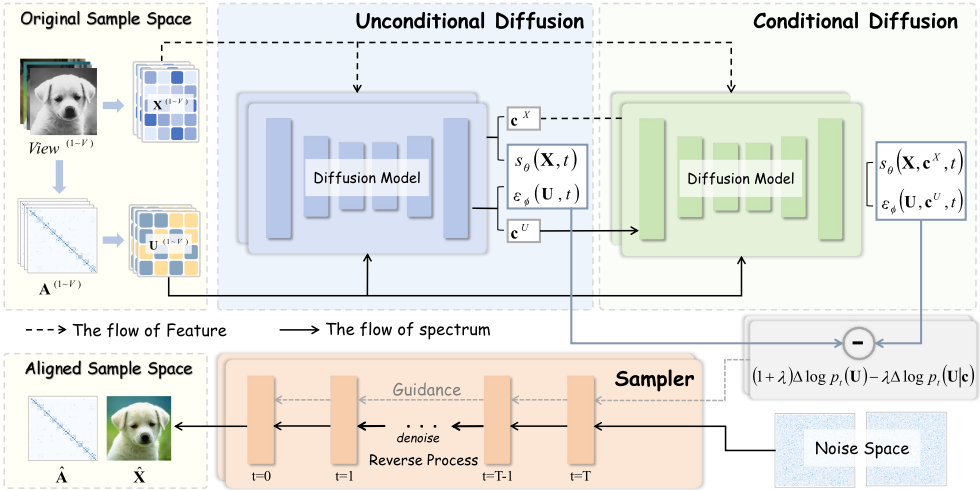
This section details the methodology proposed in this study, and the architecture of the model is illustrated in Figure 2.
4.1 Multi-viewDenoising Spectral Diffusion
Denote a set of views X as {X1 ,X2 , · · · ,XV }. Each view can be represented as a graph Gv = (V (v) , E (v) ,A(v) ,X(v) ), where V (v) is the set of nodes, E (v) is the set of edges, A(v) ∈ RN×N and X(v) ∈ RN×dv , N is the total number of nodes and dv indicates the feature dimension. We aim for the diffusion model to learn the underlying distribution and recover more discriminative data during the sampling process. Specifically, we train two score-based neural networks, including spectral space diffusion ϵϕ(·) and feature space diffusion sθ(·), to generate high-fidelity denoised samples by running a reversed time SDEs.
Applying full-rank diffusion directly on sparse adjacency matrices can lead to significant errors, spectral-domain diffusion offers improved fidelity in reconstruction [Luo et al., 2023]. However, unlike this work, our diffusion operation relies on eigenvectors rather than eigenvalues to obtain purer and more discriminative information. Specifically, let the spectral decomposition of A be given by ΦΛΦT, where Φ is the orthogonal of eigenvectors and Λ is the diagonal matrix of eigenvalues. Noise removal using truncated eigenvectors is an effective technique grounded in graph frequency domain analysis. This approach offers several advantages, including a solid theoretical foundation, effective noise suppression, and the ability to capture global structural information [Bruna et al., 2014]. In our method, the diffusion process emphasizes the low-frequency components of the eigenvectors and achieves noise reduction by reconstructing the first k components of the truncated eigenvectors. For clarity, we denote these truncated vectors as U. The forward spectral diffusion is then described by the following system of SDEs:
whereXvt andUvt represent the evolutionary states of the feature vectors and eigenvectors, v is the view index, f X (·, t) : RN×dv ↦→ RN×dv and f U (·, t) : RN×N ↦→ RN×N denote the drift terms, σX(t) and σU(t) denote the corresponding diffusion coefficients. The stochastic processes ωX t and ωU t are standard Wiener processes.
Forward diffusion perturbs the original data with progressively stronger Gaussian noise under a prescribed drift f X (·, t). Now we define the reverse time SDEs as follows:
where pt(Xv ) and pt(Uv ) denote the marginal probability density functions of Xv and Uv over time, ¯ω is reversetime Wiener process, and the score matching functions ∇X log pt(Xv ) and ∇U log pt(Uv ) are used to train the neural network to learn the gradient of the data distribution.
4.2 Learning Center Anchor via Spectral Diffusion
As mentioned in previous sections, existing methods amplify noise during alignment, leading to failed denoising or even negative effects. To address this issue, we design a module that dynamically learns data centers to align multi-view representations and mitigate noise interference in views, ensuring that the model accurately captures the intrinsic relationships between them.
We begin by following the work of [Arazo et al., 2019], which highlights that noise samples often deviate from the true data distribution. Specifically, we compute the similarity between the original representation and its reconstructed counterpart, which can be formalized as follows:
where τ is the temperature coefficient that controls the smoothness of the weights, and si represents the cosine similarity between the original representation X and the current reconstructed representation ˆX. After calculating the weights using Equation (9), we use it to reduce the impact of noisy samples on the data center. Specifically, we initialize the value as the representation mean to anchor the initial data center (that is, c(v) = 1N ∑Ni=1 X(v) i ) and iteratively refine it through the training process of the unconditional diffusion:
where c(v) represents the representation center of view v, and cfinal represents the global center of multi-view data. Iterative updates of the anchor enable the diffusion model to align representations into a consistent space during the reverse denoising process. In practice, we substitute X and U into the above equation to obtain the corresponding representations cXfinal and cUfinal . In subsequent steps, these two consensus center anchors are used as conditional inputs to the diffusion model to guide its generation process.
4.3 Center-GuidedMulti-viewAlignment
Inspired by the Classifier-Free Guidance [Ho and Salimans, 2021], we use the consensus center anchor obtained from unconditional diffusion model as conditional inputs to the conditional diffusion model. Based on Bayes' theorem, we construct an adjustable guidance mechanism by integrating gradient information from both conditional and unconditional probabilities during the sampling process:
where λ ≥ 0 is a hyperparameter that modulates the influence of the conditional guidance, cXfinal is the joint anchor of the representation of the multi-view features, and cUfinal denotes the joint anchor of the multi-view spectral vector.
The traditional Euler method has a local truncation error of O(h2 ) relative to the step size h when solving ordinary differential equations, while high-order Runge-Kutta methods require multiple evaluations of the neural network sθ and ϵϕ [S¨uli and Mayers, 2003; Karras et al., 2022]. In contrast, Heun's second-order method [Butcher, 2016] provides a favourable trade-off between truncation error and the number of neural network function evaluations [Jolicoeur-Martineau et al., 2021]. Following the guidance framework defined by Equations (12) and (13), the integration process can be approximated using the trapezoidal rule:
where X∗t-1 and U∗t-1 are intermediate predicted values given by the first-order Euler formula. For the specific derivation process of Equations (14) and (15), please refer to Appendix. By predicting the noise in the data through the above system, we can both recover the underlying data distribution and guide the data toward alignment.
4.4 Training and Inference
Training Stage. During the training stage, the consensus center anchor is first obtained by training the unconditional diffusion model using loss (4). Subsequently, the conditional diffusion model is then iteratively optimized according to the following loss functions:
Inference Stage. During the inference Stage, the data is reconstructed based on Equations (16) and (17) to obtain the aligned and denoised single-view outputs, denoted as ˆX and ˆU. In addition, once ˆU is generated through the spectral diffusion process, it is reintroduced into the decomposition equation to reconstruct ˆA as ˆUΛˆUT. For a more detailed algorithm flowchart, please refer to Appendix.
4.5 Theoretical Analysis
Proposition 1. Let A ∈ RN×N be the original data matrix, and U ∈ RN×k be the matrix consisting of the top-k eigenvectors of A, where k ≪ N. For two diffusion processes, the upper bound of the generation error for the truncated eigenvector diffusion is strictly tighter than that of the full matrix diffusion, satisfying:
Remark: Proposition 1 demonstrates that running diffusion on truncated eigenvectors yields tighter error bounds. Furthermore, as the sample size increases and k becomes negligible relative to N, the advantage in error bounds is further amplified. Consequently, our method exhibits significant advantages on large-scale datasets. The proof can be found in Appendix.
Complexity. The overall computational complexity of the diffusion phase is O((4R + 1) · V · N · D2 ). Upon simplification, the complexity exhibits a linear relation. A detailed analysis of the complexity is provided in Appendix.
5 Experiments
In this section, we first introduce the dataset and experimental setup, and then evaluate the performance of the proposed model. In addition, we conduct a series of experiments to further demonstrate the effectiveness of the model.
5.1 Datasets and ComparedMethods
Datasets. We evaluate the proposed method on eight different real-world datasets and three large-scale datasets, including 100leaves, Animals, ALOI, Flower17, GRAZ02, Scene15, MNIST, NUS-WIDE, NUSWIDEOBJ, NoisyMNIST, and YTF. Among these, NUSWIDEOBJ, NoisyMNIST, and YTF are classified as large-scale datasets. Further details are provided in Appendix.
Compared Methods. We compare the proposed method with state-of-the-art baseline models, including Co-GCN [Li et al., 2020], DSRL [Wang et al., 2021], ECMGD [Lu et al., 2024a], RCML [Xu et al., 2024], LGCN-FF [Chen et al., 2023b], and GEGCN [Lu et al., 2024b]. Here LGCNFF and GEGCN are graph-learning models, and a detailed description of the methodology can be found in Appendix.
5.2 Experimental Setting
To mitigate randomness, each experiment repeats five times, and both the mean and variance are reported. For classification tasks, we follow the standard data partitioning protocols and conduct experiments using a fixed learning rate of 0.001 over 1000 training epochs. The experiments employ two authoritative evaluation metrics: Accuracy and F1-Score. More detailed experimental settings can be found in Appendix.
5.3 Classification onMulti-viewDatasets
Performance. Graph convolutional networks are widely used for node classification tasks [Kipf and Welling, 2017; Li et al., 2018; Xu et al., 2019]. By feeding the aligned and denoised views obtained through CGSD into the GCN, we evaluate our node classification performance. The experimental results presented in Table 2 demonstrate that the proposed algorithm consistently outperforms other baseline methods across most datasets. Among them, LGCN-FF and GEGCN are denoising alignment algorithms. Specifically, it achieves notable accuracy improvements of 4.01%, 10.81%, and 2.61% on the 100leaves, Flower17, and Scene15 datasets, respectively. However, the GRAZ02 dataset contains too few samples to fully demonstrate the algorithm's advantages. Furthermore, due to the linear time complexity of CGSD
| Model | Metrics | 100leaves | Animals | ALOI | Flower17 | GRAZ02 | Scene15 | MNIST | NUS-WIDE |
|---|---|---|---|---|---|---|---|---|---|
| Co-GCN | ACC | 30.53 ±5.01 | 73.00 ±5.60 | 94.27 ±0.72 | 37.58 ±0.90 | 40.54 ±2.65 | 58.70 ±1.21 | 92.00 ±0.51 | 41.74 ±1.56 |
| F1 | 29.12 ±4.91 | 73.72 ±1.62 | 95.19 ±0.87 | 33.67 ±1.04 | 38.91 ±1.54 | 56.72 ±0.93 | 91.93 ±0.53 | 39.73 ±0.94 | |
| DSRL | ACC | 67.91 ±1.62 | 80.02 ±2.37 | 91.67 ±0.30 | 43.26 ±5.22 | 48.13 ±1.00 | 61.80 ±0.91 | 92.91 ±0.23 | 43.02 ±1.38 |
| F1 | 64.42 ±1.84 | 75.30 ±2.84 | 91.72 ±0.31 | 41.26 ±4.80 | 48.74 ±1.00 | 60.55 ±0.84 | 92.82 ±0.20 | 38.33 ±2.33 | |
| ECMGD | ACC | 85.50 ±0.31 | 81.84 ±0.19 | 94.32 ±0.72 | 61.63 ±0.38 | 60.58 ±0.21 | 75.30 ±0.42 | 88.31 ±0.11 | 47.64 ±0.80 |
| F1 | 85.02 ±0.41 | 75.26 ±0.27 | 95.36 ±0.72 | 61.15 ±0.18 | 60.27 ±0.51 | 73.85 ±0.32 | 88.12 ±0.12 | 46.67 ±0.04 | |
| RCML | ACC | 52.01 ±0.70 | 81.79 ±0.06 | 83.44 ±1.41 | 38.31 ±2.42 | 42.39 ±0.25 | 76.19 ±0.77 | 85.10 ±0.04 | 40.65 ±0.17 |
| F1 | 43.92 ±0.96 | 75.58 ±0.09 | 83.63 ±1.57 | 34.92 ±2.47 | 38.30 ±0.31 | 75.03 ±0.63 | 84.66 ±0.05 | 39.40 ±0.18 | |
| LGCN-FF | ACC | 62.13 ±0.66 | 72.34 ±6.00 | 93.14 ±1.39 | 50.52 ±0.00 | 49.58 ±2.58 | 57.98 ±0.38 | 90.40 ±2.14 | 44.18 ±0.59 |
| F1 | 61.67 ±0.53 | 66.26 ±6.84 | 93.16 ±1.38 | 50.64 ±0.00 | 43.68 ±1.00 | 55.39 ±1.42 | 88.90 ±2.11 | 41.23 ±1.04 | |
| GEGCN | ACC | 91.11 ±0.55 | 79.52 ±0.22 | 90.71 ±0.41 | 61.47 ±0.74 | 61.64 ±0.50 | 72.98 ±0.44 | 93.33 ±0.19 | 42.85 ±1.28 |
| F1 | 91.00 ±0.50 | 69.93 ±0.34 | 90.75 ±0.40 | 59.92 ±0.84 | 61.52 ±0.33 | 71.85 ±0.56 | 93.32 ±0.20 | 42.72 ±0.98 | |
| Ours | ACC | 95.12 ±0.35 | 85.23 ±0.13 | 96.39 ±0.80 | 72.44 ±2.18 | 60.64 ±1.09 | 78.80 ±0.91 | 93.76 ±0.23 | 49.09 ±1.08 |
| F1 | 95.02 ±0.36 | 77.96 ±0.24 | 96.06 ±0.81 | 72.63 ±2.09 | 60.45 ±1.34 | 77.89 ±0.86 | 93.65 ±0.25 | 48.85 ±2.06 |

diffusion process, the method is well-suited for large-scale datasets. As shown in Table 3, CGSD maintains competitive performance on large-scale multi-view datasets, achieving state-of-the-art performance on all three datasets.
Visualization. Figure 3 shows the t-SNE visualization results of the classification performance of different contrast methods on the Scene15 dataset. Observing the chart, compared to other models, we can see that CGSD significantly improves the inter-class separability within this dataset, indicating that our approach extracts more discriminative features. For visualization of all compared algorithms, please refer to Appendix.
5.4 Visualisation of Denoising Results
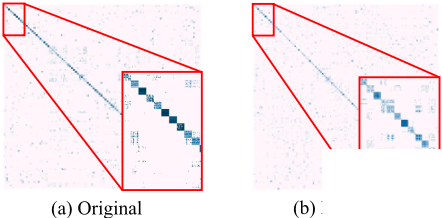
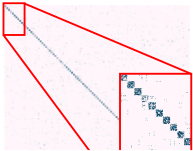
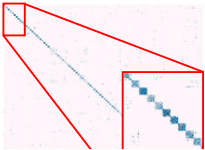
Figure 4 visualizes the original adjacency matrix, alongside the results of two advanced graph learning methods and our proposed denoising method. Notably, our method produces the most distinct diagonal block structure, indicating that the learned similarity matrix focuses on intra-class relationships with a marked reduction in heterogeneous connections. This structure offers a significant advantage for learning node embeddings via graph convolutional networks, as reflected in our superior performance on node classification tasks. The effectiveness of our method stems from the use of a diffusion model, which integrates informative signals frommulti-view while simultaneously denoising truncated eigenvector.
5.5 Time Efficiency Analysis
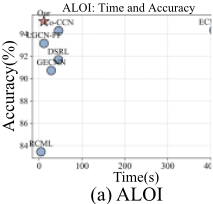
We conduct a comprehensive evaluation of the computational efficiency and performance of various algorithms on multiview data, as shown in Figure 5. The results demonstrate that our proposed method not only achieves higher accuracy but also requires significantly less training time compared to most competing approaches. This improvement is largely due to our linear-time complexity diffusion process and advanced view fusion.
5.6 Ablation Study
To validate the effectiveness of CGSD, we conduct ablation studies, the results of which are illustrated in Figure 6. We independently remove the alignment operations within the feature and spectral spaces to isolate the impact of these alignment mechanisms. It can be observed that the ablated variants exhibit significant performance differences across the majority of datasets. This further indicates that the data sampled following our diffusion process possesses superior discriminability compared to the original data distribution. Detailed results of the ablation studies for the remaining datasets are provided in Appendix.
5.7 Parameter Sensitivity
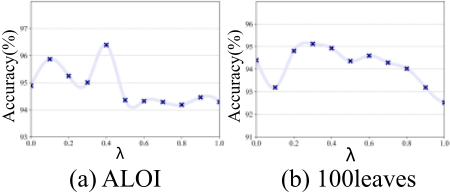
We conduct experiments based on Equations (12) and (13) using various values of λ, with the detailed results presented in Figure 7. Specifically, we report node classification performance for λ = 0 (representing purely unconditional diffusion) and for λ values ranging from 0.1 to 1.0, capturing
(c) GEGCN
(d) Ours
| Model | Metrics | NUSWIDEOBJ | NoisyMNIST |
|---|---|---|---|
| Co-GCN | ACC | 26.55 ± 1.59 | 87.85 |
| F1 | 15.22 ± 2.03 | 87.59 | |
| DSRL | ACC | OOM | 88.24 ± |
| F1 | OOM | 88.52 ± | |
| ECMGD | ACC | OOM | 89.53 ± |
| F1 | OOM | 89.31 ± | |
| RCML | ACC | 34.05 ± 0.15 | 88.40 |
| F1 | 11.84 ± 0.13 | 88.05 | |
| ACC | 14.24 ± 1.24 | 88.68 ± |
LGCN-FF ACC
F1
2.43 ± 1.27
YTF
87.85 ±1.87 98.77 ±0.01
87.59 ±1.76 98.76 ±0.02
OOM
OOM
OOM
OOM
88.40 ±0.07 78.62 ±0.52
88.05 ±0.08 76.58 ±0.47
OOM
85.56 ± 0.49
OOM
GEGCN ACC
F1
OOM
93.63 ± 0.57
OOM
OOM
93.52 ± 0.54
OOM
Ours ACC
38.22 ± 0.21
97.80 ±0.36 99.86 ±0.00
F1
23.62 ± 0.16
97.78 ±0.37 99.79 ±0.01
Table 3: Classification performance on large-scale datasets. The
best results are highlighted in green, while the second-best are high-
lighted in brown, where 'OOM' denotes Out-of-Memory.
Animals: Time and Accuracy
Time(s)
(b) Animals
Figure 5: A comparsion of the runtime (s) and accuracy (%) of the algorithms on the ALOI and Animals datasets.
different levels of guidance strength. The results show that both datasets achieve optimal performance when λ is approximately 0.4, suggesting that moderate guidance effectively facilitates the alignment process by enabling the model to extract complementary information from multi-view. In contrast, excessive guidance leads to a decline in performance. Detailed results of the parameter sensitivity for the remaining datasets are shown in Appendix.

(a) ALOI
(b) 100leaves
Figure 6: Performance comparison between different model variants
on the ALOI and 100leaves datasets.
6 Conclusion and FutureWork
This paper proposes a framework called CGSD, whose main innovation is to replace the alignment process with a generative approach. Unlike existing multi-view learning methods, we learn the underlying distribution of samples to generate aligned samples that conform to the distribution of multiview data. This method effectively alleviates the problem of noise amplification in current alignment methods. Experiments on multiple real-world datasets validate the superiority of CGSD. In the future, we plan to further refine CGSD through several promising directions, such as developing adaptive guidance mechanisms for generation and investigating more stable sampling strategies, thereby extending it to increasingly complex real-world scenarios.
Accuracy(%)
Accuracy(%)
Accuracy(%)
Acknowledgements
This work is in part supported by the National Natural Science Foundation of China under Grants U25A20527 and 62276065, and the Fujian Provincial Natural Science Foundation of China under Grant 2024J01510026.
@inproceedings{ijcai2026p550,
  title     = {Multi-View Alignment and Denoising via Center-Guided Spectral Diffusion},
  author    = {Wang, Jiayuan and Lian, Jie and Shi, Yongquan and Lu, Jielong and Lai, Zhiyuan and Wang, Shiping},
  booktitle = {Proceedings of the Thirty-Fifth International Joint Conference on
               Artificial Intelligence, {IJCAI-26}},
  publisher = {International Joint Conferences on Artificial Intelligence Organization},
  editor    = {Diego Calvanese},
  pages     = {4940--4948},
  year      = {2026},
  month     = {8},
  note      = {Main Track},
  doi       = {10.24963/ijcai.2026/550},
  url       = {https://doi.org/10.24963/ijcai.2026/550},
}
TY - CPAPER TI - Multi-View Alignment and Denoising via Center-Guided Spectral Diffusion AU - Wang, Jiayuan AU - Lian, Jie AU - Shi, Yongquan AU - Lu, Jielong AU - Lai, Zhiyuan AU - Wang, Shiping T2 - Proceedings of the Thirty-Fifth International Joint Conference on Artificial Intelligence, IJCAI-26 PB - International Joint Conferences on Artificial Intelligence Organization PY - 2026 SP - 4940 EP - 4948 DO - 10.24963/ijcai.2026/550 UR - https://doi.org/10.24963/ijcai.2026/550 ER -Copied
Machine-readable versions of this paper, for tools and AI agents:





