
Beyond Pipeline Mimicry: Expert-level Aesthetic ISP via Reward-Guided Flow
Proceedings of the Thirty-Fifth International Joint Conference on Artificial Intelligence. Main Track. Pages 1559-1567.
https://doi.org/10.24963/ijcai.2026/174
Keywords
- Computer Vision: Image and video retrieval
- Computer Vision: Applications and Systems
- Knowledge Representation and Reasoning: Applications
Abstract
Recent deep learning-based ISP methods are primarily constrained by mimicking fixed camera pipelines, consequently struggling to achieve expert-level aesthetic quality. To this end, we propose AesISP, the first expert-level aesthetic ISP framework formulated as a reward flow model. Addressing the ill-posed nature of ISP, AesISP establishes a Privileged Prior Distillation paradigm. By leveraging expert-image-guided latent proxies, we decompose the intractable task into a tractable, proxy-driven learning process. Subsequently, we propose MeanFlow++, which reformulates the flow matching objective via target-prediction parameterization and a Progressive Temporal Curriculum. By evolving from learning instantaneous to long-range average velocities, this mechanism rectifies transport trajectories and uses deterministic mapping to impose explicit constraints, anchoring the generation trajectory to the expert manifold. Finally, we introduce a multi-dimensional reward-driven reinforcement learning approach.Leveraging Group Relative Policy Optimization (GRPO) to balance trade-offs across dimensions such as color and lighting, it steers the model to converge precisely on expert-level aesthetic standards. Experiments demonstrate that AesISP outperforms state-of-the-art methods in both quantitative metrics and aesthetic quality.
- [Bai et al., 2025a] Haowen Bai, Jiangshe Zhang, Zixiang Zhao, Lilun Deng, Yukun Cui, and Shuang Xu. Retinex- mef: Retinex-based glare effects aware unsupervised multi-exposure image fusion. In Proceedings of the IEEE/CVF International Conference on Computer Vision, pages 7251-7261, 2025.
- [Bai et al., 2025b] Haowen Bai, Jiangshe Zhang, Zixiang Zhao, Yichen Wu, Lilun Deng, Yukun Cui, Tao Feng, and Shuang Xu. Task-driven image fusion with learnable fu- sion loss. In Proceedings of the Computer Vision and Pat- tern Recognition Conference, pages 7457-7468, 2025.
- [Bai et al., 2025c] Haowen Bai, Zixiang Zhao, Jiangshe Zhang, Yichen Wu, Lilun Deng, Yukun Cui, Baisong Jiang, and Shuang Xu. Refusion: Learning image fusion from reconstruction with learnable loss via meta-learning. International Journal of Computer Vision, 133(5):2547- 2567, 2025.
- [Bychkovsky et al., 2011] Vladimir Bychkovsky, Sylvain Paris, Eric Chan, and Frédo Durand. Learning photo- graphic global tonal adjustment with a database of input / output image pairs. In The Twenty-Fourth IEEE Confer- ence on Computer Vision and Pattern Recognition, 2011.
- [Chen et al., 2018] Ricky TQ Chen, Yulia Rubanova, Jesse Bettencourt, and David K Duvenaud. Neural ordinary dif- ferential equations. Advances in neural information pro- cessing systems, 31, 2018.
- [Dai et al., 2020] Linhui Dai, Xiaohong Liu, Chengqi Li, and Jun Chen. Awnet: Attentive wavelet network for im- age isp. In European Conference on Computer Vision, pages 185-201. Springer, 2020.
- [Geng et al., 2025] Zhengyang Geng, Mingyang Deng, Xingjian Bai, J Zico Kolter, and Kaiming He. Mean flows for one-step generative modeling. arXiv preprint arXiv:2505.13447, 2025.
- [Google DeepMind, 2025] Google DeepMind. Gemini 3 flash: Frontier intelligence built for speed. https:// deepmind.google/models/gemini/flash/, December 2025. Accessed: 2026-01-20. Link
- [He et al., 2024] Xuanhua He, Tao Hu, Guoli Wang, Zejin Wang, Run Wang, Qian Zhang, Keyu Yan, Ziyi Chen, Rui Li, Chengjun Xie, et al. Enhancing raw-to-srgb with decoupled style structure in fourier domain. In Proceed- ings of the AAAI Conference on Artificial Intelligence, vol- ume 38, pages 2130-2138, 2024.
- [Ho et al., 2020] Jonathan Ho, Ajay Jain, and Pieter Abbeel. Denoising diffusion probabilistic models. Advances in neural information processing systems, 33:6840-6851, 2020.
- [Hsyu et al., 2021] Ming-Chun Hsyu, Chih-Wei Liu, Chao Chen, Chao-Wei Chen, and Wen-Chia Tsai. Csanet: High speed channel spatial attention network for mobile isp. 2021 IEEE/CVF Conference on Computer Vision and Pat- tern Recognition Workshops (CVPRW), pages 2486-2493, 2021.
- [Ignatov et al., 2020] Andrey Ignatov, Radu Timofte, Zhilu Zhang, Ming Liu, Haolin Wang, Wangmeng Zuo, Jiawei Zhang, Ruimao Zhang, Zhanglin Peng, Sijie Ren, et al. Aim 2020 challenge on learned image signal processing pipeline. In European Conference on Computer Vision, pages 152-170. Springer, 2020.
- [Kang et al., 2014] Le Kang, Peng Ye, Yi Li, and David Do- ermann. Convolutional neural networks for no-reference image quality assessment. In Proceedings of the IEEE con- ference on computer vision and pattern recognition, pages 1733-1740, 2014.
- [Ke et al., 2021] Junjie Ke, Qifei Wang, Yilin Wang, Pey- man Milanfar, and Feng Yang. Musiq: Multi-scale im- age quality transformer. In Proceedings of the IEEE/CVF international conference on computer vision, pages 5148- 5157, 2021.
- [Li and He, 2025] Tianhong Li and Kaiming He. Back to basics: Let denoising generative models denoise. arXiv preprint arXiv:2511.13720, 2025.
- [Li et al., 2024a] Zhuoyuan Li, Jiacheng Li, Yao Li, Li Li, Dong Liu, and Feng Wu. In-loop filtering via trained look-up tables. In 2024 IEEE International Conference on Visual Communications and Image Processing (VCIP), pages 1-5, 2024.
- [Li et al., 2024b] Zhuoyuan Li, Yao Li, Chuanbo Tang, Li Li, Dong Liu, and Feng Wu. Uniformly accelerated motion model for inter prediction. In 2024 IEEE Interna- tional Conference on Visual Communications and Image Processing (VCIP), pages 1-5, 2024.
- [Li et al., 2025] Zhuoyuan Li, Junqi Liao, Chuanbo Tang, Haotian Zhang, Yuqi Li, Yifan Bian, Xihua Sheng, Xin- min Feng, Yao Li, Changsheng Gao, et al. Ustc-td: A test dataset and benchmark for image and video coding in 2020s. IEEE Transactions on Multimedia, 2025.
- [Lipman et al., 2022] Yaron Lipman, Ricky TQ Chen, Heli Ben-Hamu, Maximilian Nickel, and Matt Le. Flow matching for generative modeling. arXiv preprint arXiv:2210.02747, 2022.
- [Mo et al., 2025] Zhipeng Mo, Wenbo Li, and Sihao Ding. Diffuse and refine latent prior with transformers for neu- ral isp. In 2025 IEEE International Conference on Image Processing (ICIP), pages 1456-1461. IEEE, 2025.
- [Ren et al., 2025] Yang Ren, Hai Jiang, Menglong Yang, Wei Li, and Shuaicheng Liu. Ispdiffuser: Learning raw- to-srgb mappings with texture-aware diffusion models and histogram-guided color consistency. In Proceedings of the AAAI Conference on Artificial Intelligence, volume 39, pages 6722-6730, 2025.
- [Shao et al., 2024] Zhihong Shao, Peiyi Wang, Qihao Zhu, Runxin Xu, Alan Song, Mingchuan Xiao, Yaofei Kelude, Yining Zhang, Kungu Li, Yikang Lv, et al. Deepseekmath: Pushing the limits of mathematical reasoning in open lan- guage models. arXiv preprint arXiv:2402.03300, 2024.
- [Souza and Heidrich, 2024] Matheus Souza and Wolfgang Heidrich. Metaisp-exploiting global scene structure for accurate multi-device color rendition. arXiv preprint arXiv:2401.03220, 2024.
- [Talebi and Milanfar, 2018] Hossein Talebi and Peyman Mi- lanfar. Nima: Neural image assessment. IEEE transac- tions on image processing, 27(8):3998-4011, 2018.
- [Wu et al., 2023] Haoning Wu, Zicheng Zhang, Weixia Zhang, Chaofeng Chen, Liang Liao, Chunyi Li, Yixuan Gao, Annan Wang, Erli Zhang, Wenxiu Sun, et al. Q-align: Teaching lmms for visual scoring via discrete text-defined levels. arXiv preprint arXiv:2312.17090, 2023.
- [Xiao and Xiong, 2025] Zeyu Xiao and Zhiwei Xiong. In- corporating degradation estimation in light field spatial super-resolution. Computer Vision and Image Understand- ing, 252:104295, 2025.
- [Xiao et al., 2026] Zeyu Xiao, Zhuoyuan Li, Yang Zhao, Yu Liu, Zhao Zhang, and Wei Jia. Learning dual modal- ity interactions for event-based motion deblurring. IEEE Transactions on Multimedia, 2026.
- [Xu et al., 2024] Kepeng Xu, Zijia Ma, Li Xu, Gang He, Yunsong Li, Wenxin Yu, Taichu Han, and Cheng Yang. An end-to-end real-world camera imaging pipeline, 2024.
- [Xu et al., 2025] Kepeng Xu, Tong Qiao, Zhenyang Liu, Li Xu, and Gang He. End-to-end RAW synergy for el- evated vision-language reasoning. In The First Workshop on Multimodal Knowledge and Language Modeling, 2025.
- [Yan et al., 2025] Hailong Yan, Ao Li, Xiangtao Zhang, Zhe Liu, Zenglin Shi, Ce Zhu, and Le Zhang. Mobileie: An extremely lightweight and effective convnet for real-time image enhancement on mobile devices. arXiv preprint arXiv:2507.01838, 2025.
- [Yang et al., 2022] Sidi Yang, Tianhe Wu, Shuwei Shi, Shan- shan Lao, Yuan Gong, Mingdeng Cao, Jiahao Wang, and Yujiu Yang. Maniqa: Multi-dimension attention network for no-reference image quality assessment. In Proceed- ings of the IEEE/CVF conference on computer vision and pattern recognition, pages 1191-1200, 2022.
- [Zhang et al., 2018] Richard Zhang, Phillip Isola, Alexei A Efros, Eli Shechtman, and Oliver Wang. The unreasonable effectiveness of deep features as a perceptual metric. In Proceedings of the IEEE conference on computer vision and pattern recognition, pages 586-595, 2018.
- [Zhang et al., 2021] Zhilu Zhang, Haolin Wang, Ming Liu, Ruohao Wang, Jiawei Zhang, and Wangmeng Zuo. Learn- ing raw-to-srgb mappings with inaccurately aligned su- pervision. In Proceedings of the IEEE/CVF International Conference on Computer Vision, pages 4348-4358, 2021.
- [Zhao et al., 2021] Rui Zhao, Ruiqin Xiong, Ziluo Ding, Xiaopeng Fan, Jian Zhang, and Tiejun Huang. Mrd- flow: Unsupervised optical flow estimation network with multi-scale recurrent decoder. IEEE Transactions on Cir- cuits and Systems for Video Technology, 32(7):4639-4652, 2021.
- [Zhao et al., 2026] Rui Zhao, Ruiqin Xiong, Dongkai Wang, Shiyu Xuan, Jian Zhang, Xiaopeng Fan, and Tiejun Huang. Spike camera optical flow estimation based on continuous spike streams. IEEE Transactions on Pat- tern Analysis and Machine Intelligence, 48(4):4756-4770, 2026.
References were extracted automatically from the PDF and may contain errors.
Full text extracted automatically from the PDF; figures, tables and equations may differ. The PDF is the version of record.
1 Introduction
In the field of image signal processing (ISP), a significant paradigm shift is occurring, transitioning from traditional hardware-driven logic to data-driven deep learning (DL) models. Most mainstream DL-ISP approaches adopt a supervised learning framework, utilizing paired data to fit deterministic mappings prescribed by standard engines or commercial cameras (e.g., RawPy or Canon). These methods accurately model the transformation from sensor data to sRGB space. Recent end-to-end real-world camera pipelines further show that jointly learning RAW-to-sRGB processing is effective under practical imaging conditions [Xu et al., 2024]. However, they are inherently high-fidelity proxies for a fixed imaging pipeline, which limits their flexibility and artistic adaptability.
* Corresponding authors.
This deterministic nature, while precise, fundamentally conflicts with the art of photography. High-quality imaging requires adaptive, stylistic adjustments based on specific visual semantics and mood, rather than rigid approximations. By enforcing a one-size-fits-all logic across different scenes, existing methods degrade into static converters, prioritizing rule compliance over aesthetic expression. To overcome this limitation, we propose a shift toward Aesthetic ISP (AesISP), aiming to reconstruct the processing paradigm. We focus on moving away from fidelity-driven simulation to aestheticsdriven generation, aligning more closely with human expert preferences to produce images that balance signal integrity with exceptional visual appeal.
Building such an aesthetic ISP system presents unique challenges, requiring a reevaluation of existing learning paradigms. Directly regressing Raw data to expert-level aesthetic images through traditional models is highly challenging due to the ill-posed nature of the mapping. To address this, we introduce the concept of Privileged Prior Distillation. Rather than directly tackling this high-dimensional generation task, we decompose it into two more tractable stages. In the first stage, we propose an expert-validated condensing model (Aesthetic Condensing Network (ACN)) and a Raw-to-RGB transformation model (Raw-to-SRGB Mapping Model (R2SM)). The ACN condenses the complex transformation from Raw to aesthetic sRGB into a compact, lowdimensional aesthetic ISP latent variable, zaes. Subsequently, the R2SM uses the aesthetic prior zaes to guide the Raw-toRGB transformation. Since zaes is a low-dimensional abstraction of the complex color grading logic, it significantly improves the tractability of modeling compared to the full pixel space. This strategy not only circumvents the inherent ambiguity of direct mapping but also forces the model to learn the direction of aesthetic adjustments, avoiding mechanical memorization of pixel values.
In the second stage, we develop an Expert Prior Generator (EPG) to model the distribution of expert-level aesthetic latents, zaes, from Raw inputs alone. The generated prior then guides R2SM toward high-quality sRGB rendering.
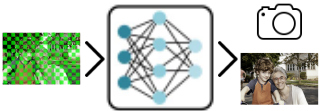
- a). Previous methods: Learning fixed traditional ISP.
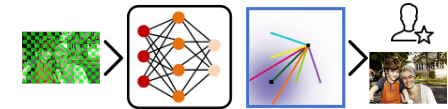
b). Our method: Learning expert-level aesthetic ISP.
Figure 1: From pipeline emulation to aesthetic generation. (a) Existing deep ISPs [Zhang et al., 2021] typically use supervised regression to mimic fixed hardware pipelines (e.g., Canon), often failing to capture semantic-adaptive aesthetics. (b) AesISP formulates the task as rewardguided flow generation, leveraging an expert prior and multi-dimensional rewards to optimize for both fidelity and expert-level aesthetics.
We observe that vanilla MeanFlow faces a key bottleneck in aesthetic ISP: its linear flow assumption is ill-suited to the high-curvature mapping from the linear Raw domain to the nonlinear aesthetic manifold. We therefore introduce two core improvements:
- Progressive Temporal Curriculum: We use a progressive temporal curriculum to bridge the geometric gap between local tangents and global secants on curved manifolds. Training begins with local denoising on the expert prior manifold and gradually expands the sampled time span, enabling stable learning of long-range transformations.
- Target-Predictive Parameterization: We introduce target-predictive parameterization to suppress highfrequency noise in velocity regression. Since the expert aesthetic prior, zaes, lies on a compact low-dimensional manifold, target prediction is more stable than direct regression in high-dimensional Raw space. Projecting the predicted velocity back to signal space imposes explicit manifold constraints, keeping predictions anchored to the expert aesthetic prior.
Together, these advancements stabilize Raw-to-RGB conversion while preserving subtle aesthetic details.
Given the subjective and multi-dimensional nature of aesthetic quality, pixel-level losses and scalar rewards cannot capture nuanced perceptual trade-offs in arrangement, color harmony, and overall appeal. RAW-centric multimodal studies further suggest that sensor-level information can support high-level vision-language reasoning [Xu et al., 2025], motivating a closer link between low-level imaging and semantic aesthetic assessment. We therefore introduce a multidimensional reward-driven reinforcement learning approach that uses Visual Language Models (VLMs) to optimize aesthetic criteria such as arrangement, color balance, and emotional tone, guiding the model toward expert-level standards.
As the first expert-level aesthetic ISP framework built on a reward-flow model, we present AesISP. The main contributions of our work are as follows.
- AesISP Framework: The first expert-level aesthetic ISP based on a reward flow model, surpassing traditional fixed-pipeline imitation paradigms to achieve rendering that combines both high fidelity and artistic expression.
- Privileged Prior Distillation: A novel approach that decomposes the ill-posed Raw-to-expert mapping into a reference-guided surrogate learning process, effectively constraining the solution space.
- MeanFlow++ Mechanism: A mechanism that combines target prediction with progressive curriculum learning to reconstruct flow objectives, anchoring the expert manifold robustly through explicit constraints.
- Multi-Dimensional Aesthetic Reward Learning: Utilizing Visual Language Models (VLM) to optimize multiple aesthetic criteria, such as arrangement and color harmony, aligning the model with human aesthetic preferences.
2 RelatedWork
Neural Image Signal Processing Deep learning has revolutionized the design philosophy of ISP pipelines. Recent enhancement and fusion studies show that perceptual reconstruction often requires illumination-aware modeling and adaptive objectives beyond pixel-wise fidelity [Bai et al., 2025a; Bai et al., 2025c]. This trend is also reflected in broader computational imaging tasks, where degradation estimation, modality interaction, and signal-specific dynamics are exploited for light-field restoration, event-based deblurring, and optical-flow modeling [Xiao and Xiong, 2025; Xiao et al., 2026; Zhao et al., 2021; Zhao et al., 2026]. In image and video coding, recent benchmarks and learned prediction/filtering modules further indicate that high-quality reconstruction depends on task-specific priors and signal-adaptive processing [Li et al., 2025; Li et al., 2024a; Li et al., 2024b]. Classical regression models such as CSANet [Hsyu et al., 2021], AWNet [Dai et al., 2020], and LiteISP [Zhang et al., 2021] essentially serve as neural approximators for traditional hardware ISPs. Even generative methods like ISPDiffuser [Ren et al., 2025] and D&R [Mo et al., 2025], despite improving texture details, remain constrained by the "pipeline fitting" paradigm, where the ultimate goal is to replicate the outputs of existing camera algorithms. In contrast, AesISP shifts ISP from "fidelity-oriented simulation" to "aestheticoriented generation," directly mapping RAW inputs to expertlevel aesthetic representations beyond standard pipeline constraints.
Generative Models While Diffusion Probabilistic Models (DPMs) [Ho et al., 2020] and Continuous Normalizing Flows (CNFs) [Chen et al., 2018] excel in generation tasks, their iterative integration processes often incur prohibitive inference latency. To address this, FlowMatching (FM) [Lipman et al., 2022] introduces a simulation-free paradigm, achieving deterministic transport by regressing fixed velocity fields.
Building on this, MeanFlow [Geng et al., 2025] further realizes ultra-fast one-step generation by modeling average velocity. Although these velocity-centric frameworks have succeeded in general synthesis tasks, applying them to aesthetic ISP reveals a fundamental theoretical bottleneck. As pointed out by Li et al. [Li and He, 2025], velocity is inherently an off-manifold quantity belonging to the high-dimensional ambient space; directly regressing it introduces significant task-irrelevant high-frequency noise interference. More critically, the high-curvature nature of the Raw-to-Aesthetic mapping induces severe geometric misalignment: standard training objectives cannot reconcile the significant discrepancy between global average velocity (secant) and local instantaneous velocity (tangent), leading to ambiguous optimization directions. To surmount these limitations, we propose MeanFlow++. This framework redirects the optimization objective toward manifold-anchored signal prediction, circumventing high-entropy noise in the velocity field. Furthermore, the introduction of a progressive time curriculum eliminates geometric misalignment caused by high curvature, ensuring the model robustly captures the complex mapping from Raw to aesthetic space.
3 Methodology
3.1 Overview
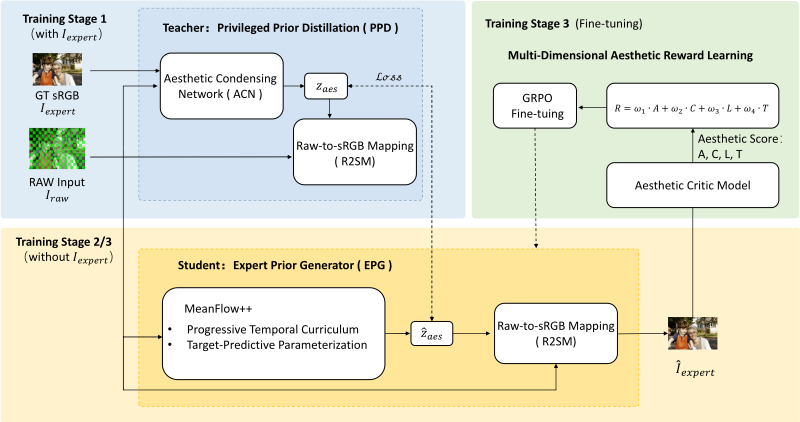
AesISP is designed to reconstruct the intricate mapping between raw sensor data (Iraw) and expert-level aesthetic images (Iexpert). As illustrated in Figure 2, to tackle the inherent ill-posed nature of this translation, our framework operates through three tightly coupled stages, effectively decomposing the high-dimensional generation task into tractable proxy learning processes.
First, we establish a Privileged Prior Distillation paradigm. During training, utilizing Iexpert as privileged information, we employ an Aesthetic Condensing Network (ACN) to distill complex color grading logic into a compact, lowdimensional aesthetic ISP latent variable (zaes). This latent variable subsequently serves as a prior to guide the Raw-toSRGB Mapping Model (R2SM), thereby circumventing the ambiguity associated with direct mapping.
Second, to accurately model the distribution of zaes solely from Iraw during inference, we introduce the Expert Prior Generator (EPG), underpinned by our novel MeanFlow++ mechanism. Addressing the complex mapping from the linear Raw domain to the non-linear aesthetic manifold, MeanFlow++ integrates a Progressive Temporal Curriculum with Target-Predictive Parameterization. By evolving from learning instantaneous local denoising to modeling long-range deterministic transport paths, it constructs a flow trajectory with explicit structural constraints, robustly anchoring the prediction to the expert manifold.
Finally, to ensure alignment with human aesthetic preferences, we incorporate a Multi-Dimensional Aesthetic Reward Learning mechanism. This approach leverages Visual Language Models (VLMs) to capture high-level semantics such as arrangement and color harmony, guiding the model finetuning to produce sRGB images that balance high signal fidelity with exceptional artistic expressiveness.
3.2 Privileged Prior Distillation Paradigm
Mapping raw sensor data (Iraw) to expert-level aesthetic images (Iexpert) constitutes an inherently ill-posed inverse problem. Directly learning this complex, one-to-many mapping is arduous and prone to suboptimal convergence. To address this, we propose the Privileged Prior Distillation (PPD) strategy, designed to regularize the solution space by leveraging privileged information available during training.
Specifically, we introduce the Aesthetic Condensing Network (ACN), denoted as EACN. Unlike traditional encoders that focus solely on content features, EACN takes both Iraw and Iexpert as joint inputs to distill the underlying aesthetic adjustment logic. The network compresses this complex nonlinear transformation into a compact, low-dimensional aesthetic ISP latent variable zaes:
where zaes serves as a low-dimensional proxy for highdimensional aesthetic operations, effectively decoupling the aesthetic grading instructions from the image content.
Subsequently, we employ the Raw-to-SRGB Mapping Model (R2SM), denoted as MR2SM, which acts as a conditional execution engine. MR2SM utilizes the aesthetic intent encoded in zaes to guide the physical rendering process from Iraw to the sRGB space. We jointly optimize ACN and R2SM by minimizing the pixel-wise reconstruction error between the generated output and the expert ground truth:
Through this distillation paradigm, we decompose the ambiguous direct regression task into two tractable subproblems: aesthetic intent extraction via ACN and controlled image reconstruction via R2SM. This strategy not only significantly reduces modeling complexity but also forces zaes to form a compact and semantically continuous manifold, laying a robust foundation for the subsequent flow-based prediction stage.
3.3 MeanFlow++Mechanism
Following the Privileged Prior Distillation stage, we obtain a training set of paired data {(Iraw, zaes)}, where zaes = EACN(Iraw, Iexpert) represents the low-dimensional aesthetic latent prior distilled by the frozen ACN. The objective of this second stage is to model the conditional distribution p(zaes | Iraw): given solely Iraw, the model must generate a latent code z that lies precisely on the expert aesthetic manifold. To achieve efficient and high-fidelity generation, we construct the MeanFlow++ framework upon the averagevelocity modeling principle of MeanFlow [Geng et al., 2025]. We introduce two complementary advancements-a progressive temporal curriculum and target-predictive parameterization-to address the challenges of fitting this complex mapping from the linear Raw domain to the non-linear aesthetic manifold.
Progressive Temporal Curriculum
To enable efficient one-step generation (1-NFE), MeanFlow++ must ultimately master long-range transport, mapping noise ϵ directly to the aesthetic prior zaes across the full time interval (i.e., r = 0, t = 1). While MeanFlow theoretically supports learning average velocities over arbitrary intervals [Geng et al., 2025], exposing the model to long-range supervision immediately creates a significant optimization bottleneck. At the early stages, the model has not yet established a stable correspondence between the photographic semantics in Iraw and the geometry of the zaes manifold.
To mitigate this, we introduce a Progressive Temporal Curriculum. This strategy resolves geometric misalignment by organizing learning from local tangent fitting to global trajectory alignment. The curriculum proceeds dynamically by controlling the time gap ∆ = t - r:
- Instantaneous Stage (∆ ≈ 0): The objective reduces to standard flow matching [Lipman et al., 2022; Geng et al., 2025], where the model learns instantaneous velocities to capture local manifold tangents.
- Short-Range Stage (Small ∆): The model expands its receptive field to learn average velocities over short intervals, consolidating stability near the manifold.
- Long-Range Stage (Large ∆): Finally, the model learns global transport across large gaps, acquiring the capability for direct Raw-to-Aesthetic mapping.
In practice, we sample ∆ ∼ U(0,∆max) and gradually anneal ∆max from 0 to 1 during training.
Target-Predictive Parameterization
Standard flow-based approaches typically regress a conditional velocity field u. However, the velocity field resides in a high-entropy, off-manifold space, making direct regression prone to variance and error accumulation. In our context, the target zaes lies on a structured, semantically meaningful expert aesthetic manifold. Regressing velocity often leads to "drift", where the integral of the predicted flow deviates from this precise manifold.
To address this, we reformulate the learning paradigm as Target-Prediction. Instead of optimizing the velocity field directly, we leverage the MeanFlow identity [Geng et al., 2025] to project the predicted velocity back into the signal space, enforcing an explicit constraint on the terminal state. Specifically, given noise ϵ ∼ N(0, I) and an interpolated state zt = (1 - t)zaes + tϵ, we derive a closed-form estimate of the aesthetic prior, denoted as ˆz0:
where uθ is the network prediction and ∂uθ ∂t is computed via automatic differentiation. This formulation essentially inverts the flow equation to predict the origin zaes. Consequently, we supervise the model directly in the target space:
where Lrec denotes a robust reconstruction loss function. This objective mathematically enforces Manifold Anchoring: by minimizing the discrepancy between the predicted origin ˆz0 and the ground truth zaes, we constrain the flow trajectory to terminate precisely on the expert manifold, rather than merely matching intermediate velocities. This significantly stabilizes the generation process and ensures that the synthesized latents faithfully preserve the intricate color grading and tonal logic distilled from the experts.
| Method | PSNR ↑ | SSIM↑ | LPIPS ↓ | NIMA ↑ | MUSIQ ↑ | MANIQA ↑ | Q-Align ↑ | MUSIQ-AVA ↑ | CNNIQA ↑ |
|---|---|---|---|---|---|---|---|---|---|
| AWNet[Dai et al., 2020] | 24.330 | 0.8814 | 0.1086 | 4.7591 | 63.83 | 0.3621 | 3.8242 | 4.7922 | 0.5712 |
| CSANet[Hsyu et al., 2021] | 23.074 | 0.8478 | 0.1329 | 4.7539 | 64.58 | 0.3685 | 3.8069 | 4.7574 | 0.5944 |
| LiteISPNet[Zhang et al., 2021] | 24.693 | 0.8810 | 0.0895 | 4.8248 | 64.90 | 0.3869 | 3.9179 | 4.8361 | 0.5846 |
| MW-ISPNet[Ignatov et al., 2020] | 23.487 | 0.8824 | 0.1014 | 4.8141 | 64.37 | 0.3656 | 3.8355 | 4.8056 | 0.5791 |
| MobileIE[Yan et al., 2025] | 23.932 | 0.8448 | 0.1506 | 4.7194 | 60.74 | 0.3423 | 3.6233 | 4.7404 | 0.5468 |
| MetaISP[Souza and Heidrich, 2024] | 24.461 | 0.8754 | 0.1336 | 4.7591 | 63.15 | 0.3621 | 3.6854 | 4.6929 | 0.5239 |
| FourierISP[He et al., 2024] | 24.758 | 0.8830 | 0.1126 | 4.7933 | 64.60 | 0.3873 | 3.8400 | 4.8236 | 0.5769 |
| ISPDiffuser[Ren et al., 2025] | 23.007 | 0.8453 | 0.1620 | 4.8067 | 61.26 | 0.3112 | 3.7535 | 4.5742 | 0.4687 |
| AesISP ( Ours ) | 26.173 | 0.9096 | 0.0675 | 4.8542 | 65.97 | 0.4039 | 3.9956 | 4.8995 | 0.5942 |
3.4 Multi-Dimensional Aesthetic Reward Learning
Given the inherently subjective and multi-dimensional nature of aesthetic quality, pixel-level reconstruction losses alone are inadequate for capturing nuanced perceptual differences. Inspired by task-adaptive low-level objectives [Bai et al., 2025c; Bai et al., 2025b], we model aesthetics with multidimensional rewards. Traditional scalar rewards fall short in modeling the intricate trade-offs between arrangement, color harmony, and overall visual appeal. To address this, we introduce a novel multi-dimensional reward-driven reinforcement learning approach, termed Multi-Dimensional Aesthetic Reward Learning.
Specifically, we employ Gemini-3 [Google DeepMind, 2025] as the aesthetic critic to evaluate generated images across four dimensions: Arrangement (A), Color Harmony (C), Lighting Tone (L), and Atmosphere (T). These scores are aggregated into a unified reward Rfused:
For efficient fine-tuning, we utilize Group Relative Policy Optimization (GRPO) [Shao et al., 2024]. For each raw input, we evaluate G candidates and compute the group-relative advantage ˆ Ai:
Here, Ri is the fused reward, and µgroup and σgroup denote group statistics. This signed advantage promotes aboveaverage candidates while balancing fidelity and aesthetics.
3.5 Training Strategy
We employ a Three-stage Progressive Protocol to train AesFlow on the FiveK dataset. This protocol decouples optimization objectives, ensuring robust convergence across modules.
Stage I: Expert Manifold Construction. This stage establishes a reliable expert latent manifold. We jointly train the Aesthetic Condensing Network (ACN) and the R2SM decoder. Using paired supervision, ACN extracts the latent zaes, from which R2SM reconstructs the expert image. We optimize the reconstruction objective Lrec = ∥MR2SM(Iraw, zaes) - Iexpert∥1. This constraint forces zaes to encapsulate essential color grading cues, serving as the ground truth anchor for subsequent prior fitting.
Stage II: Generative Prior Fitting via EPG. Fixing the decoder, we train the Expert Prior Generator (EPG) to fit p(zaes | Iraw). EPG adopts a Coarse-to-Fine strategy: it first predicts a coarse deterministic estimate, and MeanFlow++ learns to generate the residual zres. To stabilize optimization, we adopt the Adaptive Weighted Objective from MeanFlow [Geng et al., 2025]:
where δ denotes the prediction error, w is the adaptive weight, and sg(·) is the stop-gradient operator. This objective dynamically balances sample contributions via γ, ensuring a stable transition from local denoising to long-range transport under our progressive curriculum.
Stage III: Aesthetic Preference Fine-tuning. The final stage performs end-to-end fine-tuning using the GRPO mechanism. Leveraging the stochastic nature of MeanFlow++, we synthesize a diverse pool of candidate priors, which are rendered by R2SM. The model is then updated via VLM-driven multi-dimensional rewards, aligning the output with human aesthetic preferences while maintaining pixel-level fidelity.
4 Experiments
4.1 Experimental Settings
Dataset and Metrics We conduct experiments on the MITAdobe FiveK dataset [Bychkovsky et al., 2011]. We allocate 4381 image pairs for training and use 200 pairs for testing. To comprehensively assess performance, we employ a holistic set of metrics across three dimensions: (1) Fidelity: PSNR and SSIMmeasure signal reconstruction accuracy. (2) Perceptual Quality: LPIPS [Zhang et al., 2018] evaluates human-perceived image degradation. (3) Aesthetic & Semantic Quality: We utilize a suite of reference-free metrics, including NIMA [Talebi and Milanfar, 2018], MUSIQ and MUSIQ-AVA [Ke et al., 2021], MANIQA [Yang et al., 2022], CNNIQA [Kang et al., 2014], and the VLM-based metric QAlign [Wu et al., 2023], to strictly evaluate aesthetic alignment and visual statistics.
Implementation Details Our framework is implemented in PyTorch on an NVIDIA RTX 5090 GPU. We use the AdamW optimizer with an initial learning rate of 2 × 10⁻⁴ . Training follows our three-stage progressive protocol. A batch size of 24 is used for the first two stages. In the final stage (GRPO Fine-tuning), we adjust the batch size to 6 with a group size of G = 4 to manage computational costs while enabling effective relative optimization. For inference, thanks to the MeanFlow++ mechanism, we achieve high-fidelity generation with a single function evaluation (NFE=1).
| Method | PSNR ↑ | SSIM↑ | LPIPS ↓ |
|---|---|---|---|
| Baseline (Direct Mapping) | 24.69 | 0.8809 | 0.0895 |
| Ours (w/ Distillation) | 25.12 | 0.9022 | 0.0739 |
4.2 Comparison with ExistingMethods
We benchmark AesISP against representative regressionbased baselines (e.g., LiteISP [Zhang et al., 2021], FourierISP [He et al., 2024]) and the generative ISPDiffuser [Ren et al., 2025].
Quantitative Evaluation. Table 1 details the performance on the FiveK test set. AesISP achieves strong results across fidelity and aesthetic metrics, validating its ability to overcome paradigm limitations:
- Reconciling Fidelity and Aesthetics: AesISP demonstrates strong fidelity and aesthetic quality. This validates our Privileged Prior Distillation: while regression models often converge to a statistical mean of color gradings, resulting in blurry outputs, AesISP leverages the distilled latent zaes to lock onto the unique expert solution, ensuring precise pixel-level restoration.
- Overcoming Mapping Bottlenecks: Although ISPDiffuser also adopts a diffusion-based generative framework, it lags in LPIPS and Q-Align. This confirms
that standard diffusion models struggle to master the high-curvature Raw-to-sRGBmapping. In contrast, AesISP maximizes the benefits of MeanFlow++'s TargetPredictive Parameterization and Progressive Temporal Curriculum. These mechanisms explicitly anchor the trajectory to the expert manifold and facilitate longrange transport, ensuring both high generative quality and controllability.
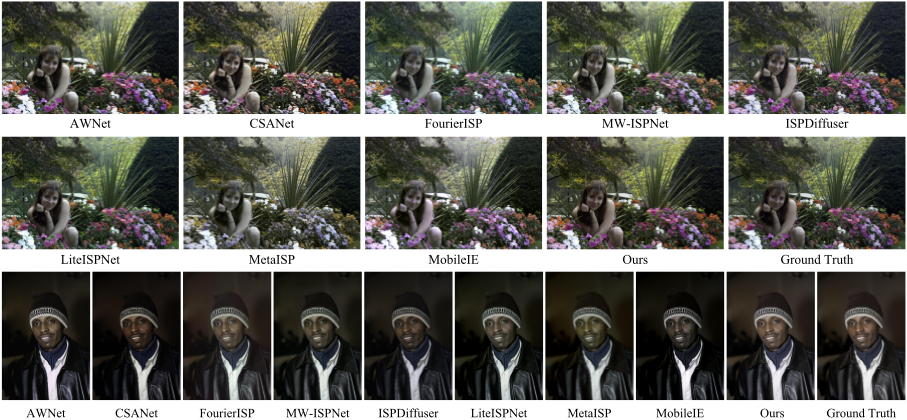
Qualitative Visual Evaluation. As shown in Figure 3, while regression baselines yield desaturated results and diffusion models suffer from texture drift, AesISP generates results that are closest to the Expert-Retouched Reference in terms of color tension and lighting hierarchy, perfectly preserving structural details.
4.3 Ablation Studies and Analysis
Verification of Privileged Prior Distillation
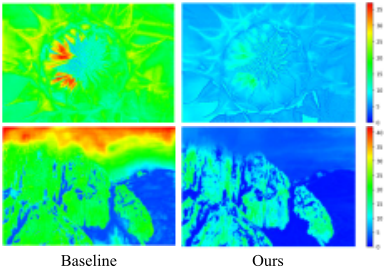
Attempting to model the high-dimensional Raw-to-Expert mapping solely via a monolithic network causes convergence towards the statistical mean of the training distribution, failing to capture distinct expert styles. This regression-tothe-mean phenomenon is visually substantiated by the error heatmap in Fig. 5. Widespread high-error regions (red/green) are observed in the Direct Mapping Baseline. These largescale deviations are the direct consequence of the model converging to a statistical average when confronted with complex semantics. Unable to lock onto a specific mode, the baseline degrades into a mediocre approximation, resulting in significant divergence from the Ground Truth across broad areas.
To mitigate this, the PPD paradigm decouples the task via zaes, enforcing explicit stylistic guidance. As shown in Table 2, incorporating PPD elevates PSNR to 25.12 dB. This confirms that leveraging privileged priors effectively transcends the limitations of regression-to-the-mean, enabling w/o GRPO (Stage 2) 26.457 0.9113 0.0665
| Stage | PSNR ↑ | SSIM↑ | LPIPS ↓ | NIMA ↑ | MUSIQ ↑ | MANIQA ↑ | Q-Align ↑ | MUSIQ-AVA ↑ | CNNIQA ↑ |
4.8479
65.83
0.4024
3.9816
4.8959
0.5937
w/ GRPO (Stage 3) 26.173 0.9096 0.0675
4.8542
65.97
0.4039
3.9956
4.8995
0.5942
Table 3: Impact of GRPO on Aesthetic Metrics. Comparison of Stage 2 (w/o GRPO) and the five-run average of Stage 3 (w/ GRPO).
t-SNE Dimension 1
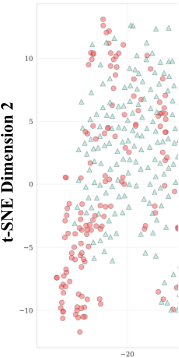
Figure 4: t-SNE Visualization. The Baseline exhibits severe distributional shift (isolated cluster), whereas TPP realigns predictions with the Ground Truth, demonstrating precise manifold anchoring.
| Method | PSNR ↑ | SSIM↑ | LPIPS ↓ |
|---|---|---|---|
| Baseline (Velocity Reg.) | 25.12 | 0.9022 | 0.0739 |
| + Target Prediction | 25.61 | 0.9037 | 0.0708 |
| + Progressive Curriculum | 26.45 | 0.9112 | 0.0665 |
Table 4: Step-wise Ablation of MeanFlow++. TPP improves structural fidelity (SSIM) via explicit manifold constraints, while PTC boosts PSNR by correcting geometric misalignment.
Verification of the MeanFlow++ Mechanism
To validate the efficacy of the MeanFlow++ design, we conduct a progressive ablation analysis to investigate how TargetPredictive Parameterization (TPP) and the Progressive Temporal Curriculum (PTC) synergistically resolve manifold anchoring and long-range transport challenges.
Necessity of TPP for Manifold Anchoring. In contrast to indirect velocity field constraints that are prone to highdimensional noise, TPP imposes explicit constraints by projecting predicted velocities, strictly confining the generation trajectory to the expert manifold. The t-SNE visualization in Fig. 4 confirms this: the unconstrained baseline exhibits a severe distributional shift (isolated cluster), whereas TPP successfully realigns the predicted distribution to overlap with the Ground Truth. This precise anchoring in feature space directly translates into the significant SSIM improvements observed in Table 4.
Necessity of PTC for Long-Range Transport. Although TPP constrains the endpoint, the non-linear mapping induces geometric misalignment between local tangents and global secants. PTC corrects this by guiding a transition from local denoising to global generation, effectively rectifying the transport path. This strategy triggers a PSNR leap from 25.61 dB to 26.45 dB, confirming its indispensability for resolving long-range transport issues on high-curvature manifolds.
Verification of Multi-Dimensional Aesthetic Reward Learning
Traditional pixel-wise objectives struggle to model intricate trade-offs between arrangement, color harmony, and overall visual appeal. To bridge this gap, we introduce a VLM-driven MDAR designed to capture multi-dimensional aesthetic criteria, including arrangement layout, color balance, and emotional tone. By integrating these multi-faceted dimensions into the learning process, our mechanism effectively guides the model to achieve results that align with expert-level aesthetic standards.
Table 3 shows that GRPO improves perceptual metrics such as Q-Align and MUSIQ, confirming its benefit for expert-level aesthetic alignment despite a slight PSNR drop.
5 Conclusion
We presented AesISP, a reward-guided flow framework for expert-level aesthetic ISP. Combining privileged prior distillation, MeanFlow++, and multi-dimensional reward learning, AesISP improves fidelity and aesthetic quality on MIT-Adobe FiveK. Future work will study sensor generalization and controllable editing.
Acknowledgements
This paper is supported by the construction project of the Fujiang Laboratory Nuclear Medicine Artificial Intelligence Research Center (No. 2023ZYDF074). Tong Qiao and Kepeng Xu contributed equally to this work. Please ask Dr. Gang He for correspondence.
@inproceedings{ijcai2026p174,
  title     = {Beyond Pipeline Mimicry: Expert-level Aesthetic ISP via Reward-Guided Flow},
  author    = {Qiao, Tong and Xu, Kepeng and He, Gang and Liu, Zhenyang and Yu, Wenxin},
  booktitle = {Proceedings of the Thirty-Fifth International Joint Conference on
               Artificial Intelligence, {IJCAI-26}},
  publisher = {International Joint Conferences on Artificial Intelligence Organization},
  editor    = {Diego Calvanese},
  pages     = {1559--1567},
  year      = {2026},
  month     = {8},
  note      = {Main Track},
  doi       = {10.24963/ijcai.2026/174},
  url       = {https://doi.org/10.24963/ijcai.2026/174},
}
TY - CPAPER TI - Beyond Pipeline Mimicry: Expert-level Aesthetic ISP via Reward-Guided Flow AU - Qiao, Tong AU - Xu, Kepeng AU - He, Gang AU - Liu, Zhenyang AU - Yu, Wenxin T2 - Proceedings of the Thirty-Fifth International Joint Conference on Artificial Intelligence, IJCAI-26 PB - International Joint Conferences on Artificial Intelligence Organization PY - 2026 SP - 1559 EP - 1567 DO - 10.24963/ijcai.2026/174 UR - https://doi.org/10.24963/ijcai.2026/174 ER -Copied
Machine-readable versions of this paper, for tools and AI agents:





