
A Gamified Assessment Platform for Predicting the Risk of Dementia +Parkinson’s disease (DPD) Co-Morbidity
Proceedings of the Twenty-Ninth International Joint Conference on Artificial Intelligence. Demos. Pages 5297-5299.
https://doi.org/10.24963/ijcai.2020/775
Keywords
- Machine Learning: general
- Human-Computer Interactive Systems: general
Abstract
Population aging is becoming an increasingly important issue around the world. As people live longer, they also tend to suffer from more challenging medical conditions. Currently, there is a lack of a holistic technology-powered solution for providing quality care at affordable cost to patients suffering from co-morbidity. In this paper, we demonstrate a novel AI-powered solution to provide early detection of the onset of Dementia + Parkinson's disease (DPD) co-morbidity, a condition which severely limits a senior's ability to live actively and independently. We investigate useful in-game behaviour markers which can support machine learning-based predictive analytics on seniors' risk of developing DPD co-morbidity.
- [Aung et al., 2013] Min SH Aung, Sibylle B Thies, Lau- rence PJ Kenney, David Howard, Ruud W Selles, An- drew H Findlow, and John Y Goulermas. Automated de- tection of instantaneous gait events using time frequency analysis and manifold embedding. IEEE Trans. Neural Syst. Rehabil. Eng., 21(6):908-916, 2013.
- [Berndt and Clifford, 1994] Donald J Berndt and James Clif- ford. Using dynamic time warping to find patterns in time series. In KDD workshop, volume 10, pages 359-370.
- Seattle, WA, 1994.
- [Emre, 2003] Murat Emre. Dementia associated with parkin- son's disease. The Lancet Neurology, 2(4):229-237, 2003.
- [Heideman et al., 1984] Michael Heideman, Don Johnson, and Charles Burrus. Gauss and the history of the fast fourier transform. IEEE ASSP Magazine, 1(4):14-21, 1984.
- [Hely et al., 2008] Mariese A Hely, Wayne GJ Reid, Michael A Adena, Glenda M Halliday, and John GL Mor- ris. The sydney multicenter study of parkinson's disease: the inevitability of dementia at 20 years. Movement disor- ders, 23(6):837-844, 2008.
- [Hochreiter and Schmidhuber, 1997] Sepp Hochreiter and Jürgen Schmidhuber. Long short-term memory. Neural computation, 9(8):1735-1780, 1997.
- [Iakovakis et al., 2018] Dimitrios Iakovakis, Stelios Had- jidimitriou, Vasileios Charisis, Sevasti Bostantzopoulou, Zoe Katsarou, and Leontios J Hadjileontiadis. Touch- screen typing-pattern analysis for detecting fine motor skills decline in early-stage parkinson's disease. Scientific reports, 8(1):7663, 2018.
- [Joundi et al., 2011] Raed A Joundi, John-Stuart Brittain, Ned Jenkinson, Alexander L Green, and Tipu Aziz. Rapid tremor frequency assessment with the iphone accelerome- ter. Parkinsonism Relat. Disord., 17(4):288-290, 2011.
- [LeCun et al., 1995] Yann LeCun, Yoshua Bengio, et al. Convolutional networks for images, speech, and time se- ries. The Handbook of Brain Theory and Neural Networks, 3361(10):1995, 1995.
- [LeCun et al., 2010] Yann LeCun, Corinna Cortes, and CJ Burges. MNIST handwritten digit database. 2010.
- [Nussbaum and Ellis, 2003] Robert L Nussbaum and Christopher E Ellis. Alzheimer's disease and parkinson's disease. N. Engl. J. Med., 348(14):1356-1364, 2003.
- [Schwab and Karlen, 2019] Patrick Schwab and Walter Karlen. PhoneMD: Learning to Diagnose Parkinson's Disease from Smartphone Data. AAAI, 2019.
- [Shulman, 2000] Kenneth I Shulman. Clock-drawing: is it the ideal cognitive screening test? Int. J. Geriatr. Psychia- try, 15(6):548-561, 2000.
- [Stamate et al., 2017] Cosmin Stamate, George D Magoulas, Stefan Küppers, Effrosyni Nomikou, Ioannis Daskalopou- los, Marco U Luchini, Theano Moussouri, and George Roussos. Deep learning parkinson's from smartphone data. In PerCom, pages 31-40. IEEE, 2017.
- [Thenganatt and Louis, 2012] Mary Ann Thenganatt and Elan D Louis. Distinguishing essential tremor from parkinson's disease: bedside tests and laboratory evalua- tions. Expert Rev. Neurother., 12(6):687-696, 2012.
- [Zeng et al., 2018] Zhiwei Zeng, Simon Fauvel, Benny Tan Toh Hsiang, Di Wang, Yang Qiu, Pamela Chew Oi Khuan, Cyril Leung, Zhiqi Shen, and Jing Jih Chin. To- wards long-term tracking and detection of early dementia: a computerized cognitive test battery with gamification. In Proc. of the 3rd ICCSE, pages 1-10, 2018.
- [Zhang et al., 2011] Daoqiang Zhang, Yaping Wang, Lup- ing Zhou, Hong Yuan, Dinggang Shen, Alzheimer's Dis- ease Neuroimaging Initiative, et al. Multimodal classifica- tion of alzheimer's disease and mild cognitive impairment. Neuroimage, 55(3):856-867, 2011.
- [Zhang et al., 2019a] Hanbin Zhang, Chen Song, Aosen Wang, Chenhan Xu, Dongmei Li, and Wenyao Xu. Pdvo- cal: Towards privacy-preserving parkinson's disease de- tection using non-speech body sounds. In MobiCom, page 16. ACM, 2019.
- [Zhang et al., 2019b] Xi Zhang, Jingyuan Chou, Jian Liang, Cao Xiao, Yize Zhao, Harini Sarva, Claire Henchcliffe, and Fei Wang. Data-driven subtyping of parkinson's dis- ease using longitudinal clinical records: a cohort study. Scientific reports, 9(1):1-12, 2019.
References were extracted automatically from the PDF and may contain errors.
Full text extracted automatically from the PDF; figures, tables and equations may differ. The PDF is the version of record.
1 Introduction
Parkinson's disease (PD) and dementia are chronic neurodegenerative diseases where symptoms progressively deteriorate with no cure currently available. PD patients exhibit motor symptoms like tremor, rigidity, bradykinesia, abnormal gait [Nussbaum and Ellis, 2003]. Dementia patients exhibit cognitive deficits like long-term memory loss, difficulty in reasoning, decline in visual and spatial abilities, and depression [Nussbaum and Ellis, 2003]. Research has shown that dementia develops in over 80% of PD patients after 20 years [Hely et al., 2008]. This has been attributed to the possible spread of PD pathology (i.e., Lewy-body-type degeneration) to the hippocampus and cerebral cortex which are the main regions that experience atrophy in Alzheimer's disease [Emre, 2003]. Suffering from dementia and Parkinson's disease at the same time, i.e. DPD co-morbidity, drastically decreases quality of life for patients. This puts a massive strain on both economy and healthcare infrastructure to care for these patients. Neurodegenerative diseases have an increased onset with age. With many countries facing an aging population, this is a pressing problem that needs immediate addressing.
The diagnosis of PD and dementia is usually based on multi-source data, including laboratory, clinical and behavioral data, and requires the knowledge and opinions from multiple healthcare professionals, such as physio-therapist, psychologist, and memory disorder specialist. Due to its intricate nature, the diagnosis process is highly subjective with different healthcare professionals having different views on the severity of symptoms. As a result, machine learning methods have been used to provide a more objective assessment, to aid the doctor in reaching a diagnosis. Models are trained using a variety of biomarkers from clinical records to neuroimaging scans. For PD assessment, research has mainly focused on detecting psychomotor symptoms using body worn sensors. Analysis is carried out on the sensor signals to identify discriminative patterns related to slowness in movement [Iakovakis et al., 2018], tremor [Joundi et al., 2011] and abnormal gait [Aung et al., 2013]. As for dementia assessment, researchers have explored various cognitiverelated biomarkers, such as measuring brain atrophy from neuroimaging scans [Zhang et al., 2011] and test results of computerized test batteries [Zeng et al., 2018].
The pervasiveness of smartphone devices in the last decade has provided a cost-effective diagnostic tool accessible by everyone. Most smartphones come equipped with sensors like accelerometers and gyroscopes to record physiological signals when carrying out various assessments related to motor and cognitive well-being. There have been a few successful work that showed the potential of using smartphones as an accessible and longitudinal monitoring tool for self-diagnosis of PD [Stamate et al., 2017; Schwab and Karlen, 2019; Zhang et al., 2019a]. Most of the current smartphone-based assessments are focused on either PD or dementia individually, with a lack of studies on monitoring and predicting DPD co-morbidity.
2 Gamified Assessment Platform
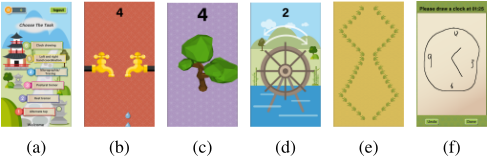
This paper presents a prototype for detecting early signs of DPD co-morbidity through a mobile assessment platform (video link 1 ). It consists of six gamified assessments which assess the patient on both motor and cognitive impairments (see Figure 1). They are specially designed to capture severity of symptoms related to DPD co-morbidity. Since current medical literature indicates a high probability of PD patients developing dementia [Hely et al., 2008], most of our assessments are PD related (Fig. 1 (a) - (e)). The mini-games are designed in collaboration with doctors and researchers from Pacific Parkinson's Research Centre. Each of them is designed for assessing one characterizing symptom of PD, such as tremor, micrographia, and left-right hand coordination. The clock drawing test is a widely used clinical test for screening cognitive impairments [Shulman, 2000]. A digitalized version with automatic scoring system is designed for assessing dementia symptoms (Fig. 1(f)).
1 https://youtu.be/-AJvGDgwYrg
3 AI Engine
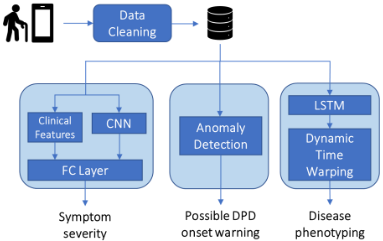
Data collected from the various tasks can then be used for 1) daily symptoms monitoring, 2) early warning of potential progression from PD to dementia, and 3) discovering disease phenotypes which could complement medical research into DPD progression and pathology. An overview of the AI engine is shown in Figure 2.
Monitoring Symptoms
As the assessments are self-administered without any form of clinical supervision, the data collected are likely to be noisy. Filtering of data is crucial, as using noisy data for training will affect model performance. We train a binary classifier to filter out data points that do not follow assessment protocol (e.g., large segments of stationary signals).
The data collected from each test comes in the form of 1D signals. We make use of a combination of both clinically driven and data driven features. For the clinical features, we used feature engineering to extract specific traits found in each disease, refer to Figure 3. In PD, resting tremor occurs in the range of 4-6 Hz [Thenganatt and Louis, 2012]. We first apply Fast Fourier Transformation (FFT) [Heideman et
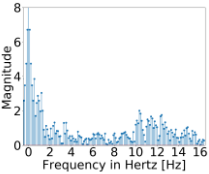
- (a) Rest tremor frequency distribution after FFT.
- (c) Clock contour and hands fitted using least squares method.
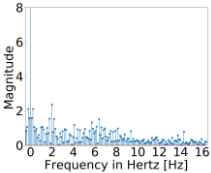
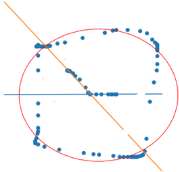
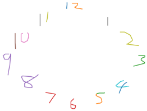
Figure 3: Clinical features extracted for PD (a,b) and dementia (c,d)
al., 1984] and filter out signals not in this range. Patients with dementia are known to suffer from spatial and recall deficits. As such, clinical features for the clock drawing test involve assessing how well the clock is drawn. We first segment the handwritten digits based on the temporal proximity of strokes. A Convolutional Neural Network (CNN) [LeCun et al., 1995] pre-trained on the MNIST dataset [LeCun et al., 2010] is then used to recognise each digit. The hands and contour of the clock are fitted using a least squares method. Scoring will be done based on the digits being at the correct position with respect to the hour and minute hands. For the data driven features, we use a CNN to extract local invariant patterns from the raw sensor signals. The clinical features from each test are then concatenated with the data driven features to train a deep learning model in an end-to-end manner. An overall disease state can be calculated by combining the performance scores from all tests.
Early Warning
Based on the longitudinal signals collected, we compare how a patient's symptoms differ on a monthly or daily basis. Relative intra-patient comparison is more reliable than a direct inter-patient comparison. It is normal for different individuals to have varying level of performance on the various tests. This could be due to familiarity with the task or naturally slower reflexes. Large decrease in relative performance will be a bigger source of concern and prompt intervention is required. We detect significant drops in performance using a window averaging approach, where a pre-defined threshold is set and any score difference across windows that exceed this value will trigger a warning to the patient.
Discovering Phenotypes
The longitudinal data collected from each patient can also be used as a way to cluster the patients. The user's historical performance across tasks are combined to form a feature vector at each time point. The history is encoded using a Long-short term memory network (LSTM) [Hochreiter and Schmidhuber, 1997] which is trained in an unsupervised manner like in [Zhang et al., 2019b]. As each patient joins the study at different time points, it is likely that intra-patient temporal sequences are out of sync. We used Dynamic Time Warping [Berndt and Clifford, 1994] to align the different representations temporally before obtaining a similarity score based on Euclidean distance. This allows us to discover different types of DPD progression patterns that can occur.
4 Conclusion
In conclusion, our gamified assessment platform provides a new paradigm for monitoring and managing neurodegenerative diseases. In the future, we will collaborate with healthcare professionals to test the platform with both healthy seniors and DPD co-morbidity patients to collect longitudinal datasets that can be used by AI researchers for exploring diagnosis and progression prediction of PD and dementia, and by medical researchers for studying DPD co-morbidity.
Acknowledgements
This research is supported, in part, by the Singapore Ministry of Health under its National Innovation Challenge on Active and Confident Ageing (NIC Project No. MOH/NIC/COG04/2017), the National Research Foundation, Singapore under its NRF Investigatorship Programme (NRFI Award No. NRF-NRFI05-2019-0002), and AlibabaNTU Joint Research Institute (Alibaba-NTU-AIR2019B1).
@inproceedings{ijcai2020p775,
  title     = {A Gamified Assessment Platform for Predicting the Risk of Dementia +Parkinson’s disease (DPD) Co-Morbidity},
  author    = {Zeng, Zhiwei and Jiang, Hongchao and Zhang, Yanci and Shen, Zhiqi and Ji, Jun and Mckeown, Martin J. and Chin, Jing Jih and Leung, Cyril and Miao, Chunyan},
  booktitle = {Proceedings of the Twenty-Ninth International Joint Conference on
               Artificial Intelligence, {IJCAI-20}},
  publisher = {International Joint Conferences on Artificial Intelligence Organization},
  editor    = {Christian Bessiere},
  pages     = {5297--5299},
  year      = {2020},
  month     = {7},
  note      = {Demos},
  doi       = {10.24963/ijcai.2020/775},
  url       = {https://doi.org/10.24963/ijcai.2020/775},
}
TY - CPAPER TI - A Gamified Assessment Platform for Predicting the Risk of Dementia +Parkinson’s disease (DPD) Co-Morbidity AU - Zeng, Zhiwei AU - Jiang, Hongchao AU - Zhang, Yanci AU - Shen, Zhiqi AU - Ji, Jun AU - Mckeown, Martin J. AU - Chin, Jing Jih AU - Leung, Cyril AU - Miao, Chunyan T2 - Proceedings of the Twenty-Ninth International Joint Conference on Artificial Intelligence, IJCAI-20 PB - International Joint Conferences on Artificial Intelligence Organization PY - 2020 SP - 5297 EP - 5299 DO - 10.24963/ijcai.2020/775 UR - https://doi.org/10.24963/ijcai.2020/775 ER -Copied
Machine-readable versions of this paper, for tools and AI agents:





