
Probabilistic Knowledge-Based Programs
Proceedings of the Twenty-Fourth International Joint Conference on Artificial Intelligence. Main Track. Pages 1594-1599.
© 2015 International Joint Conferences on Artificial Intelligence
Abstract
We introduce Probabilistic Knowledge-Based Programs (PKBPs), a new, compact representation of policies for factored partially observable Markov decision processes. PKBPs use branching conditions such as if the probability of Φ is larger than p, and many more. While similar in spirit to value-based policies, PKBPs leverage the factored representation for more compactness. They also cope with more general goals than standard state-based rewards, such as pure information-gathering goals. Compactness comes at the price of reactivity, since evaluating branching conditions on-line is not polynomial in general. In this sense, PKBPs are complementary to other representations. Our intended application is as a tool for experts to specify policies in a natural, compact language, then have them verified automatically. We study succinctness and the complexity of verification for PKBPs.
- [Araya-López et al., 2010] M. Araya-López, O. Buffet, V. Thomas, and F. Charpillet. A POMDP extension with belief-dependent rewards. In NIPS, pages 64-72, 2010.
- [Aucher, 2007] G. Aucher. Interpreting an action from what we perceive and what we expect. J. of Applied Non-classical Logics, 17(1):9-38, 2007.
- [Bacchus et al., 1999] F. Bacchus, J. Halpern, and H. Levesque. Reasoning about noisy sensors and effectors in the situation cal- culus. AIJ, 111(1-2):171-208, 1999.
- [Bäckström and Jonsson, 2011] C. Bäckström and P. Jonsson. Lim- its for compact representations of plans. In ICAPS, pages 146- 153, 2011.
- [Belle and Lakemeyer, 2011] V. Belle and G. Lakemeyer. A seman- tical account of progression in the presence of uncertainty. In AAAI, 2011.
- [Belle and Levesque, 2013] V. Belle and H. Levesque. Reasoning about probabilities in dynamic systems using goal regression. In UAI, 2013.
- [Bonet et al., 2010] B. Bonet, H. Palacios, and H. Geffner. Auto- matic derivation of finite-state machines for behavior control. In AAAI, 2010.
- [Boutilier and Poole, 1996] C. Boutilier and D. Poole. Computing optimal policies for partially observable decision processes using compact representations. In AAAI, pages 1168-1175, 1996.
- [Boutilier et al., 1999] C. Boutilier, T.. Dean, and S. Hanks. Decision-theoretic planning: Structural assumptions and compu- tational leverage. JAIR, 11:1-94, 1999.
- [Claßen and Lakemeyer, 2006] J. Claßen and G. Lakemeyer. Foun- dations for knowledge-based programs using ES. In KR, pages 318-328, 2006.
- [Darwiche, 2009] A. Darwiche. Modeling and Reasoning with Bayesian Networks. Cambridge Univ. Press, 2009.
- [Dean and Kanazawa, 1989] T. Dean and K. Kanazawa. A Model for Reasoning about Persistence and Causation. Computational Intelligence, 5:142-150, 1989.
- [Fagin et al., 1990] R. Fagin, J. Halpern, and N. Megiddo. A logic for reasoning about probabilities. Information and Computation, 87(1/2):78-128, 1990.
- [Fagin et al., 1995] R. Fagin, J. Halpern, Y. Moses, and M. Vardi. Reasoning about knowledge. MIT Press, 1995.
- [Gabaldon and Lakemeyer, 2007] A. Gabaldon and G. Lakemeyer. ESP: A logic of only-knowing, noisy sensing and acting. In AAAI, pages 974-979, 2007.
- [Hajishirzi and Amir, 2010] H. Hajishirzi and E. Amir. Reasoning about deterministic actions with probabilistic prior and applica- tion to stochastic filtering. In KR, 2010.
- [Hamilton et al., 2014] W. Hamilton, M. Milani Fard, and J. Pineau. Efficient learning and planning with compressed predictive states. JMLR, 15:3395-3439, 2014.
- [Hansen and Feng, 2000] E. Hansen and Z. Feng. Dynamic pro- gramming for POMDPs using a factored state representation. In AIPS, pages 130-139, 2000.
- [Herzig et al., 2003] A. Herzig, J. Lang, and P. Marquis. Action representation and partially observable planning using epistemic logic. In IJCAI, pages 1067-1072, 2003. IJCAI
- [Iocchi et al., 2009] L. Iocchi, T. Lukasiewicz, D. Nardi, and R. Rosati. Reasoning about actions with sensing under quali- tative and probabilistic uncertainty. ACM Trans. Comput. Log., 10(1), 2009.
- [Kushmerick et al., 1995] N. Kushmerick, S. Hanks, and D. Weld. An algorithm for probabilistic planning. AIJ, 76:239-286, 1995.
- [Lang and Zanuttini, 2012] J. Lang and B. Zanuttini. Knowledge- based programs as plans -the complexity of plan verification. In ECAI, pages 504-509, 2012.
- [Lang and Zanuttini, 2013] J. Lang and B. Zanuttini. Knowledge- based programs as plans: Succinctness and the complexity of plan existence. In TARK, 2013.
- [Laverny and Lang, 2005] N. Laverny and J. Lang. From knowledge-based programs to graded belief-based programs, part II: off-line reasoning. In IJCAI, pages 497-502, 2005. IJCAI
- [Madani et al., 2003] O. Madani, S. Hanks, and A. Condon. On the undecidability of probabilistic planning and related stochastic optimization problems. AIJ, pages 5-34, 2003.
- [Mundhenk et al., 2000] M. Mundhenk, J. Goldsmith, C. Lusena, and E. Allender. Complexity of finite-horizon Markov decision process problems. J. ACM, 47(4):681-720, 2000.
- [Poupart, 2005] P. Poupart. Exploiting Structure to efficiently solve large scale partially observable Markov decision processes. PhD thesis, University of Toronto, 2005.
- [Reiter, 2001] R. Reiter. Knowledge in action: logical foundations for specifying and implementing dynamical systems. MIT press, 2001.
- [Rens et al., 2014] G. Rens, T. Meyer, and G. Lakemeyer. SLAP: specification logic of actions with probability. J. Applied Logic, 12(2):128-150, 2014.
- [Sabbadin et al., 2007] R. Sabbadin, J. Lang, and N. Ravoanjana- hary. Purely epistemic Markov decision processes. In AAAI, 2007.
- [Sanner and Boutilier, 2009] S. Sanner and C. Boutilier. Practical solution techniques for first-order MDPs. AIJ, 173(5):748-788, 2009.
- [Shani et al., 2008] G. Shani, R. Brafman, S. Shimony, and P. Poupart. Efficient ADD operations for point-based algorithms. In ICAPS, pages 330-337, 2008.
- [Shani et al., 2013] G. Shani, J. Pineau, and R. Kaplow. A survey of point-based POMDP solvers. Autonomous Agents and Multi- Agent Systems, 27(1):1-51, 2013.
- [Sim et al., 2008] H. Sim, K.-E. Kim, J. Kim, D.-S. Chang, and M.- W. Koo. Symbolic heuristic search value iteration for factored POMDPs. In AAAI, pages 1088-1093, 2008.
- [Son and Baral, 2001] T. C. Son and C. Baral. Formalizing sensing actions: A transition function based approach. AIJ, 125(1-2):19- 91, 2001.
- [van Eijck and Schwarzentruber, 2014] J. van Eijck and F. Schwarzentruber. Epistemic probability logic simplified. In Advances in Modal Logic, pages 158-177, 2014.
- [Wang and Schmolze, 2005] C. Wang and J. Schmolze. Planning with POMDPs using a compact, logic-based representation. In ICTAI, pages 523-530, 2005.
- [Younes et al., 2005] H. Younes, M. Littman, D. Weissman, and J. Asmuth. The first probabilistic track of the international plan- ning competition. JAIR, 24:851-887, 2005.
References were extracted automatically from the PDF and may contain errors.
Full text extracted automatically from the PDF; figures, tables and equations may differ. The PDF is the version of record.
1 Introduction
Partially observable Markov decision processes (POMDPs) are probably the most popular framework for planning under partial observability. Planning for a POMDP means computing a policy, specifying what action to take at each step at execution time. A key question is how to represent policies. Two well-known families of representations are history-based and value-based ones. We investigate here a radically different representation: probabilistic knowledge-based programs.
Standard knowledge-based programs (KBPs) were introduced by Fagin et al. [1995], as high-level protocols describing the actions that agents should perform as a function of their knowledge, such as, typically, if I know ϕ then π1 else π2. Knowledge is expressed by S5 modalities. Thus, in a KBP, branching conditions are epistemically interpretable, and deduction tasks are involved at execution time (online).
Some works have considered the use of KBPs in an AI planning context. KBPs are implemented in the situation calculus by Reiter [2001] and Claßen and Lakemeyer [2006]. Son and Baral [2001] and Herzig et al. [2003] use epistemic
∗Funded by the French Research Agency (ANR-10-BLAN-215).
Bruno Zanuttini
GREYC
UNICAEN, CNRS, ENSICAEN, France bruno.zanuttini@unicaen.fr
logic for expressing planning problems, with KBPs as output. Laverny and Lang [2005] generalize KBPs to beliefbased programs with uncertain action effects and noisy observations. Lang and Zanuttini [2012; 2013] show that KBPs are powerful for expressing policies or plans: epistemic branching conditions allow for exponentially more compact representations than standard plans; the counterpart is an increase of complexity for plan verification and existence. Yet some other approaches that investigate succinct representations of plans, although not under the form of KBPs, are discussed by Bonet et al. [2010] and B¨ackstr¨om and Jonsson [2011].
However, the practical applicability of these works is hampered by the restriction to nonprobabilistic belief states. Hence we consider a probabilistic variant of KBPs, PKBPs for short. These form a representation of policies or contingent plans for standard POMDPs and stochastic planning domains. The novelty is in allowing complex combinations of probabilistic statements as branching conditions, such as if the probability that a tiger is behind door i is less than 0.1 then open door i, else listen at the door j with the lowest probability (among all doors) of there being a tiger behind.
PKBPs provide an alternative to standard representations, as a more natural and compact language, but with reasoning involved during execution. We view them as a tool for helping experts to specify policies easily; so we study their succinctness and the complexity of automatically verifying them.
Background is given in Section 2 and related work discussed in Section 3. In Section 4 we define PKBPs and their execution semantics. In Section 5 we show that PKBPs are more succinct than standard POMDP policies or contingent plans in probabilistic planning. We address execution with compact representations in Section 6 and the complexity of plan verification in Section 7. We conclude in Section 8.
2 Preliminaries
A partially observable Markov decision process is a tuple Π = (S, b0 ,A,Ω, T,O,R), where S,A,Ω are finite sets of states, actions, and observations, and b0 is a probability distribution on S (written b0 ∈ ∆(S)). An agent controls Π by taking an action at ∈ A and observing some ot ∈ Ω at each timestep t = 0, 1, . . . . The dynamics are given by T, O, R:
- at each timestep t ≥ 0, the process is in some state st ∈ S, which is not directly observed; s0 is drawn from b0 .
- ∀a ∈ A, s, s′ ∈ S, T(s, a, s′ ) ∈ [0, 1] gives the probability of st+1 = s′ for st = s, at = a.
- for T(s, a, s′ ) > 0, ∀o ∈ Ω, O(s, a, s′ , o) ∈ [0, 1] gives the probability of ot = o for st = s, at = a, st+1 = s′ .
- R(b) ∈ Q gives the reward obtained by the agent at timestep t if its belief state is b (see below).
A purely ontic action a never gives feedback (∃o⊤ ∈ Ω, ∀s, s′ ,O(s, a, s′ , o⊤) = 1), and a sensing action a never changes the current state (∀s, T (s, a, s) = 1).
Partial observability implies that the agent cannot monitor the current state st at execution time. Rather, it can maintain a belief state bt ∈ ∆(S); bt (s) is its belief at timestep t that st is s. The belief state can be monitored using progression by actions taken and observations received:
Note that we define rewards on belief states. Since we consider expectations of rewards, a state-based reward function R′ : S → Q can be captured by R(b) = ∑s∈S b(s)R′ (s). 1 The more general setting however comes for free in our approach (since we do not use the piecewise linearity and convexity of Q-values), and captures more general goals: for instance, information-gathering goals [Sabbadin et al., 2007; Araya-L´opez et al., 2010] such as R(b) = 1 if ∃s ∈ S, b(s) > 0.99 and 0 otherwise (identify the current state), or ∑i (1 - P(xi | b)P(xi | b)) (identify the value of each xi, where xi is a state variable, or equivalently, a set of states).
A policy π prescribes an action at each step, given (possibly indirectly) past actions and observations. Its expected value at horizon H < ∞ is E(∑Ht=0 R(bt )), with bt+1 = Prog(bt , at , ot ), at = π(a0 , o0 , . . . , at , ot ), and expectation over s0 ∼ b0 , st+1 ∼ T (st , at , ·), ot ∼ O(st , at , st+1 , ·).
Example 2.1. We consider a variant of the famous tiger example. There are 5 doors, a tiger hidden behind 2 of them, and a princess behind one of the other 3. Initially, all triples (i, j, k) (tigers behind doors i and j, princess behind door k, with i, j, k all different) are equiprobable. We consider (sensing) actions listeni, i = 1, . . . , 4 (note that one cannot listen at door 5), and (ontic) actions openi, i = 1, . . . , 5. When performing listeni, the agent may hear the tiger roaring (r+) or not (r-), with probability 0.5 each, if a tiger is behind door i, and never hears anything otherwise. If the agent performs openi, it is eaten for sure by the tiger if there is one behind door i (yielding reward -1), and married to the princess for sure if she is there (yielding reward +1).
In a POMDP formulation, T(s, listeni, s′ ) is 1 for s = s′ and 0 otherwise (the state is unchanged) and, for instance: O(s, listeni, s, r+) is 0.5 if there is a tiger behind door i in s; T (s, openi, s′ ) is 1 if there is a tiger behind door i in s, and s′ is the same as s but with door i open and the agent eaten, and R(s′ ) is -1 in such s′ ; R(b) is defined by ∑s b(s)R(s).
Representation of Policies Representing policies is a crucial issue for POMDPs, given that a policy π maps an exponential number (in the horizon H) of histories to actions. Two main families of approaches are studied in the literature.
1 The extension to R(st , at , st+1 ) or R(bt , a, bt+1 ) is direct.
In history-based approaches, when π is executed it is in some internal state qt at any timestep, and there is a direct mapping from internal states to actions to take. The transition to the next internal state qt+1 is directly provoked by the observation ot received. Basic examples are policy trees, with nodes labelled by actions and arcs by observations: qt is the current node, at is its label, and qt+1 is obtained by following the arc labelled ot . A more compact representation is given by finite-state controllers, which are generalisations of this to possibly cyclic graphs, typically seen as automata.
In value-based approaches, the agent explicitly maintains its belief state bt , and π gives the expected value of taking each action (assuming that the continuation of the policy will be optimal) as a function of bt ; the action maximizing this value is chosen. A typical example is a set Ξ of α-vectors: π is represented by pairs (αi, ai) with αi an |S|-dimensional vector of scalars and ai ∈ A. Such Ξ represents π through π(bt ) = ai∗ , with i∗ = argmaxi bt · αi (inner product).
Factored Representations We use factored representations of POMDPs, in which X = {x1, . . . , xn} is set of Boolean state variables and S = 2X is the set of assignments to them. b0 , T , O, R are specified using structured representations. We assume b0 is represented by a Bayesian network (BN) over X, 2 and T, O by two-slice temporal BNs (2TBNs).
We assume familiarity with BNs (see [Darwiche, 2009]). 2TBNs [Dean and Kanazawa, 1989] have been used in planning since [Boutilier et al., 1999], and are taken into account in probabilistic PDDL [Younes et al., 2005]. A 2TBN over X is a BN over X ∪ X′ , where X′ = {x′1 , . . . , x′n}; xi and x′i represent xi at some timestep and at the next one, respectively. Each edge in the underlying digraph of a 2TBN is from some unprimed to some primed variable, or from x′i to x′j for i < j in some fixed ordering. Moreover, only primed variables have conditional probability tables (CPTs). A 2TBN hence represents distributions on the assignments to X′ conditional on the value of X. An example of representation of T with 2TBNs is given below. The function O is represented similarly: the 2TBN for O(·, a, ·, ·) has variables X ∪X′ and o (with domain Ω), and a CPT only for o, which gives the probability ditribution on Ω for all s, s′ with T (s, a, s′ ) > 0. We discuss the representation of rewards in Section 7.
Example 2.2 (cont'd). We use state variables ti (a tiger is behind door i, i = 1, . . . , 5), pi (the princess is behind door i, i = 1, . . . , 5), m (married) and e (eaten). The state assigning only t1, t3, p4 to true formalizes the situation where the tigers are behind doors 1 and 3, and the princess behind door 4. Figure 1 shows a part of the 2TBN Nopen1 representing T(·, open1, ·) (variables ti and pi, i ̸= 1, are not represented), Figure 2 a part of the BN Nb0 for b0 , and Figure 3 a part of the BN for Prog(b0 , open1) obtained by progressing Nb0 by Nopen1 before receiving the observation.
3 RelatedWork
Boutilier and Poole [1996] investigated factored representations for POMDPs, with CPTs represented by decision trees,
2 Abusing notation, we do not distinguish between state variables and the corresponding random variables.
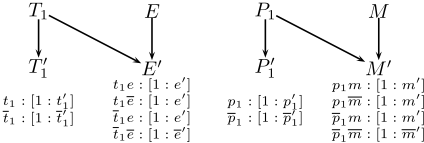
Figure 2: (A part of) the BNNb0 representing b0
and derived a condensed representation of α-vectors. This work was extended in particular by Hansen and Feng [2000] to CPT and α-vector representation by ADDs, and by Shani et al. [2008] for point-based (nonexact) approaches. Probabilistic STRIPS operators [Kushmerick et al., 1995] are another factored representation. They were investigated for POMDPs by Wang and Schmolze [2005], who also derived compact representations of α-vectors. We discuss these works more in depth in Section 5. Poupart [2005, Chapters 3, 4] gives a thorough overview of compact representations up to 2005.
Mundhenk et al. [2000] and Madani et al. [2003] consider succinct and compressed representations of POMDPs, where T and O are represented by circuits. They study the decidability and complexity of evaluating a policy and deciding whether there exists one reaching a given value, but do not consider compact representations of (history-dependent) policies. Yet other compact representations studied in the literature are first order [Sanner and Boutilier, 2009] and predictive-state representations [Hamilton et al., 2014].
The Knowledge Representation and Reasoning community also studied progression (and sometimes regression) of belief states by stochastic actions (including sensing actions) in expressive and compact logical languages, such as firstorder logic or the situation calculus [Bacchus et al., 1999; Gabaldon and Lakemeyer, 2007; Belle and Levesque, 2013; Belle and Lakemeyer, 2011]), propositional logic and dynamic BNs [Hajishirzi and Amir, 2010], or propositional action languages [Iocchi et al., 2009]. Extensions to dynamic logic were also developed for reasoning with stochastic actions (associated with modalities) and observations, such as in [Aucher, 2007; van Eijck and Schwarzentruber, 2014; Rens et al., 2014]. Nevertheless, none of these works considers programs which branch on knowledge or belief.
Finally, although we are interested in exact representations of policies here, let us mention the large body of work on approximate solutions to POMDPs, the most prominent of which being point-based approaches [Shani et al., 2013].

4 Probabilistic Knowledge-Based Programs
We now introduce probabilistic knowledge-based programs (or policies-PKBPs). The representation aims at taking the best of history- and value-based representations: like the former, they do not need to distinguish belief states with different expected values, provided the action to take is the same, and like the latter, they summarize the relevant portion of the history as conditions on the current belief state.
The term knowledge-based is borrowed from knowledgebased programs [Fagin et al., 1995], and refers to the fact that PKBPs branch on what the agent knows (believes) at execution time. Hence they rely on belief state monitoring. As we will see, with PKBPs the next action to take cannot be computed in polynomial time in general, but PKBPs can be exponentially more compact than "reactive" policies. Moreover, they are expressed in a very natural language.
Hence PKBPs complement standard representations. In particular, we have in mind applications in which experts do not want to let an automated system compute decisions, like when human lives (military scenarios) or a lot of money (e.g., spacecrafts) are at stake. Then PKBPs provide a very interesting (compact and natural) language for them to write policies by themselves, while allowing for automated verification.
Moreover, in some applications decisions need not be made instantaneously online: for instance, for systems interacting with humans, when decisions are interleaved with human actions (typically slow as compared to CPU clocks), or for robotic systems in which the execution of one action is very slow (e.g., Curiosity is known to move at 150m/h on Mars).
Representation We use a language, written F n , of probability formulas over variables x1, . . . , xn [Fagin et al., 1990].
The atoms in F n are all atoms of the form P(ϕ), where ϕ is a propositional formula over x1, . . . , xn. The value of P(ϕ) in a belief state b is the probability for ϕ to be true in b, namely, Vb(ϕ) = ∑s|=ϕ b(s). Expressions can be formed using sum and product 3 between atoms and/or rational numbers; e.g., 2P(ϕ)P(ψ)+P(ξ)+0.5. We write E n for the set of all such expressions, and define Vb(E) in the obvious way for E ∈ E n . Finally, F n is defined inductively by:
- ⊤ (truth) and ⊥ (falsity) are probability formulas in F n ,
- for E ∈ E n , p ∈ Q,⋊⋉∈ {≥,>,≤,<}, E ⋊⋉ p is in F n ,
- for Φ,Ψ ∈ F n , ¬Φ, Φ∨Ψ, Φ∧Ψ, Φ→Ψ are in F n .
While an expression E ∈ E n has a value Vb(E) in a belief state b, a probability formula Φ is either true or false in b. For instance, the uniform belief state satisfies P(ϕ) > 0 for any satisfiable ϕ, and falsifies P (x1) ≥ 2P (x2)∨P (x1) ≤ 0. We write b |= Φ if b satisfies Φ, and b ̸|= Φ otherwise. We sometimes write xi instead of ¬xi.
Example 4.1 (cont'd). Let b assign probability 1/30 to each state satisfying e and m, and 0 to all other states (the agent is not married nor eaten, and situations are otherwise equally likely). Then Vb(P(t1∨t2)) is 1/2, Vb(P(t1)-1/2P(t2∧t3)) is 1/5, and b |= P (t1) > 0 ∧ P (t2) ≤ 1/2 holds.
3 Other efficiently computable operators could be used.
We can now define PKBPs formally.
Definition 1. Let n ∈ N and A a set of actions. Probabilistic knowledge-based programs (PKBPs) are defined by:
- λ is a PKBP (empty policy), and every a ∈ A is a PKBP,
- if π1, π2 are PKBPs, then [π1; π2] is a PKBP (sequence),
- if π1, π2 are PKBPs and Φ ∈ F n is a probability formula, then [ if Φ then π1 else π2 ] is a PKBP, 4
- if π is a PKBP and Φ ∈ F n is a probability formula, then [ while Φ do π ] is a PKBP.
Example 4.2 (cont'd). The following is a PKBP:
listen1; listen2; listen3; listen4; while P (t1) > 0.1 ∧ · · · ∧ P (t5) > 0.1 do if P(t1) ≤ P(t2) ∧ · · · ∧ P(t1) ≤ P(t5) then [ listen1; if P(t1) ≤ 0.1 then open1 ] elseIf P(t2) ≤ P(t1) ∧ · · · ∧ P(t2) ≤ P(t5) then [ listen2; if P(t2) ≤ 0.1 then open2 ] . . . else [ if P(t5) ≤ 0.1 then open5 ]In general, PKBPs represent nonstationary policies, which can prescribe a different action for the same belief state at different timesteps. If while constructs are omitted, PKBPs can also be seen as plans, prescribing a finite sequence of actions (contingent on observations) for a given initial belief state. Stationary policies are captured by policies of the form
while ⊤ do [ if Φ1 then a1 elseIf Φ2 then a2 . . . else ak ] .PKBPs make up a very natural language for specifying policies. In particular, they make explicit what conditions on the belief state imply the choice of a given action, unlike with value-based representations, even for factored POMDPs [Boutilier and Poole, 1996].
Semantics As a representation of a policy, a PKBP gives an action for each timestep t, as a function of actions taken and observations received so far, as summarized in the current belief state bt . The semantics is straightforward. For instance, for π = [ a;π1 ] , the prescribed action is a, and execution goes on from the next timestep on with π1. For π = [ if Φ then π1 else π2 ] , the agent must first decide bt |= Φ: if this is true then the agent acts following π1 (which may recursively call for other tests), and otherwise it acts following π2. Finally, if the PKBP boils down to the empty PKBP λ, we define the execution to stop (and no more reward to be obtained).
A PKBP of the form π = [ while Φ do π1 ] has exactly the same semantics as the PKBP [ if Φthen π1 ; π else λ] . Of course, plans with loops are not guaranteed to stop. 5
4 [ if Φ then π1 else λ ] is abbreviated by [ if Φ then π1 ] .
5 Note that there is an ambiguity about the meaning of the infinitely repeated empty plan (the simplest form of which being of the form [ while Φ do λ ] ): it is not clear whether running an empty plan forever is a plan that stops immediately or runs forever. This is however not important for this paper (we consider finite horizons).
Example 4.3 (cont'd). Let us denote a belief state b as the tuple (P(t1), . . . , P(t5)) (probability of there being a tiger behind each door), with situations otherwise equally likely. The initial belief state is b0 = (0.4, 0.4, 0.4, 0.4, 0.4). We take a0 = listen1; assume we receive observation r-, then b1 = (0.25, 0.4375, 0.4375, 0.4375, 0.4375). Then we take listen2; assuming o1 = r- we get b2 = (0.28, 0.28, 0.48, 0.48, 0.48). After taking listen3 and observing r+ we get b3 ≈ (0.17, 0.17, 1.0, 0.33, 0.33). After performing listen4 and observing r- we get b4 ≈ (0.2, 0.2, 1.0, 0.2, 0.4). Now we evaluate the branching condition and find b4 |= P(t1) ≤ P(ti) for all i > 1, therefore we take a1 = listen1. Assuming o1 = r- we get b5 ≈ (0.11, 0.22, 1.0, 0.22, 0.44), hence a5 = listen1 again. Assuming we observe r- once again, we get b6 ≈ (0.06, 0.24, 1, 0.24, 0.47), hence we execute open1.
Interestingly, some PKBPs containing a while loop (such as the one in Example 4.2) almost surely stop, that is, the probability that they stop after at most t steps tends to 1 with t → ∞. Then the probabilities of all finite histories sum up to 1 and the expected reward at an infinite horizon is welldefined, even without using a discount factor. 6
5 Succinctness
We now show that PKBPs are always at least as, and possibly exponentially more, succinct than other representations of policies, which makes them appealing. Precisely, we compare them to representations using α-vectors, possibly compactly represented, and to generic "reactive" representations.
Definition 2. A representation of a policy π is reactive if for any POMDP Π, timestep t, history ⃗h = (a0 , o0 , . . . , at , ot ) with each au given by π, the action at+1 = π(⃗h) can be computed in polytime in the size of Π and π.
Policy trees and finite state controllers are reactive representations, since the action to take can be read off directly from the current state in the representation, which can be updated by simply following the observation received. Similarly, a set Ξ of flat α-vectors, that is, α-vectors represented explicitly as vectors of |S| rational numbers, forms a reactive representation, as a flat belief state can be maintained with per-step updating in time polynomial in |S| and hence in the size of Ξ, and deciding the next action to take requires essentially as many inner products as |Ξ|. Note that under our definition, a representation can be reactive while of size exponential in the size of the problem (this is typically the case for sets of α-vectors). The picture is more subtle for compact α-vectors; we discuss this case at the end of this section.
Recall that P/poly is the (nonuniform) complexity class of problems whose answer can be computed by a polynomialsize circuit for each input size. NP ̸⊆ P/poly is a standard complexity-theoretic assumption; the converse would imply a collapse of the polynomial hierarchy at the second level. The following result says that some PKBPs are exponentially more succinct than any equivalent reactive representation.
6 Of course, some PKBPs stop only with some probability < 1, possibly even 0, such as [ while ⊤ do toss-coin ] .
Proposition 5.1. If NP ̸⊆ P/poly holds, there are policies with polysize PKBP representations, but no polysize reactive representation. This holds even if we forbid the while construct in PKBPs (but not in reactive policies) and restrict the reward function to be state-based.
Proof. Building on Lang and Zanuttini's [2013] construction for (standard) KBPs, we define POMDPs (Π1, Π2, . . . ) such that Πm = (n, b0 , A, Ω, T, O, R) encodes the NP-complete 3-SAT problem over x1, . . . , xm. Intuitively, the state encodes an "immutable" 7 3CNF ϕ = ∧i∈I (Li,1 ∨ Li,2 ∨ Li,3), where each Li,j is a literal xk or xk, and a mutable assignment ⃗x = x1 . . . xm to its variables, together with the constraint (⃗x ̸|= ϕ) → xs for a distinguished, immutable variable xs. The goal is to set ⃗x to a model of ϕ or to detect that ϕ is unsatisfiable, which amounts to being certain that xs is false. We only sketch the construction, and refer to Lang and Zanuttini [2013] for details on the encoding.
- b0 is uniform over all states satisfying (⃗x ̸|= ϕ) → xs (xs is false if ⃗x ̸|= ϕ, with no more informed prior),
- Action test(Li,j) reliably reports which literal Li,j is, and action a⊤i (resp. a⊥i ) always sets xi to ⊤ (resp. ⊥),
- R is 1 at states satisfying xs or ⃗x |= ϕ, 0 elsewhere.
It is easy to check that Πm has a representation of size polynomial in m using BNs for b0 , 2TBNs for actions, and an expression in E n for R (see Section 7). Now the following PKBP π has expected value 1 for Π at horizon O((2m 3 ) +m):
Indeed, P(xs) = 0 holds if and only if P(⃗x |= ϕ) is 0, that is, if ϕ is unsatisfiable since ⃗x is initially unknown. On the other hand, if ϕ is satisfiable, then the PKBP builds a model of it over ⃗x (read "P(ϕ ∧ xi)" as "there is at least one assignment which extends x0, . . . , xi-1, sets xi to true, and satisfies ϕ").
Clearly, π has size polynomial in m. Now, towards contradiction, assume there is a polynomial p and reactive policies π1, π2, . . . for Π1,Π2, . . . , with |πi| ≤ p(m) and expected value 1 at the given horizon. Then executing πm solve the 3-SAT problem over m variables. Since πm is reactive and the horizon is polynomial in m, executing πm amounts to running a polytime algorithm for 3-SAT over m variables, hence 3-SAT is in P/poly, a contradiction. □
Proposition 5.2. For all families (Π)n of POMDPs and families (π)n of policies for (Π)n, if (π)n has a polysize representation using flat α-vectors or α-vectors represented by decision trees [Boutilier and Poole, 1996], then it also has a polysize PKBP representation.
7 By this we mean that no action can change the variables of ϕ.
while ⊤ do if b · α1 ≥ b · α2 ∧ · · · ∧ b · α1 ≥ b · αN then a1 elseIf b · α2 ≥ b · α3 ∧ · · · ∧ b · α2 ≥ b · αN then a2 . . . else aNNowwe reformulate b·αi to ∑β αi(β)P(β), where the sum is over all branches β of the decision tree αi, αi(β) is the value associated to β, and P(β) stands for P(∧β xi = vi), i.e., the probability of the conjunction of all decisions which make up β. Clearly, this conversion yields a PKBP representing πn and of size polynomial in the size of Ξn. □
For α-vectors represented by Algebraic Decision Diagrams (ADDs) [Hansen and Feng, 2000; Sim et al., 2008] or with other compact representations [Wang and Schmolze, 2005], the result does not directly hold. Instead, we could obtain the same result using ADDs or other compact representations for formulas ϕ in atoms P(ϕ). All our results could be lifted to such representations, but we leave the details for future work.
6 Execution with Compact Representations
We now show how to execute a PKBP π for a factored POMDP Π = (n, b0, A, Ω, T, O, R), i.e., how to monitor the belief state and evaluate conditions. We give two approaches.
Standard Progression The most natural approach to belief state monitoring is to maintain a BN over x1, . . . , xn. It is well-known that the progression of bt can be realized by connecting together the BN for bt and the 2TBNs of T(·, at , ·) and O(·, at , ·, ·), then conditioning on ot and marginalizing unprimed variables. For details about algorithms performing this with BNs we refer the reader to Darwiche [2009].
We now consider the evaluation of branching conditions. Recall that PP is the class of problems which are solvable in polytime by a probabilistic algorithm which has probability less than 1/2 to give the wrong answer, and that an algorithm is in PPP it it runs in polytime with access to a PP-oracle.
Proposition 6.1. The problem of deciding, given π and a BN for bt , which action to take according to π in bt , is in PPP.
Proof. From the semantics of PKBPs, this amounts to deciding bt |= Φ for a polynomial number of branching conditions Φ ∈ F n . In turn, bt |= Φ can be decided in polynomial time given the value Pb(ϕ) for each atom P (ϕ) occurring in Φ, so it is enough to show that the computation of Pb(ϕ) is in PP.
For this we use a classical trick (see [Darwiche, 2009, Sec. 5.2.1]): we add to bt a fresh node for each operator in ϕ (assumed binary, parenthesizing as necessary). For instance, if ϕ is of the form ψ ∨ ξ, we add a node Nϕ with parents Nψ,Nξ, and CPT entries ψξ : 1.0, ψξ : 0.0, etc. This results in a BN b+ of size polynomial in that of bt and containing, in particular, a node Nϕ for the binary random variable representing the satisfaction of ϕ. Then evaluating Pb(ϕ) can be done via a polynomial number of tests Pb(ϕ) ≥ p, each of
which is in PP [Darwiche, 2009, Section 11.4]. 8 □
While this may seem a prohibitive complexity for making the next decision online, one can take advantage of the large body of work about reasoning with BNs, using reasoners as black-boxes, to achieve efficient execution in practice.
Memoryful Progression A generic drawback of belief state monitoring is that the representation of bt may grow exponentially with t, since state variables initially uncorrelated can become correlated when conditioning on observations (as E and M on Figure 3). Hence, we propose another progression operator which, at least from the complexity-theoretic point of view, allows to keep the size of bt under control. The idea is keep track of the whole history of actions taken and observations possibly received, which can be done efficiently, and to condition on the observations actually received only when necessary, for evaluating branching conditions.
For Π = (n, b0, A, Ω, T, O, R), ⃗h = (a0 , o0 , . . . , at , ot ), we define the memoryful representation of Prog(b0 ,⃗h) to be the BN obtained as follows. We first rename each xi to x0i in the BN for b0 . Now for each timestep u, we make a fresh copy of the 2TBN for T(·, au , ·) and that for O(·, au , ·, ·). In these we rename xi to xui , x′i to xu+1 i (i = 1, . . . , n), and the observation variable o to ou . Finally, we connect all these copies together and to b0 , merging common variables.
In the end, we obtain a representation of the current belief state bt in intension, as a BN whose size only grows linearly with t. It is easy to check that deciding bt |= Φ for a branching condition Φ can be done by conditioning on o0 , o1 , . . . , ot as received in ⃗h, then marginalizing xui for all u < t. Of course, a direct algorithm doing so would face an explosion in size, but we can take advantage of any off-the-shelf algorithm for reasoning with BNs (see again [Darwiche, 2009]).
Note that it is certainly not desirable in general to use memoryful instead of standard progression in practice. A reasonable heuristic would certainly be to use memoryful progression and regularly test whether some past variables can be marginalized while keeping the representation small. Anyway, as a theoretical tool, memoryful progression allows to monitor the belief state in polynomial space.
7 Verification
Given that PKBPs provide a language for experts to specify policies in a compact and natural way, an important problem is that of verifying that such a specified policy is "correct". Such an automated verification complements the expertise of the user who specified the policy. We restrict here to evaluation at a finite horizon, leaving issues related to termination for future work (see the end of Section 4).
Here we assume rewards are represented by expressions in E n , like ∑i (1 - P(xi)P(xi)) (see Section 2). This makes the presentation simpler, but the very same result would hold with another representation of rewards, e.g., by ADDs. 9
8 Each digit in Pb(ϕ) can be computed in one test Pb(ϕ) ≥ q + 2-i , and for evaluating E > p we need no more digits than p has.
9 For the result we only need the problem of computing R(b) given a BN for b to be in PSPACE.
Proposition 7.1. The following problem is in PSPACE: given a factored POMDP Π = (n, b0 , A, Ω, T, A, R), a PKBP π, H ∈ N written in unary, and θ ∈ Q, is the expected value of π (for Π at horizon H) at least θ? 10
Proof. The algorithm enumerates all observation histories ⃗h = (o1 , o2 , . . . , oH ) ∈ OH of size H, and for each one computes w(⃗h) = p(⃗h) × r(⃗h), namely, the reward r(⃗h) obtained by π along ⃗h weighted by the probability p(⃗h) for ⃗h to occur. Provided this can be computed in PSPACE for each ⃗h, the whole algorithm runs in PSPACE, since it simply sums up all w(⃗h)'s in an accumulator. 11
For a given ⃗h = (o0 , o1 , . . . , oH ), we incrementally build a series of Bayesian networks B0 , . . . ,BH , where Bt is the memoryful progression of b0 by (a0 , o0 , . . . , ak , ok ) (where at 's are given by π). At each step we use Bt and the construction in Section 6 to decide which action at to take next, and we build Bt+1 . At the same time we update the probability p(⃗h) to p(⃗h)×PBt+1 (ot+1 ), and r(⃗h) to r(⃗h)+R(bt+1 ) using the tools from Section 6 again. Since memoryful progression requires only polynomial space, and all elementary queries to the BNs are in PPP ⊆ PSPACE, we get the result.
It is worth noting that there is no real increase in complexity for verification when we use PKBPs instead of other representations. Indeed, Mundhenk et al. [2000] show that verification is already PSPACE-hard for time-dependent (instead of history-dependent) policies and nonobservable MDPs (instead of POMDPs). While the complexity setting is not exactly the same, this suggests that not much is lost with PKBPs as long as verification is concerned (while a lot may be gained in compactness). Note that membership in PSPACE could not be taken for granted, given that we use factored representations and that observations introduce correlations.
8 Conclusion
We have introduced probabilistic knowledge-based programs (PKBPs), as a new representation of policies for partially observable planning problems. PKBPs are more succinct than standard, reactive policies, and are more intuitive to read and to express by an expert. Moreover, verifying PKBPs at a finite horizon remains in PSPACE. On the other hand, PKBPs require reasoning at execution time and hence cannot be reactive, so they constitute a representation complementary to standard ones. Which one to use should be chosen depending on the domain at hand.
There are numerous issues for further research, such as (obviously) the computation of solution PKBPs for a given planning problem, as well as using advanced algorithms on logics for representing probabilistic beliefs [Fagin et al., 1990], and investigating heuristic and approximate approaches to POMDPs using PKBPs.
10 Requiring that H is given in unary form means that O(H) is considered to be polynomial in the size of the input.
11 There are essentially |O|H histories to consider, hence if each w(⃗h) can be represented in polynomial space p(|Π|), their sum can be represented in space log(|O|H × 2|p(Π)| ) ∈ O(H log(|O|) + |p(|Π|)), which is indeed polynomial in H and the size of Π.
@inproceedings{ijcai2015p228,
  title     = {Probabilistic Knowledge-Based Programs},
  author    = {Lang, Jérôme and Zanuttini, Bruno},
  booktitle = {Proceedings of the Twenty-Fourth International Joint Conference on
               Artificial Intelligence, {IJCAI-15}},
  publisher = {International Joint Conferences on Artificial Intelligence},
  editor    = {Qiang Yang and Michael Wooldridge},
  pages     = {1594--1599},
  year      = {2015},
  month     = {7},
  note      = {Main Track},
  url       = {https://ijcai.org/proceedings/2015/228},
}
TY - CPAPER TI - Probabilistic Knowledge-Based Programs AU - Lang, Jérôme AU - Zanuttini, Bruno T2 - Proceedings of the Twenty-Fourth International Joint Conference on Artificial Intelligence, IJCAI-15 PB - International Joint Conferences on Artificial Intelligence PY - 2015 SP - 1594 EP - 1599 UR - https://ijcai.org/proceedings/2015/228 ER -Copied
Machine-readable versions of this paper, for tools and AI agents:





